
Why Women Should Lift Weights
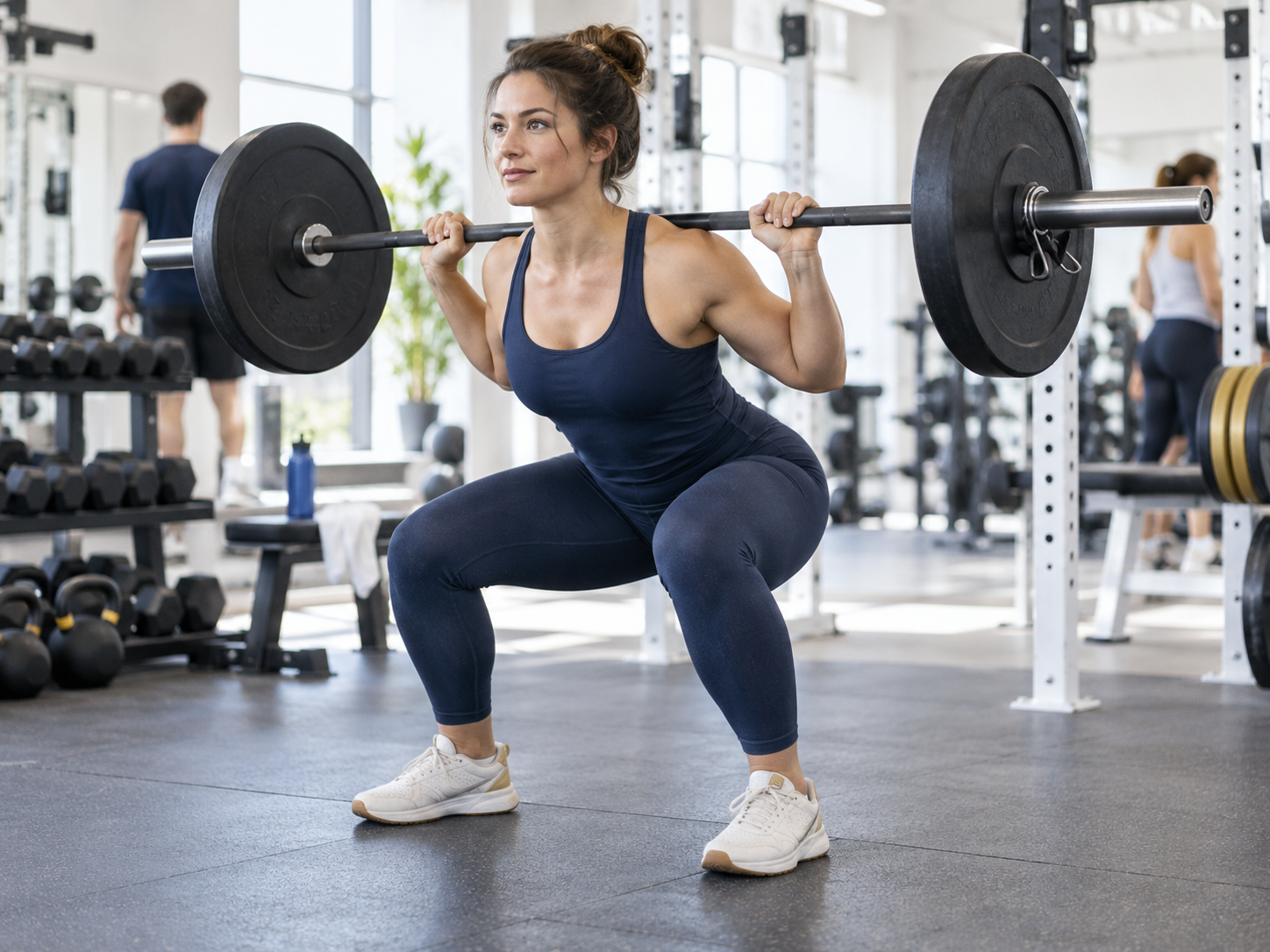
The most common reason I hear from women who don’t lift weights is that they’re worried about becoming too muscular or “too big.”
My usual response is that I’ve been trying to get too big for about a decade, and I’m still not there yet.
Building significant muscle takes years of consistent, deliberate training. Progress can be fairly quick when you first begin, but it gradually slows down. You won’t accidentally become a bodybuilder after lifting weights for a few months—and if you ever build as much muscle as you want, you can reduce your training volume and focus on maintaining it.
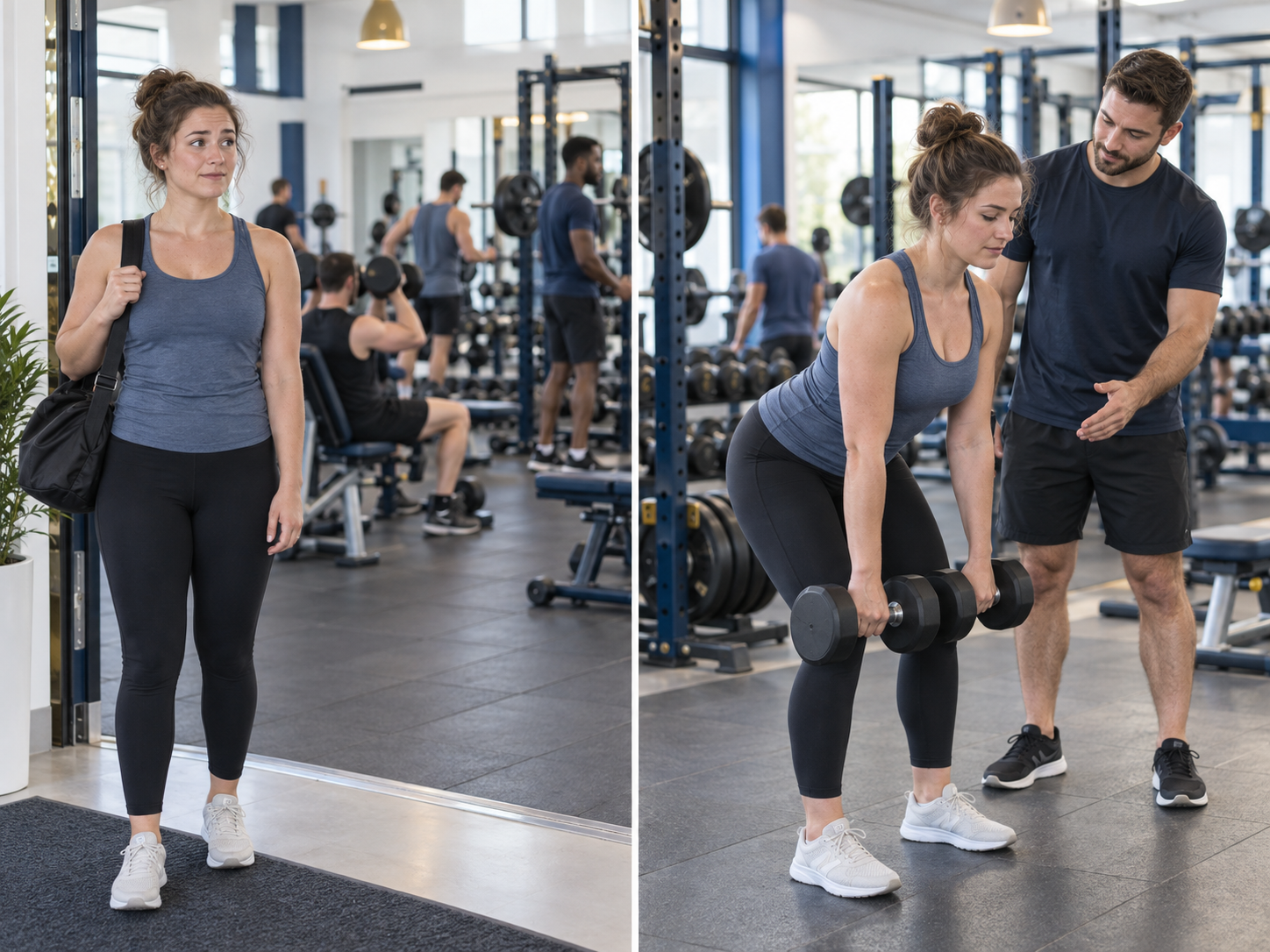
Another common barrier is feeling intimidated by the weights area. If there are ten benches and nine are occupied by groups of lads lifting heavy weights, talking loudly and laughing with each other, I completely understand why it might feel like you don’t belong there.
However, much of that intimidation comes from not feeling confident about what you’re doing. Once you understand the exercises, trust your technique and have a clear plan, you become far less concerned about what everyone else might be thinking. A personal trainer can help you overcome that initial barrier, learn the fundamentals and eventually train confidently on your own.
So, why should women lift weights? Here are some of the biggest benefits.
1. Lifting weights won’t automatically make you bulky
Developing a large amount of muscle requires consistent training, progressive overload, good recovery and usually enough food to support that growth. It happens gradually, meaning you remain in control of the process.
Many women tell me they don’t want to become muscular—they just want to look “toned.” In reality, looking toned requires some muscle. You can’t tone a muscle by changing its shape. What people usually mean is having enough muscle to create definition, combined with a suitable level of body fat.
If you want to look firmer or more defined, building muscle is part of the process, not something you need to avoid.
2. Strength training can change your body shape
Losing weight and improving your body composition aren’t necessarily the same thing.
If you only focus on reducing the number on the scales, you may lose both fat and muscle. Strength training helps you retain—and potentially build—muscle while losing body fat. This can make a noticeable difference to your appearance even if your overall weight doesn’t change dramatically.
Resistance training can also influence your proportions. For example, you can’t choose where your body loses fat, but developing your glutes, legs, shoulders and back can create the appearance of a smaller waist.
You can’t completely redesign your natural body structure, but you can use strength training to emphasise particular areas and work towards the figure you want.
3. It supports fat loss and long-term weight management
A cardio workout will generally burn more calories during the session than a typical weights workout of the same duration. However, strength training offers benefits that continue beyond the calories burned during the workout.
Building and maintaining muscle requires energy. Muscle uses more calories at rest than body fat, so having more of it can modestly increase your daily energy expenditure. The difference isn’t enormous, but it can contribute to long-term weight management.
More importantly, strength training helps you retain muscle while dieting. This means more of the weight you lose can come from body fat, rather than simply becoming a smaller and weaker version of yourself.
Cardio and strength training don’t need to compete. Combining them with suitable nutrition is usually the most effective approach.
4. Everyday life becomes easier
One of the most underrated benefits of becoming stronger is that normal daily tasks begin to feel much easier.
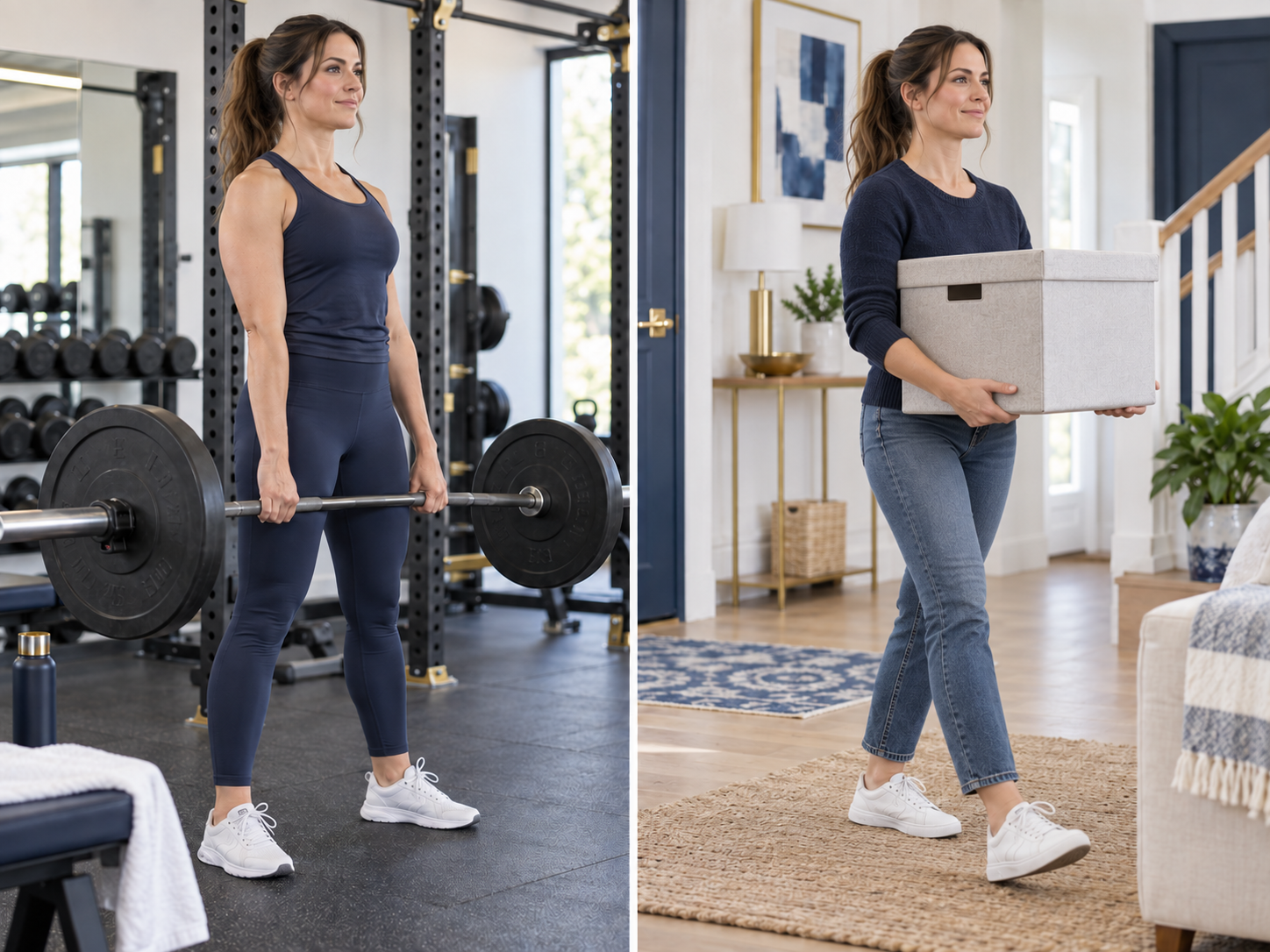
If you develop the strength to deadlift 60kg—or eventually even 100kg—lifting heavy objects around the house will feel far easier and place much less stress on your body.
Strength training gradually increases the amount of physical demand your muscles, joints and connective tissues can handle. It doesn’t make you completely injury-proof, but a stronger and better-prepared body is generally more capable of coping with everyday life.
5. It protects your bones and supports healthy ageing
Strength training becomes increasingly important as we get older.
Like muscles, bones respond to an appropriate training stimulus. Resistance and weight-bearing exercise place stress on the skeleton, encouraging the body to maintain—or potentially increase—bone strength.
One study involved 101 postmenopausal women with low or very low bone mass. Those completing supervised high-intensity resistance and impact training twice per week increased bone-mineral density at the lumbar spine by approximately 2.9% over eight months. The low-intensity comparison group lost around 1.2%.
The training group also maintained or slightly improved bone density at the femoral neck, while the comparison group lost around 1.9%. You can read the LIFTMOR study here.
Not every weights programme will produce exactly the same results, and the sessions in this study were progressive and closely supervised. However, it demonstrates how valuable appropriately programmed strength training can be, particularly as women get older.
It can also help preserve muscle, balance and physical independence. The goal isn’t simply to live longer—it’s to remain capable of doing the things you enjoy.
6. It can improve your confidence
I’ve seen strength training improve confidence in many of the people I coach.
Some of that confidence may come from feeling happier with your appearance, but much of it comes from discovering what your body can do.
It could mean completing your first full press-up, working towards a pull-up, entering the free-weights area without feeling intimidated or lifting a weight that once seemed impossible.
Your progress is also measurable. You might not notice a visible change in the mirror every week, but you can see that you’ve completed another repetition, improved your technique or added weight to an exercise.
There’s something powerful about moving away from viewing exercise purely as a way to burn calories and instead training to become stronger and more capable.
7. You don’t need to be strong before you begin
Nobody starts strength training already strong. Strength is something you develop by training.
If you’re worried about entering the weights area and using 4kg dumbbells, remember that the person next to you using 20kg dumbbells may have started with a similar weight. They’ve probably just been doing it for longer.
The weight itself doesn’t determine whether a workout is worthwhile. What matters is whether it appropriately challenges you and whether you can control it with good technique.
Everybody begins somewhere, and there is nothing embarrassing about being a beginner.
How should a beginner start lifting weights?
A beginner programme doesn’t need dozens of complicated exercises. Two or three well-planned sessions each week, built around fundamental movements such as squatting, hinging, pushing and pulling, can produce meaningful progress.
Start with manageable weights, learn the correct technique and record your repetitions. You can then gradually increase the challenge as you become stronger and more confident.
To make starting easier, I’ve created a free beginner strength-training programme that you can download below.
Ready to become stronger?
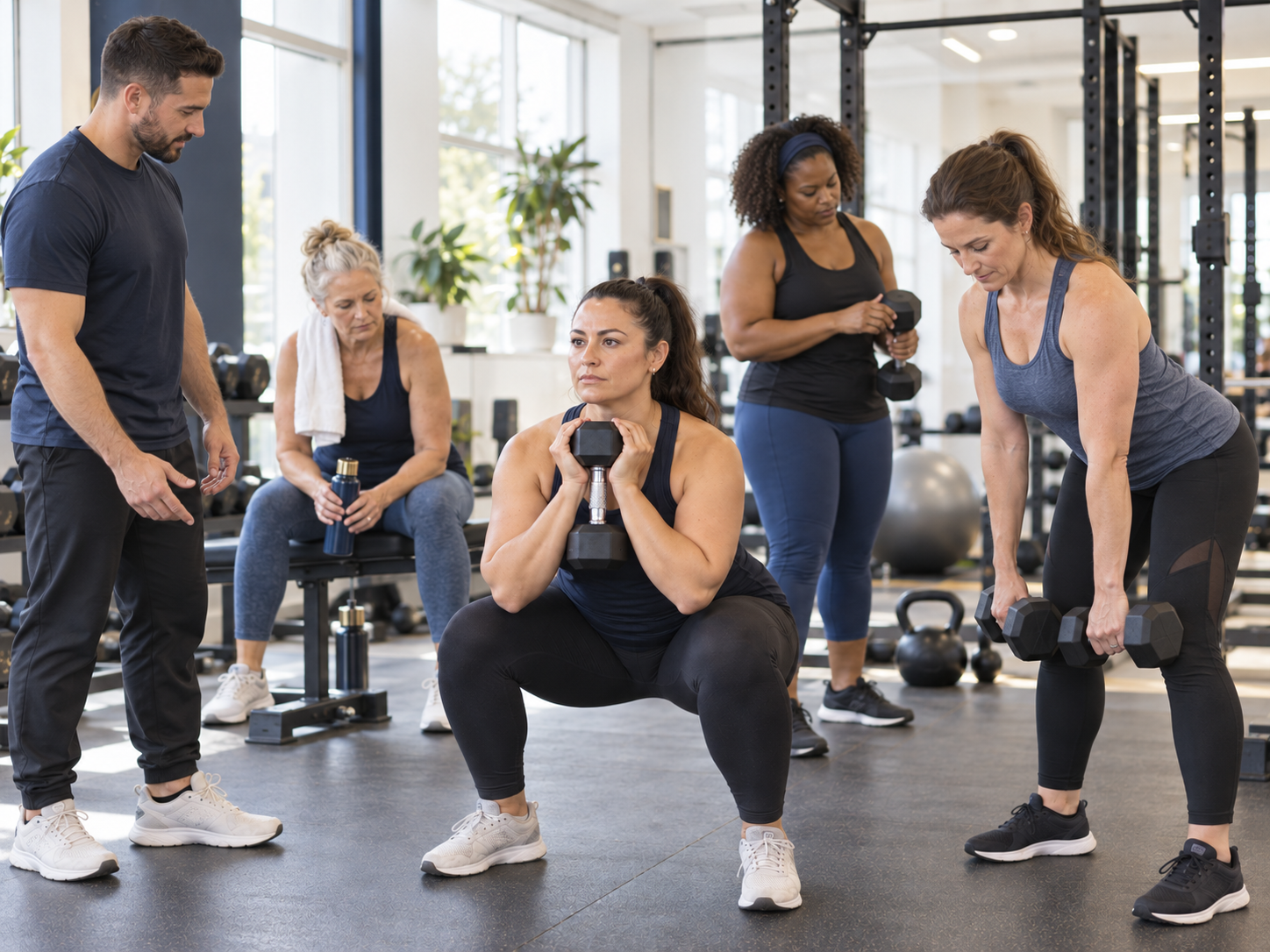
Strength training can help women change their body composition, support fat loss, protect their bones, make everyday life easier and build confidence in what their bodies can do.
You don’t need to be strong before you begin, and you don’t need to feel completely confident before entering the weights area. Strength and confidence are both developed along the way.
If you’d like to learn in a supportive environment alongside other women with similar goals, take a look at Stronger Club - my women-only strength community offering structured workouts, expert coaching and the support you need to become confident training with weights.
