
What I Eat to Gain Muscle Without Getting Fat
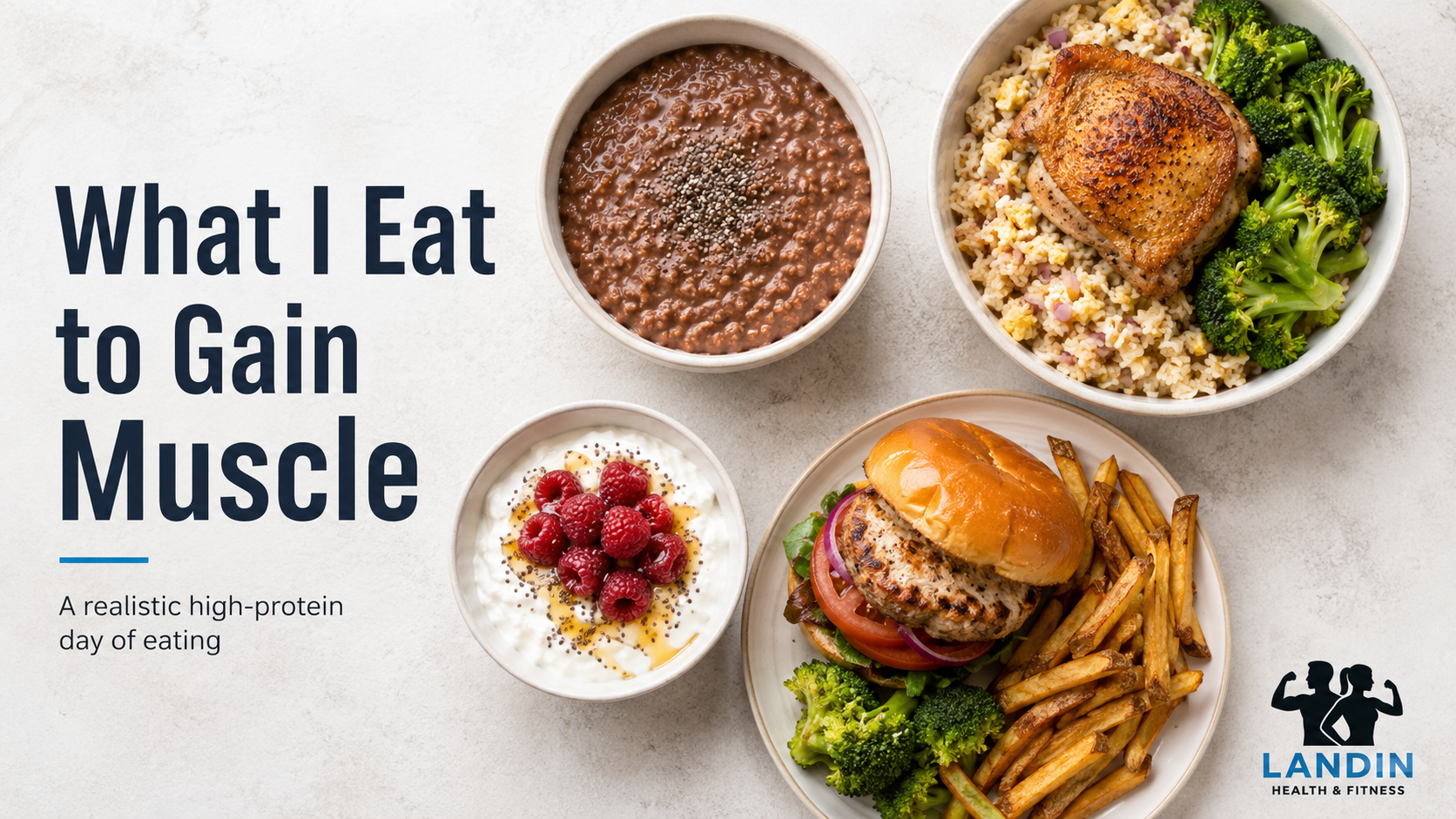
If your goal is to build muscle, your training needs to give your body a reason to grow.
But training is only part of the equation.
You also need enough protein, enough recovery, and in many cases, enough calories to support muscle gain.
The part people often get wrong is thinking this means they need to go on a huge “dirty bulk” and eat everything in sight until one day they wake up, look in the mirror and think “holy sh*t”. You don’t.
This article is not going to completely change your life or make you see food in a totally new spiritual way. It is more likely to show you that eating to build muscle is usually much simpler than people make it sound.
You often hear actors or celebrities say they ate 5,000 calories a day and put on 20lbs of muscle. They didn’t. They are either massively overstating their calories or have been told to say this to cover up the real way they gained a lot of muscle in a short period of time, you know what I am implying.
But for most people, building muscle does not require force-feeding yourself until you hate food.
It usually means:
Training hard enough to stimulate muscle growth
Eating enough protein
Eating enough total calories
Recovering properly
Repeating that consistently for months
My Approach to Calories When Gaining Muscle
My maintenance calories are probably somewhere around the 2,700 calorie mark.
Because I train in the gym around 4–5 times per week and usually play a bit of padel, I am comfortable eating around 2,500–3,000 calories most days when I am trying to gain muscle.
Some days might be slightly lower. Some days might be higher. Weekends might push closer to 3,500 calories, especially if I have a takeaway or a more relaxed meal.
I do not obsess over tracking every single day, especially at weekends.
The main thing I care about is the trend.
For me, a muscle-gain phase is going well if:
My bodyweight is slowly going up
My lifts are improving
I am recovering well
Do You Need a Calorie Surplus to Build Muscle?
The honest answer is: it depends.
Some people can build muscle without being in a calorie surplus.
For example, if you are new to lifting, returning to training after a break, or carrying a higher amount of body fat, you may be able to build muscle while eating at maintenance or even in a calorie deficit.
This is because your body has more room to adapt. If your training improves, your protein intake improves, and you start lifting consistently, you can make good progress without necessarily pushing calories much higher.
But if you are already fairly lean and have been training properly for a while, building muscle usually becomes harder without a calorie surplus.
At that point, your body may need a bit of extra energy coming in to support new muscle growth, harder training sessions and better recovery.
That does not mean you need to stuff your mouth with a burger every night.
It means a small, controlled surplus is often enough.
Why I Prefer a Small Surplus
Personally, I do not like huge bulks.
If you gain weight very quickly, you might feel like things are going well because the scale is moving, but a lot of that extra weight is likely to be fat.
And gaining extra fat does not automatically mean you are gaining extra muscle.
In many cases, you are just making the cutting phase longer and harder later on.
For me, a better approach is to gain slowly.
A rough target I like is around 2lbs of bodyweight per month.
That is enough to show you are moving in the right direction, but not so aggressive that you end up gaining unnecessary fat just for the sake of saying you are “bulking”.
Over a 6–9 month period, that can add up nicely while still keeping the process controlled.
Of course, everyone is different.
Some people are happy gaining more body fat in a bulk. Others prefer to stay leaner and take a slower approach.
There is no single perfect method, but for me, the aim is simple:
Build muscle, support training, eat enough food, but avoid turning the bulk into a full-time relationship with the biscuit cupboard.
What This Article Covers
In this article, I am going to show you an example of how I eat when trying to gain muscle.
I will break down:
My usual breakfast options
My usual lunch
My regular snacks
Some dinners I have on rotation
The estimated calories and macros for each meal
How I adjust meals up or down depending on my goal
This is not meant to be the perfect muscle-building diet for everyone.
It is just a practical example of how you can eat enough protein and calories to support muscle gain without making the process overly complicated.
The exact calories will vary depending on brands, portion sizes and how you cook the food, so treat these numbers as estimates rather than sacred scripture.
Breakfast Options
My breakfasts tend to be one of two things.
Either scrambled eggs on toast, or chocolate protein oats.
Both work well, but they do slightly different jobs. The eggs are higher in fat and feel more like a proper cooked breakfast. The oats are higher in carbs and fibre, which can be useful if you are training hard and want a bigger muscle-gain breakfast.
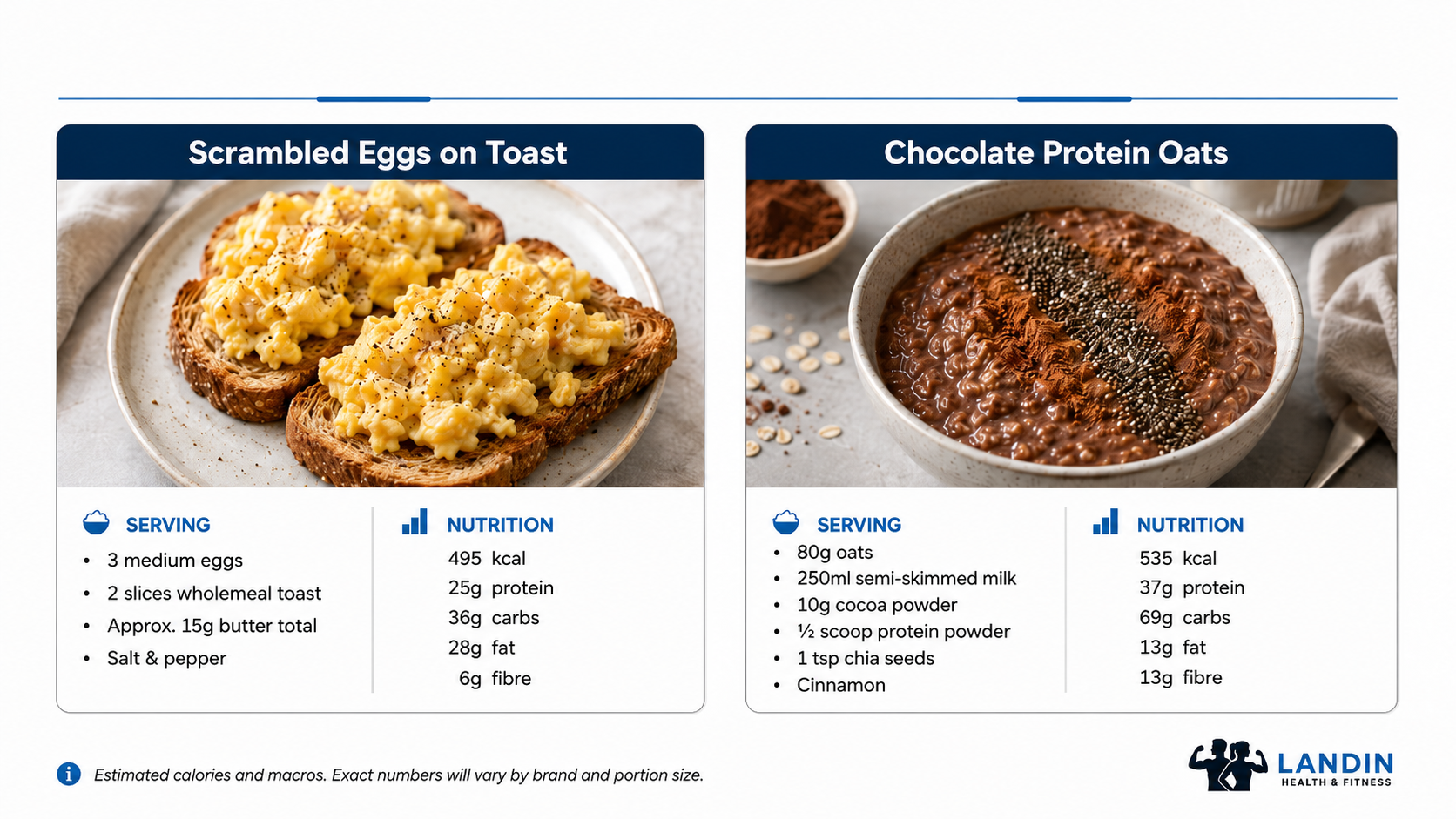
The oats are probably the better option if I want more carbs and fibre.
The eggs are still a solid breakfast, but the butter and eggs make it higher in fat. Not a bad thing, just something to be aware of.
Lunch Options
During the week, my lunch is usually fairly similar.
A lot of the time, I will have chicken thighs, rice, egg, onion and broccoli.
If I am gaining muscle, I am more likely to use chicken thighs instead of chicken breast because they are usually cheaper and higher in calories. I normally use skin-on chicken thighs, which makes the meal more calorie-dense, and it’s just my preference. Season them thighs up with some BBQ, Jerk or Peri peri seasoning and they’re delightful.
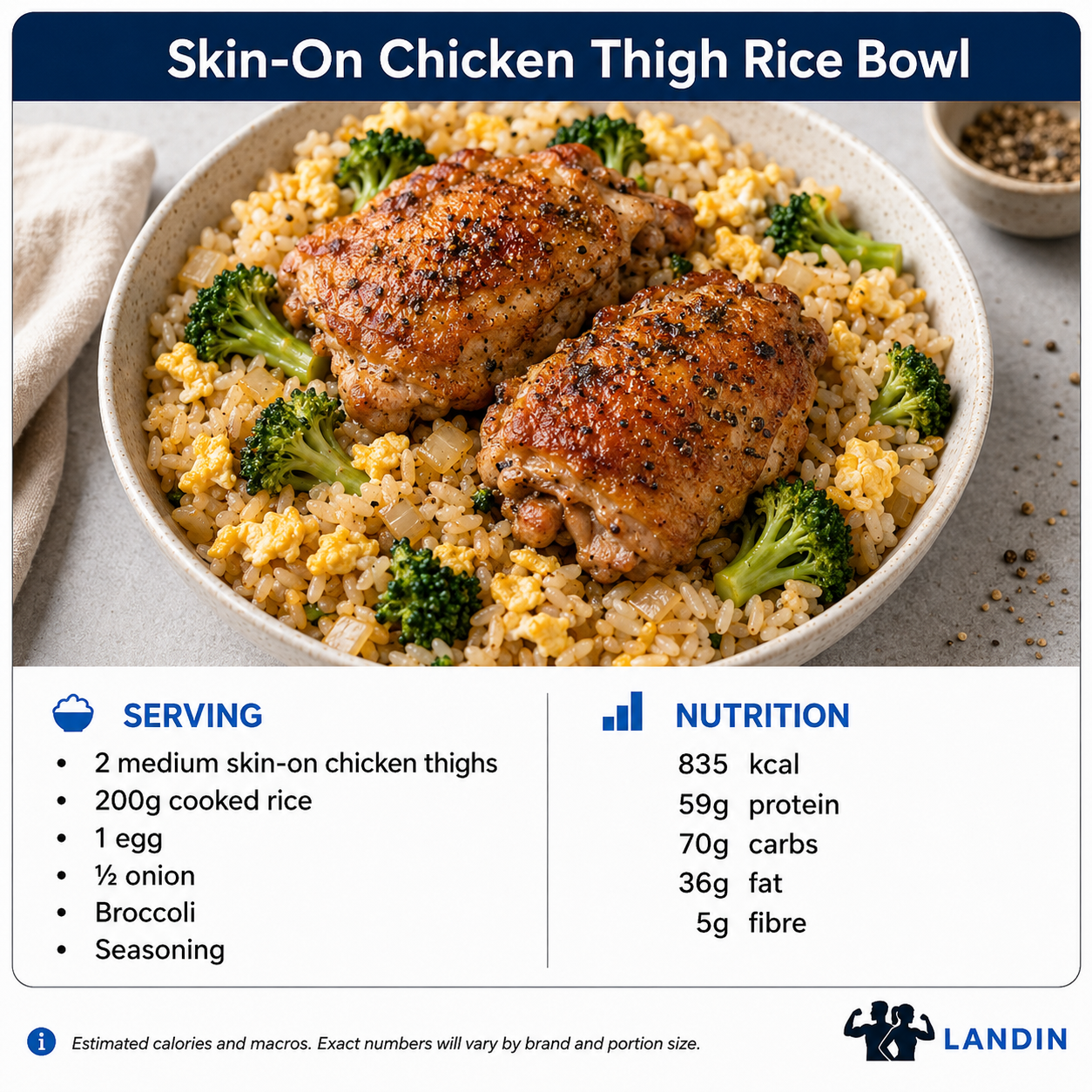
I also usually make more than one serving at dinner, so dinner often becomes the next day’s lunch.
This saves time, makes protein easier to hit, and means I am not relying on whatever sad meal deal is closest.
Meal prep does not need to mean cooking 14 identical tubs of dry chicken and rice on a Sunday while questioning every life decision you have ever made.
My Go-To Snacks
My main daytime snack is a high-protein yoghurt bowl.
I usually have this between lunch and dinner when I start getting hungry. It is a great way to get a lot of protein and a decent amount of fibre without the calories going too high.
I also use my Ninja Creami (my soul mate) quite a lot, usually after dinner. So on a typical muscle-gain day, I might have both the Greek yoghurt snack during the day and a Ninja Creami ice cream later in the evening.
Yes, this is basically me finding a way to eat dessert twice while calling it structure.
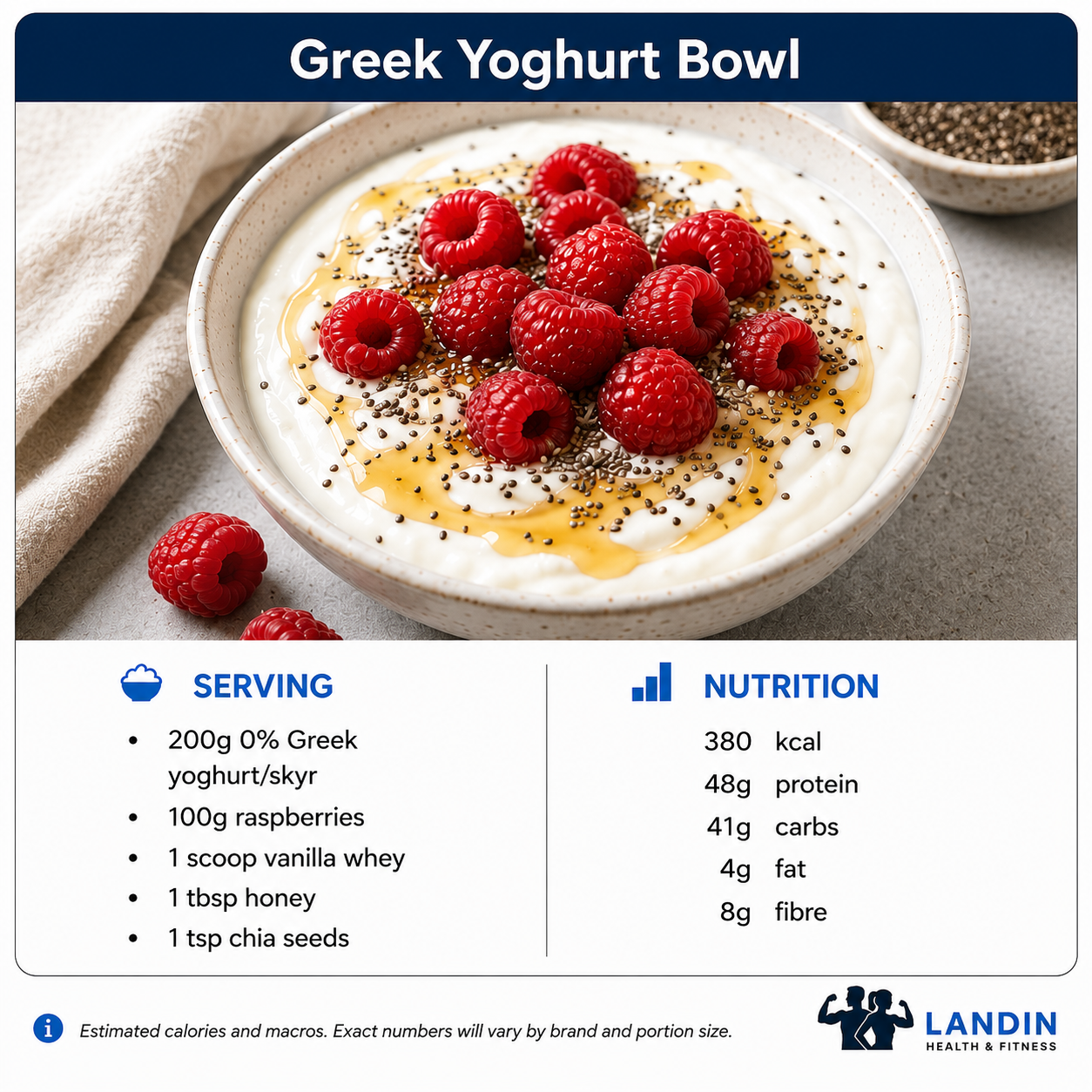
The yoghurt bowl is my favourite high-protein snack.
The dates and banana are not high-protein snacks, but they are useful for quick carbs, especially before training.
The Ninja Creami is a good option when I want something that feels like dessert but still helps with protein. A simple vanilla-style base with almond milk, Greek yoghurt or skyr and protein powder usually comes in around 220–260 calories, depending on the amounts used.
Dinner Options
Dinner is usually the meal I vary the most because I cook for both me and my fiancée.
I am more relaxed with dinner than breakfast or lunch, but I still try to make sure the meal includes at least around 40g of protein.
The point is not to eat the exact same dinner every night. It is to have a few regular meals you enjoy that still help you hit your calories and protein target.
Here are a few meals I tend to have on rotation.
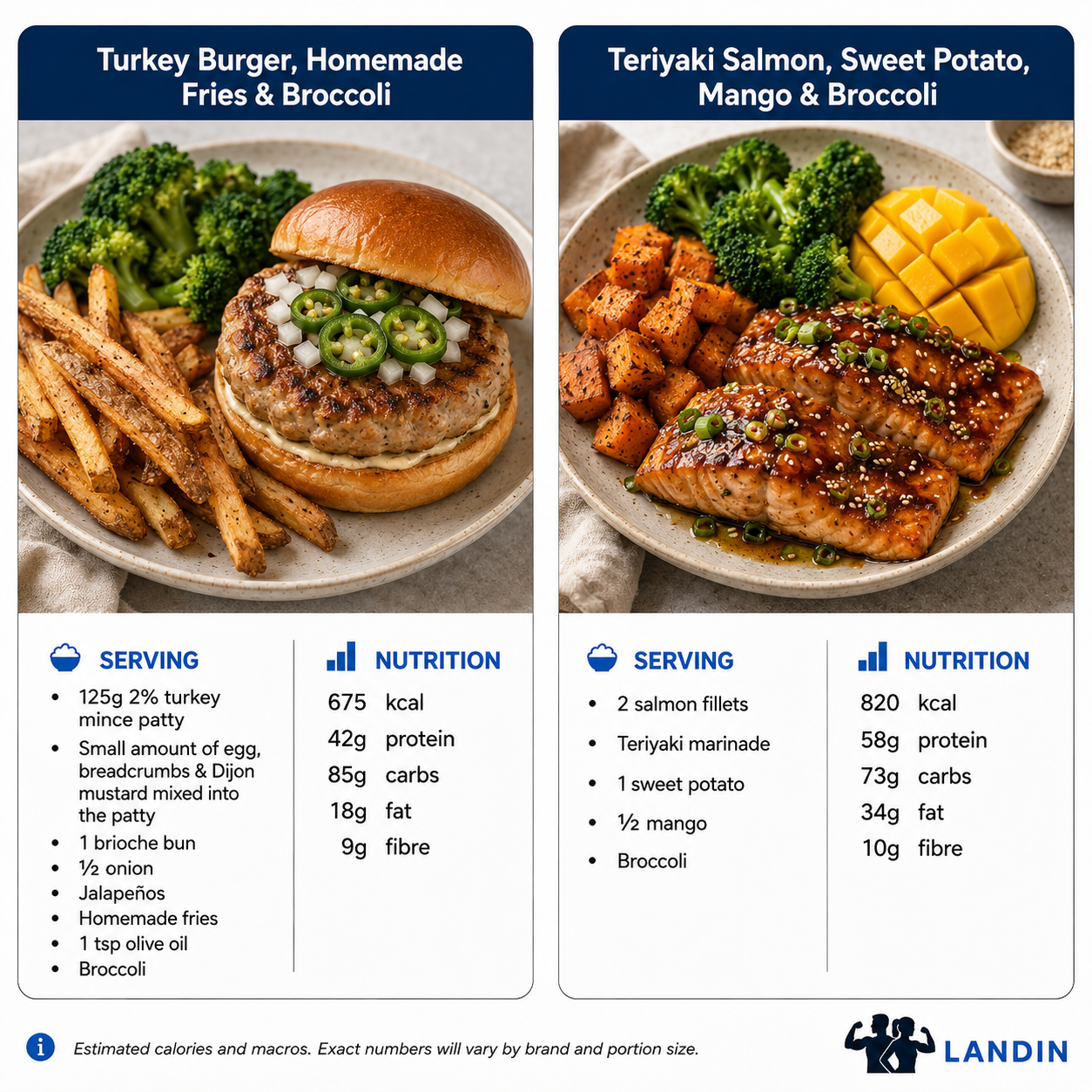
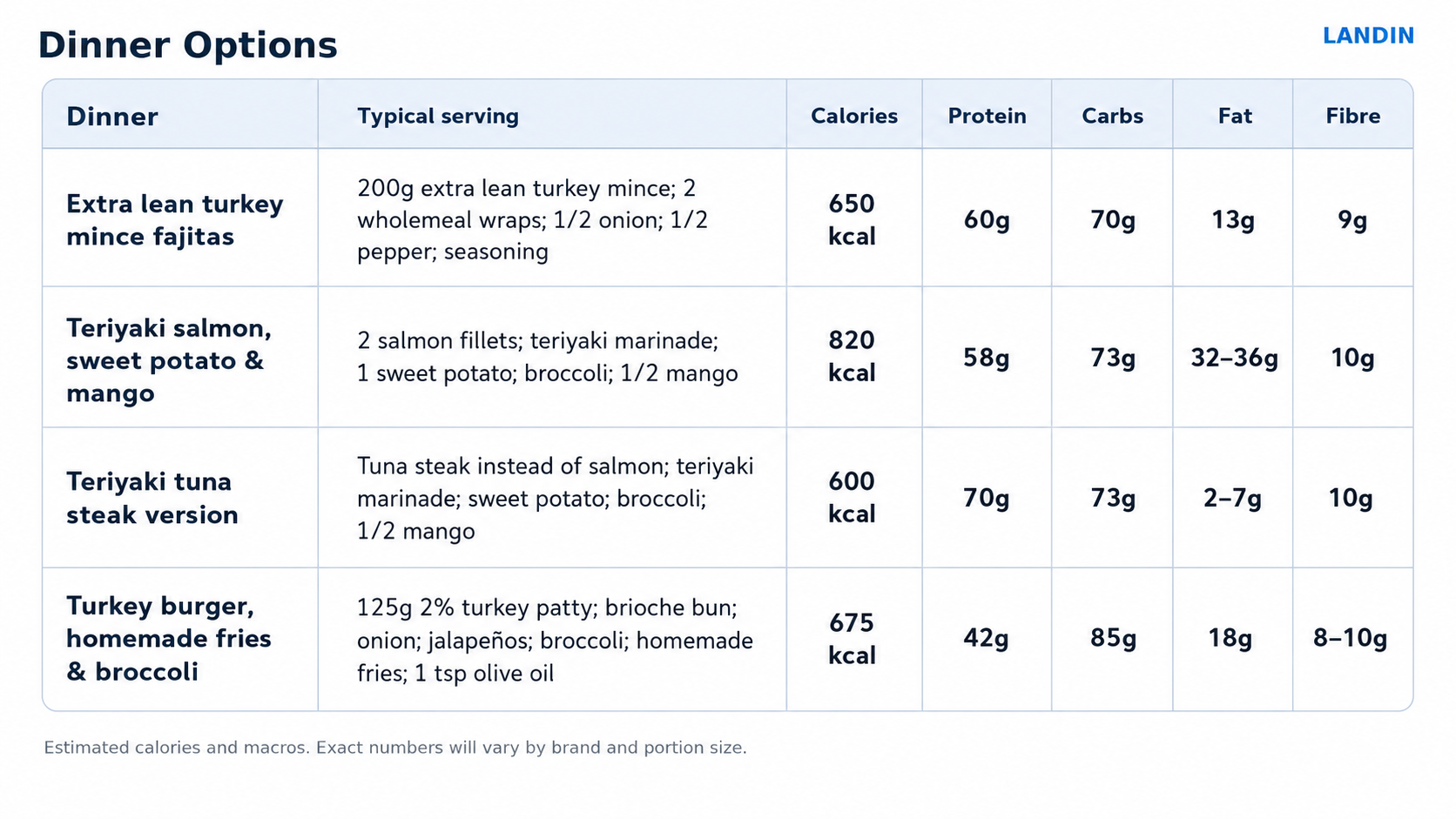
The turkey mince fajitas are probably one of the easiest high-protein dinners.
The salmon meal is higher in calories because salmon is naturally fattier, but it is still a really good muscle-gain meal.
The tuna steak version is much leaner and higher in protein for fewer calories.
The turkey burger is a good example of a meal that feels like normal food while still fitting the goal.
Not everything has to be chicken, rice and beige sadness.
Although I’ve only listed 4 different meals, I do eat have more variation and am partial to a lasagne or bangers and mash now and then. The point is more having a foundation of high protein in your meals.
How I Know If It Is Working
For me, the process is going well if two things are happening:
My bodyweight is slowly increasing
My lifts are improving
If the scale is going up at a sensible rate and I am getting stronger in the gym, then the muscle-gain phase is doing what it needs to do.
If my weight is shooting up too quickly, I probably need to pull calories back slightly.
If my weight is not moving at all and my lifts are stalling, I may need to eat a bit more.
That is why I prefer looking at trends rather than obsessing over one individual day of eating.
One day does not matter that much. The trend does.
A single high-calorie Saturday is not a disaster.
Seven weeks of scoffing my face with kebabs, chocolate and crisps is a disaster.
How to Adjust These Meals for Your Goal
The useful thing about meals like this is that you do not need to completely change your diet every time your goal changes.
You can usually just adjust the dials.
If you need fewer calories, keep the protein source similar but reduce some of the higher-calorie extras.
If you need more calories, do the opposite.
Add more carbs, use slightly higher-fat ingredients, or include calorie-dense extras that do not add a huge amount of food volume.
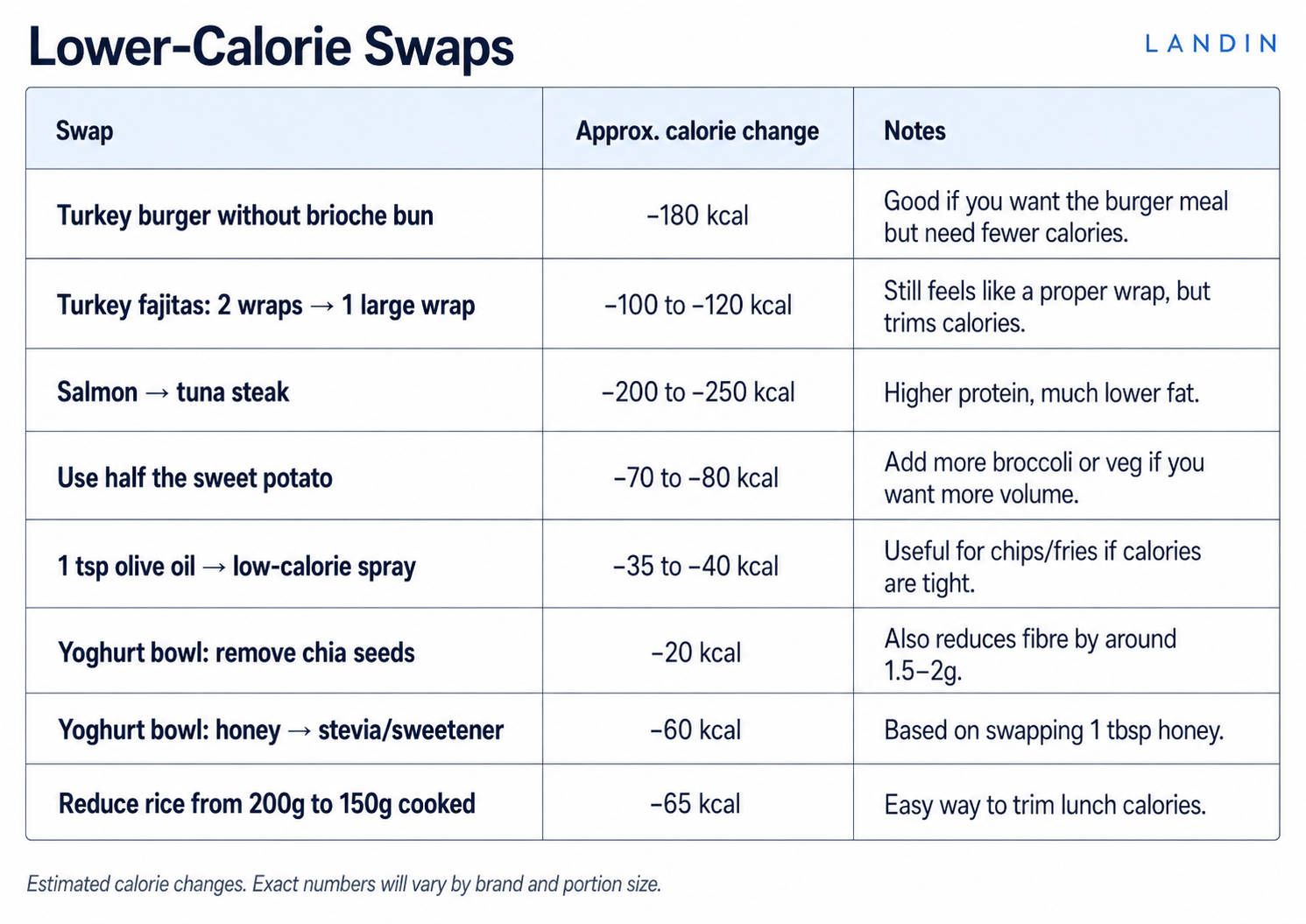
If the meal is too high in calories for your current goal, you do not need to scrap the meal completely.
You can usually just change one or two parts of it.
That is much easier than trying to live on plain chicken and broccoli while pretending you are fine.
These are just an example of how I find ways to lower calories in my specific meals. You may have meals you love that you can think of different ways to lowering the calories without getting rid of the meal altogether.
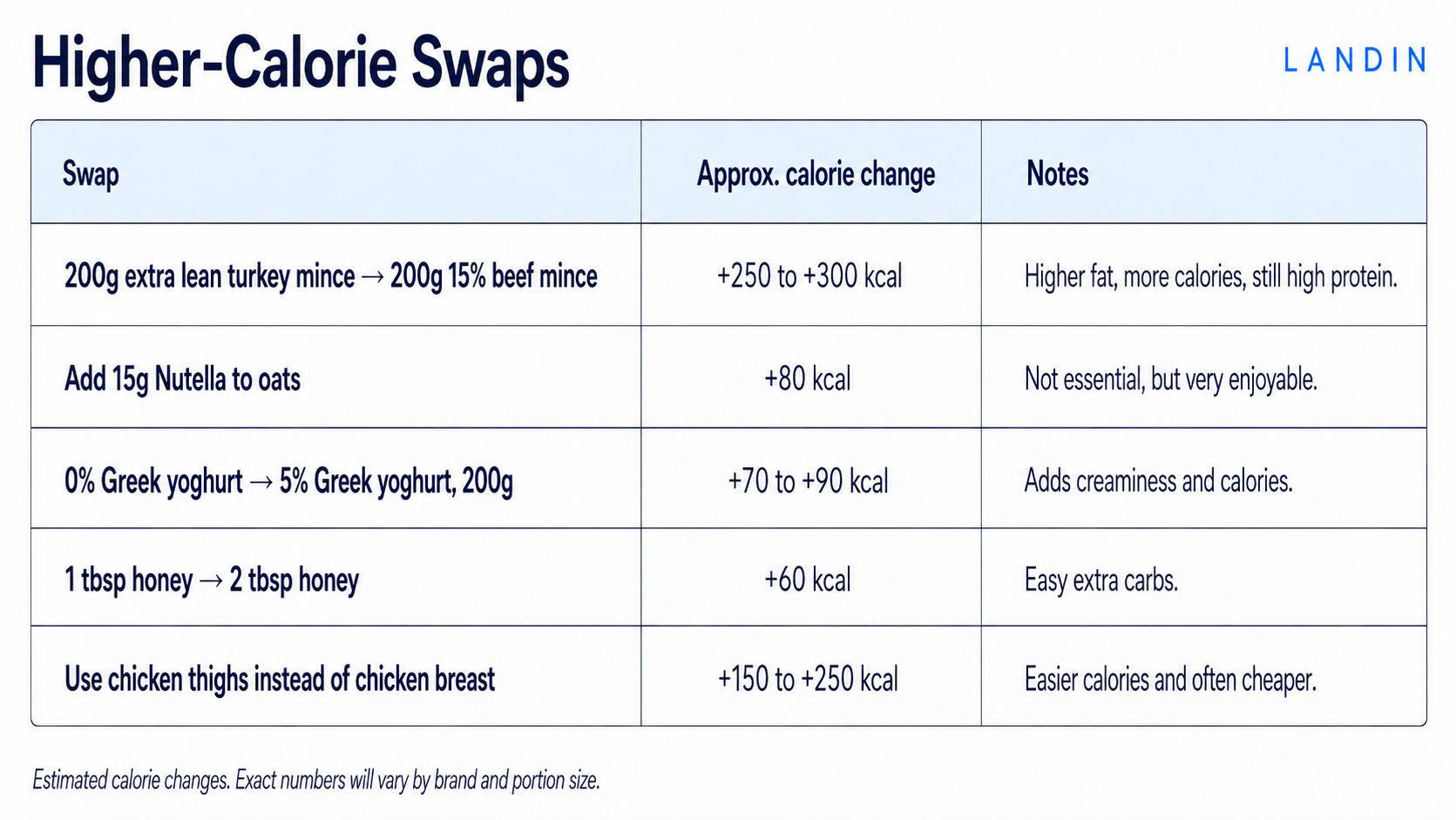
If you struggle to eat enough calories, you can make the same meals more calorie-dense without adding loads more food volume.
This is where small changes help: fattier mince, more rice, a bit more olive oil, 5% Greek yoghurt instead of 0%, or adding something like Nutella to oats.
You do not need to force-feed yourself.
Sometimes you just need smarter calorie additions.
The Big Takeaway
Eating to gain muscle does not need to be extreme.
You do not need to eat 5,000 calories a day unless your body, training, activity levels and goals genuinely require it.
For most people, gaining muscle comes down to:
Training hard and progressively
Eating enough protein
Eating enough calories to support progress
Gaining weight slowly if needed
Adjusting based on what your bodyweight and performance are doing
My personal preference is a small surplus and a slow rate of weight gain.
Around 2–3lb per month works well for me.
It gives enough food to support training, without turning the bulk into a long-term fat gain project that future-me has to clean up.
If you want to build muscle, start with the basics.
Get stronger in the gym.
Eat enough protein.
Use meals you actually enjoy.
Adjust calories up or down depending on your goal.
And remember: a muscle-gain diet does not need to be dramatic.
It just needs to be consistent enough to work.
