
How to Know If You’re Actually Building Muscle
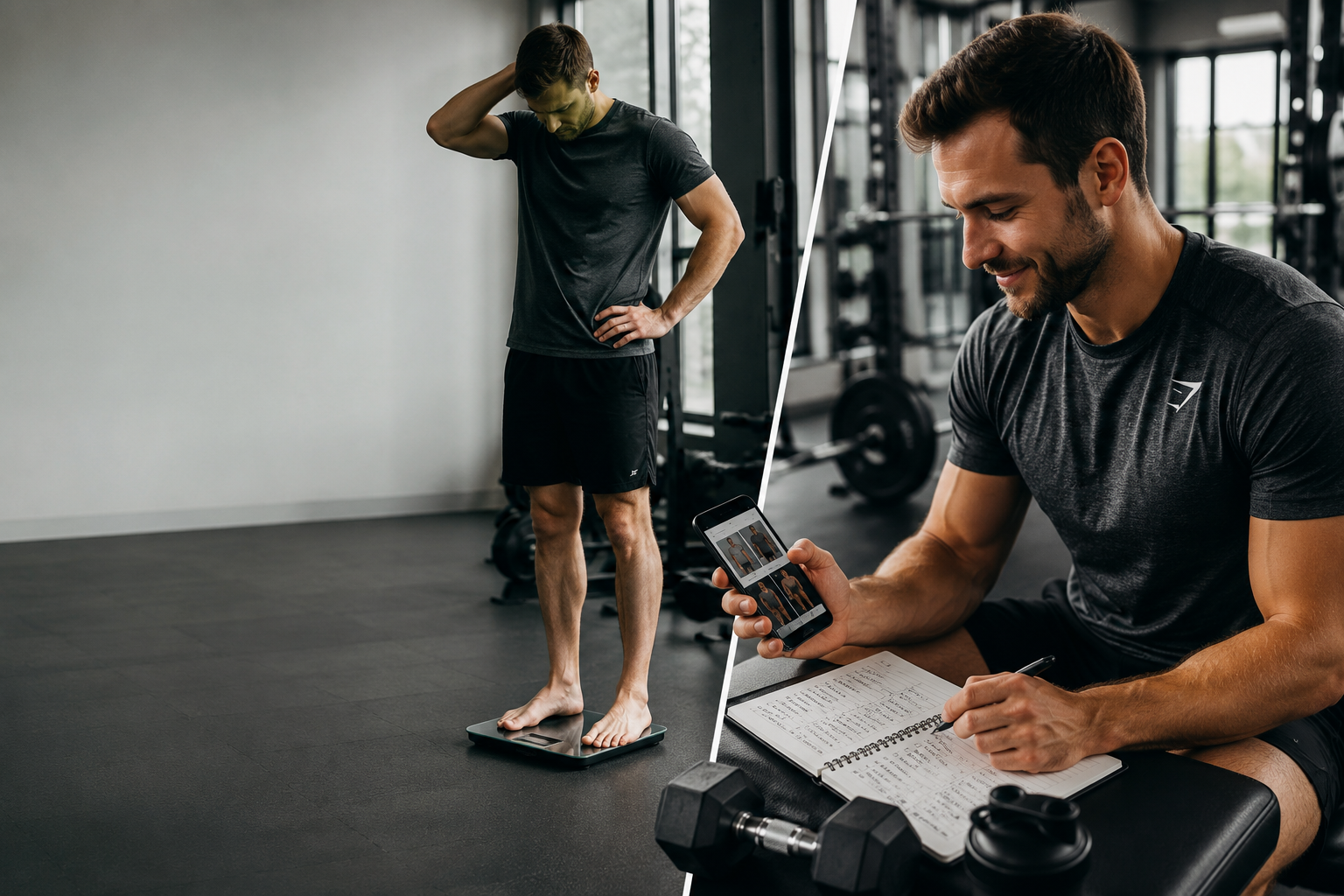
Building muscle is a slow process. There is no natural way to “get jacked fast”.
So if you are trying to gain muscle, you need better feedback than just looking in the mirror every morning and asking yourself whether your arms look different under bathroom lighting.
The two most important things to track are:
Are your measurements changing?
Are your lifts going up?
Scale weight can be useful, but it does not tell the full story.
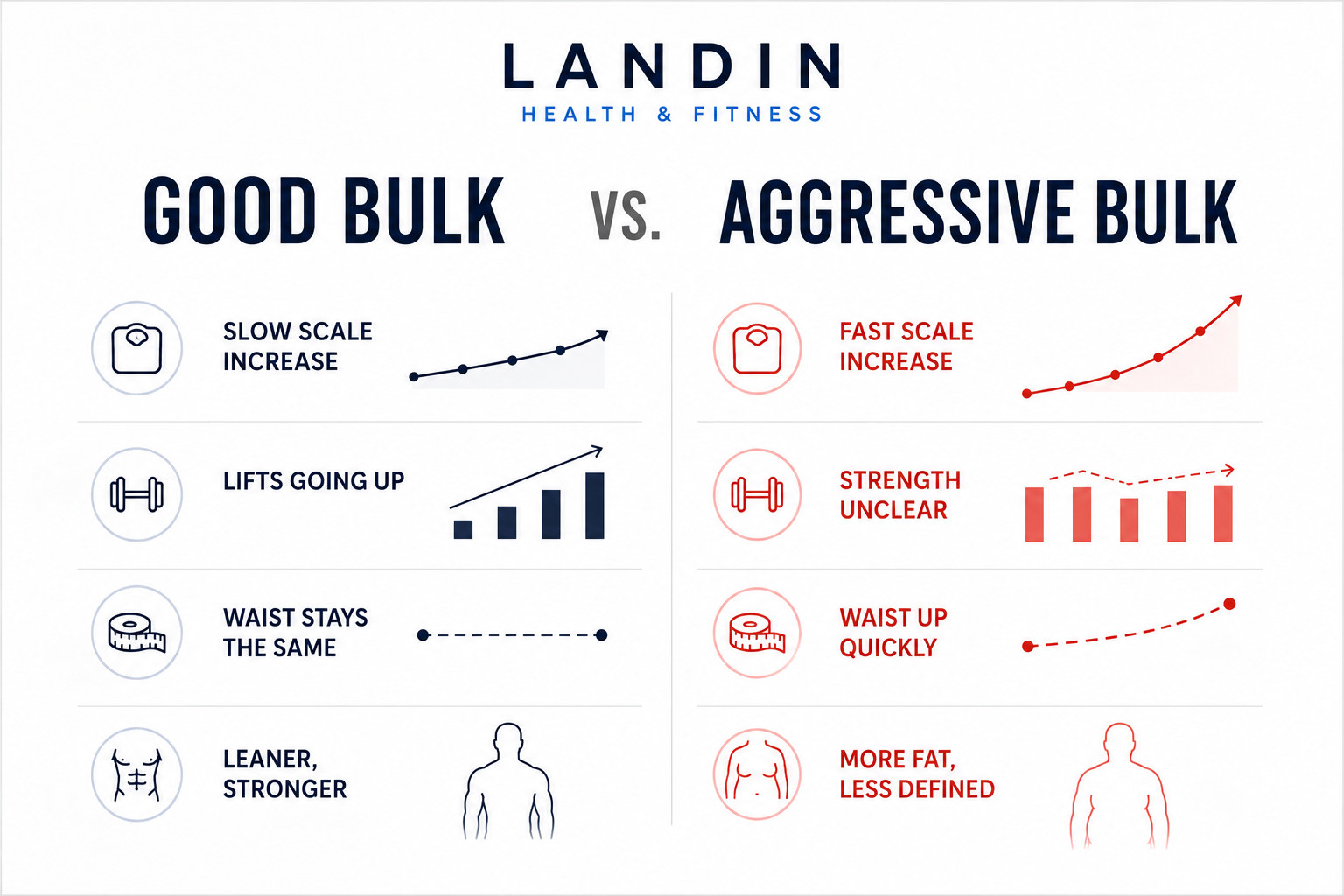
If your bodyweight is increasing slowly, your arms, legs or chest measurements are going up, your waist is not increasing too quickly, and your lifts are improving in the gym, that is a good sign your muscle-gain phase is working.
If your weight is going up quickly but your lifts are not improving and your waist measurement is climbing fast, you may just be gaining fat too quickly.
That does not mean the whole plan has failed.
It just means you may need to adjust your calories slightly and stop treating the word “bulk” as legal permission to eat like a raccoon at a wedding buffet.
[Insert hero image here: tape measure, gym logbook/app, dumbbells, bodyweight scale and progress photo setup]
Weight Gain Is Useful — But More Isn’t Always Better
If you are trying to build muscle, seeing your bodyweight go up can be a good sign.
But it needs context.
If your weight is increasing slowly, your lifts are improving, your measurements are moving in the right direction, and your waist is not climbing too quickly, that is a good sign your muscle-gain phase is working.
But faster weight gain does not automatically mean faster muscle gain.
Sometimes people see the scale going up and assume they are building loads of muscle because they are also getting stronger. But if the weight is going up very quickly, a lot of that gain is likely to be fat.
Yes, you may be lifting more. But part of that can come from having more bodyweight, better leverages, more food, more energy and simply being heavier overall.
That does not mean the bulk has failed.
It just means you probably do not need to gain weight as aggressively.
For most people, I think around 2lb of bodyweight per month is a solid target for a muscle-gain phase.
You could go slightly higher depending on your starting point, training age and body composition. For example, if someone is very underweight, new to training, or really struggles to gain weight, a faster rate of gain may make sense.
But for most people who are already a reasonable bodyweight, I would not want weight gain to be much faster than that for long periods.
The aim is not just to make the scale go up.
The aim is to build muscle, get stronger, and avoid gaining unnecessary fat that you then have to spend months dieting off later.
Because there is nothing more annoying than doing a “bulk” and then realising the main thing you successfully trained was your appetite.
Track Your Measurements
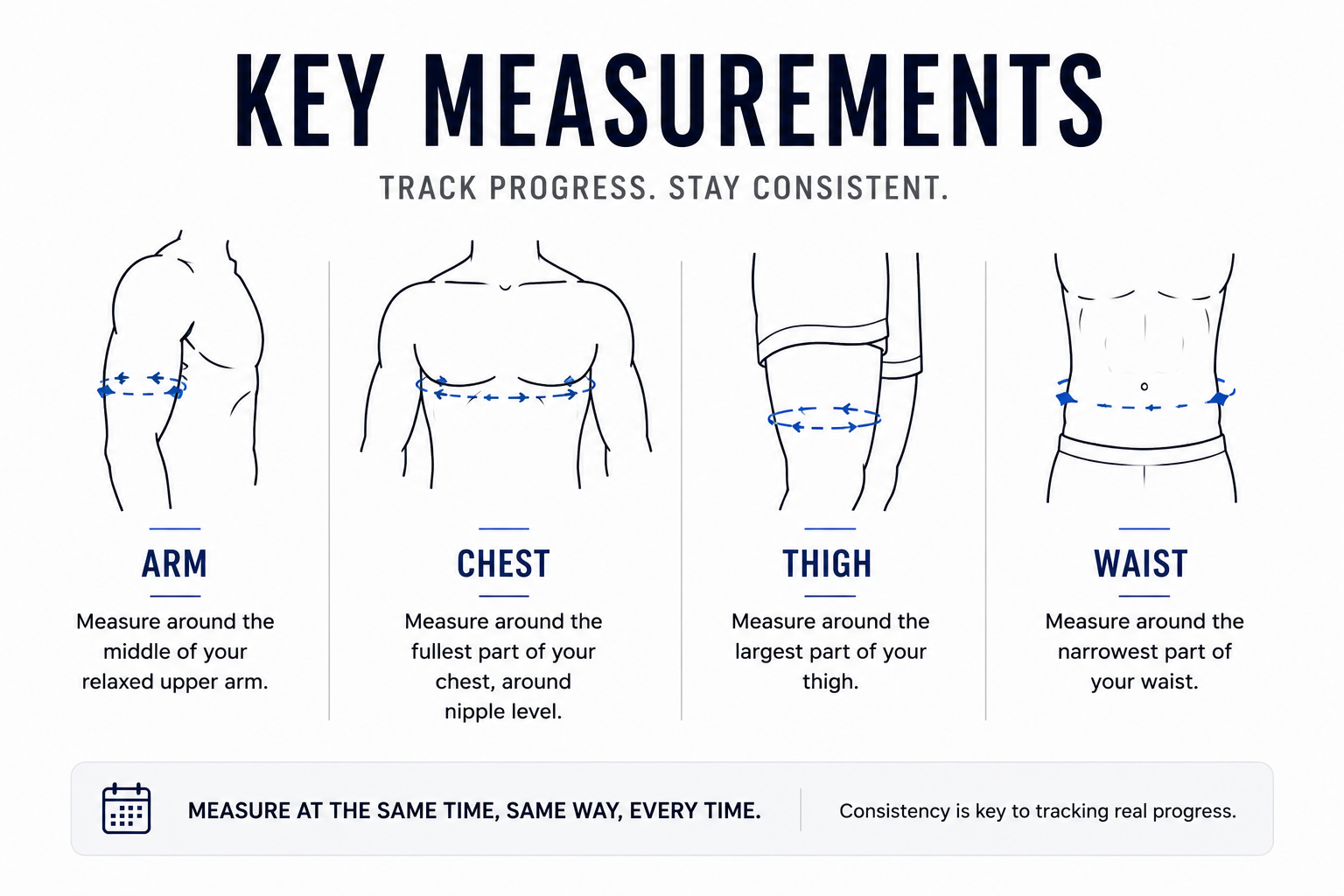
One of the simplest ways to see whether you are building muscle is to track your body measurements.
Useful places to measure include:
Arms
Chest
Legs
Waist circumference
Bodyweight
You do not need to measure everything every day, that would be mental. Every 4-6 weeks is regularly enough.
The goal is to look at the trend over time.
If your arms, legs and chest are gradually increasing, your weight is slowly moving up, and your gym performance is improving, that is a good sign.
But waist circumference is worth paying attention to as well.
A small increase during a muscle-gain phase is normal, especially if you are eating more food and holding more water. But if your waist is increasing quickly while your strength is not really improving, your calorie surplus may be too aggressive.
Why Waist Circumference Matters
Waist circumference is not just useful for tracking whether your bulk is getting a bit carried away.
It is also a useful general health marker.
A 2020 systematic review and meta-analysis published in the BMJ looked at central fatness and all-cause mortality. The researchers found that each 10cm increase in waist circumference was associated with a higher risk of all-cause mortality. They reported an 11% higher risk for each 10cm increase in waist circumference. And this is not because they gained weight overall. Their BMI was already factored in, so it is purely based on waist size increase.
Study link: Jayedi et al. 2020, BMJ — Central fatness and risk of all-cause mortality
That does not mean you need to panic every time your waist measurement changes.
Waist measurements can fluctuate because of food volume, water retention, salt intake, digestion and how you measure.
But over time, if your waist is climbing quickly, it is worth paying attention.
For muscle gain, the goal is not to keep your waist exactly the same forever.
The goal is to gain at a sensible rate, build strength, add muscle, and avoid gaining unnecessary body fat too quickly.
Use Progress Photos
Alongside measurements, progress photos can be useful.
But if you are focused on building muscle rather than losing weight, I would not take them too often.
Once per month is plenty, maybe even stretch it to 2 months if you have already been lifting for a while.
Muscle gain is slow, and taking photos every few days usually just leads to you analysing tiny changes that might be lighting, posture, pump, water retention or whether you stood slightly more like a confident human being.
Take photos in the same conditions each time:
Same lighting
Same time of day
Same poses
Same distance from the camera
Similar clothing
That way, the comparison is actually useful.
Progress photos are not there to judge every tiny fluctuation.
They are there to show changes over months.
Are Your Lifts Going Up?
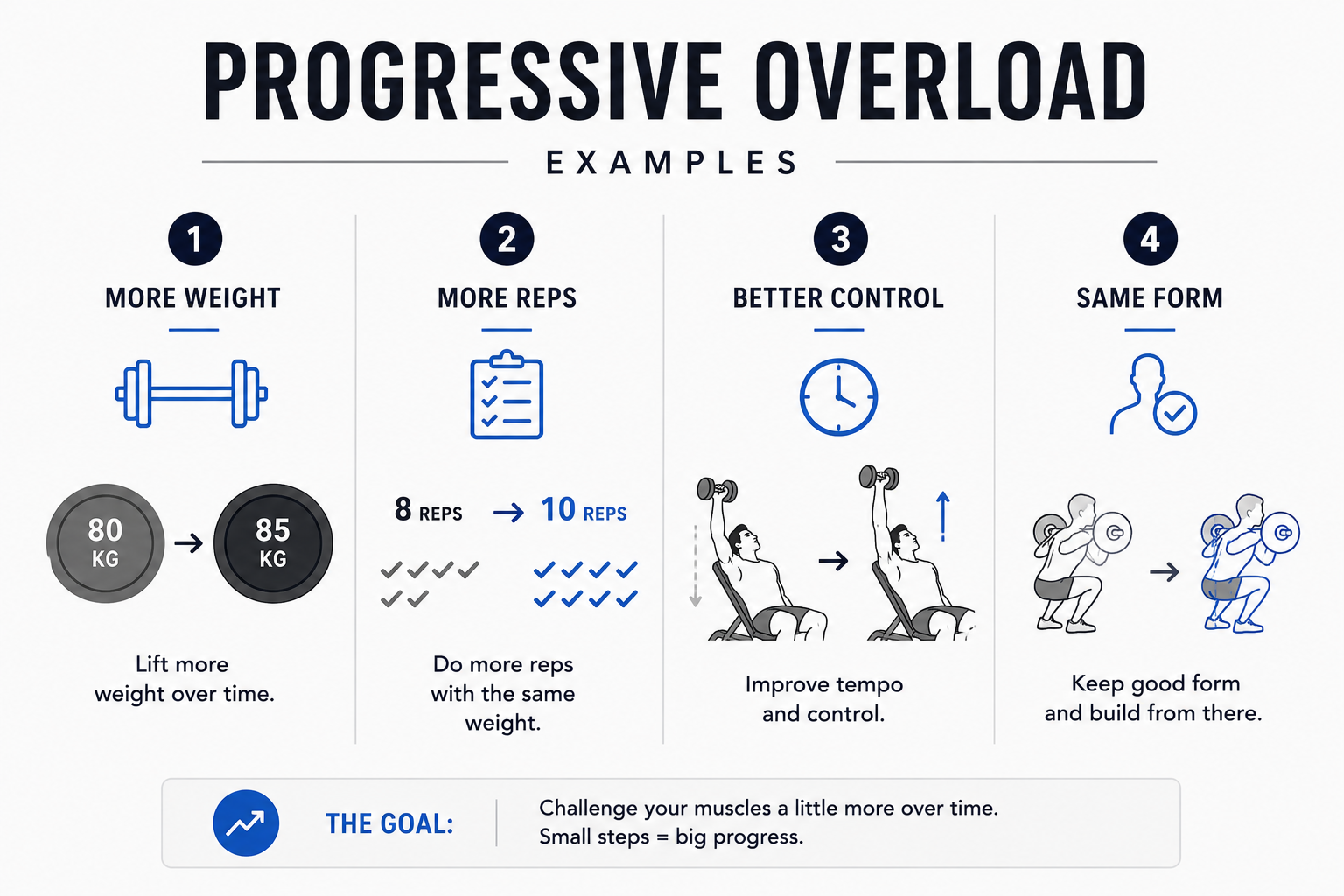
The other big sign that you are building muscle is strength progress. Getting stronger in your program is one of the most important things when it comes to building muscle.
If you are lifting more weight than previous weeks, doing more reps with the same weight, or controlling the same weight better, that is a good sign.
Especially if your form still looks solid.
For example, if your bench press goes from 60kg for 8 reps to 70kg for 8 reps over time, and the reps still look controlled, that is progress.
If your squat goes up but your depth disappears, that is slightly less convincing.
Weight on the bar matters.
But how you lift it matters too.
I have a whole article on different ways to implement progressive overload in case you wanted more info in this area.
Film Your Lifts
A good way to check this is to film your main lifts.
Film yourself in week 1, then film the same lift again 6–8 weeks later.
Compare:
Range of motion
Control
Technique
Rep speed
Setup
Whether the lift still looks like the same exercise
If the weight has gone up and your form still looks good, you are probably getting stronger.
If the weight has gone up but the form has completely fallen apart, you might just be finding creative ways to move heavier loads.
Useful? Maybe.
Building muscle efficiently? Less so.
Make Sure the Basics Are in Place
If you are consistent with training, eating enough calories, hitting your protein target and recovering well, your strength should improve over time.
That does not mean every single session will be better than the last.
You will still have bad sessions.
You will still have days where the weights feel weirdly heavy and you wonder if someone has secretly changed gravity.
But over weeks and months, the trend should be moving in the right direction.
A good muscle-gain phase usually looks like this:
Bodyweight slowly increasing
Measurements gradually improving
Waist not increasing too quickly
Lifts going up
Form staying consistent
Recovery feeling decent
That is what you are looking for.
Not perfection.
Just a clear trend that says: “Yes, this is working.”
What If Your Weight Is Going Up But Your Lifts Aren’t?
This is where it is worth being honest.
If your bodyweight is increasing but your lifts are not improving, your measurements are not changing in the places you want, and your waist is increasing quickly, you may not be in a great muscle-gain phase.
You might just be gaining weight.
That does not mean you need to panic or slash calories overnight.
But it probably means you should review the basics:
Are you training hard enough?
Are you following a structured programme?
Are you progressing your lifts over time?
Are you eating enough protein?
Are you sleeping enough?
Is your calorie surplus too aggressive?
A small calorie surplus can help muscle gain.
A massive surplus does not automatically force your body to build extra muscle.
Sadly, your body does not work like a loyalty card where every extra pizza slice earns you one free bicep.
Simple Tracking Plan
You do not need to track everything obsessively.
A simple plan could look like this:
Weigh yourself a few times per week and look at the weekly average
Measure arms, chest, legs and waist every 2–4 weeks
Take progress photos once per month
Track your main lifts every session
Film key lifts every 6–8 weeks to check form
That is enough for most people.
You are not trying to become a full-time data analyst with a gym membership.
You are just trying to gather enough information to know whether the plan is working.
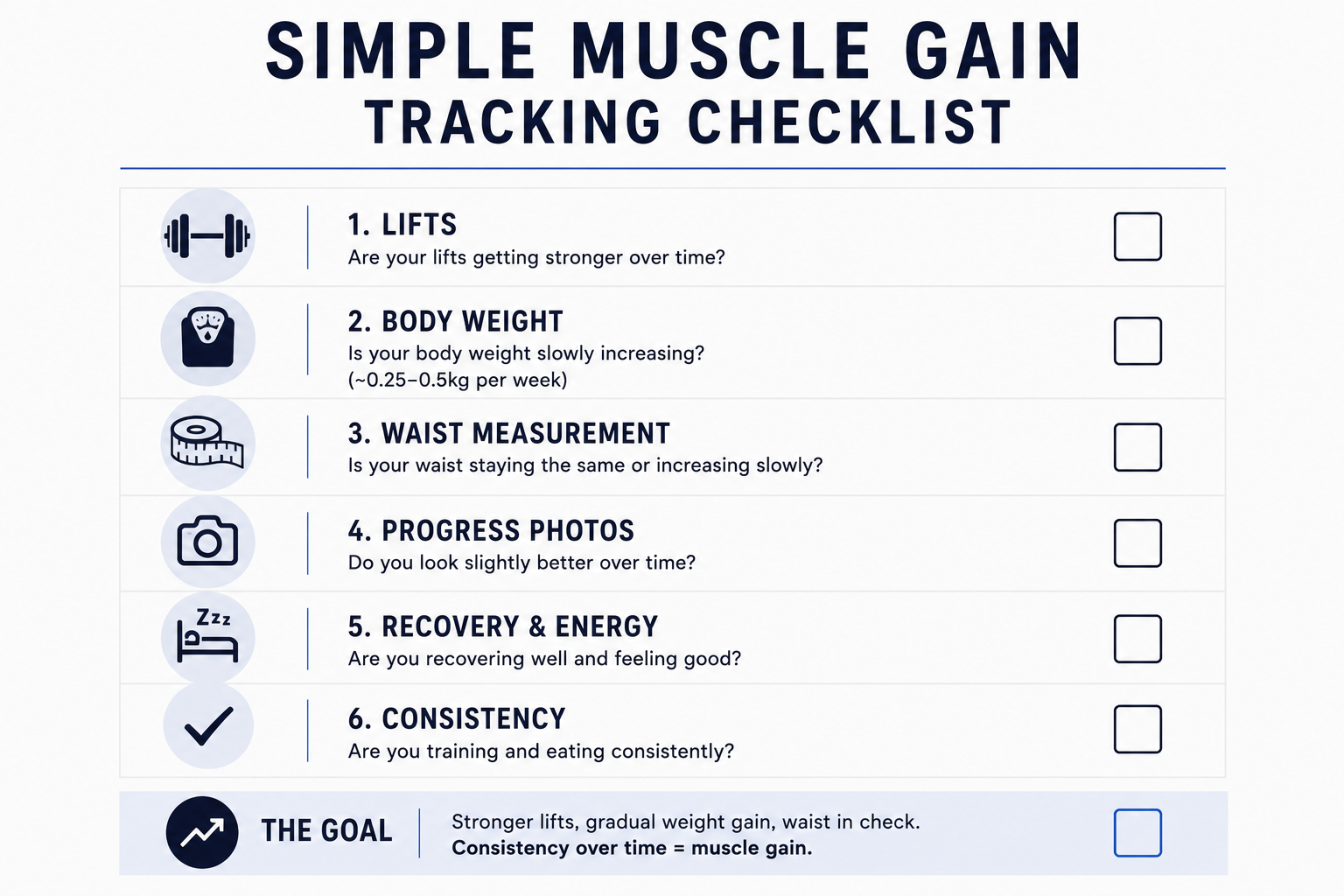
The Big Takeaway
The two biggest signs that you are building muscle are:
Your measurements are improving
Your lifts are going up without your form falling apart
Scale weight going up can be useful, but it needs to be controlled.
For most people, gaining around 2lb per month is a sensible place to start and I would suggest not exceeding 2lbs.
If your weight is slowly increasing, your lifts are improving, your measurements are moving in the right direction, and your waist is not increasing too quickly, you are probably on the right track.
If your weight is flying up, your waist is jumping up, and your lifts are not really improving, you may need to pull things back slightly.
Building muscle takes time.
Track the right things.
Look at the trend.
Keep your form honest.
And remember: the goal is not just to get heavier.
The goal is to get stronger, build muscle, and avoid turning your bulk into a long and unnecessary cutting phase later.
