
How Much Protein Do You Actually Need to Build Muscle?
Protein is important for building muscle, but people love making it more complicated than it needs to be.
If you’ve spent any time online, you’ve probably seen people arguing over exact protein timing, protein sources, shakes, amino acids, anabolic windows, and whether you need to eat chicken breast with the emotional commitment of a professional bodybuilder.
For most people, it does not need to be that deep.
If you train consistently, eat enough protein, recover well, and gradually get stronger over time, you’re already doing the important stuff.
So, how much protein do you actually need to build muscle?
Let’s keep it simple.
The Simple Answer
A good target for building muscle is:
1.6–2.2g of protein per kg (0.8–1g of protein per lb) of bodyweight per day
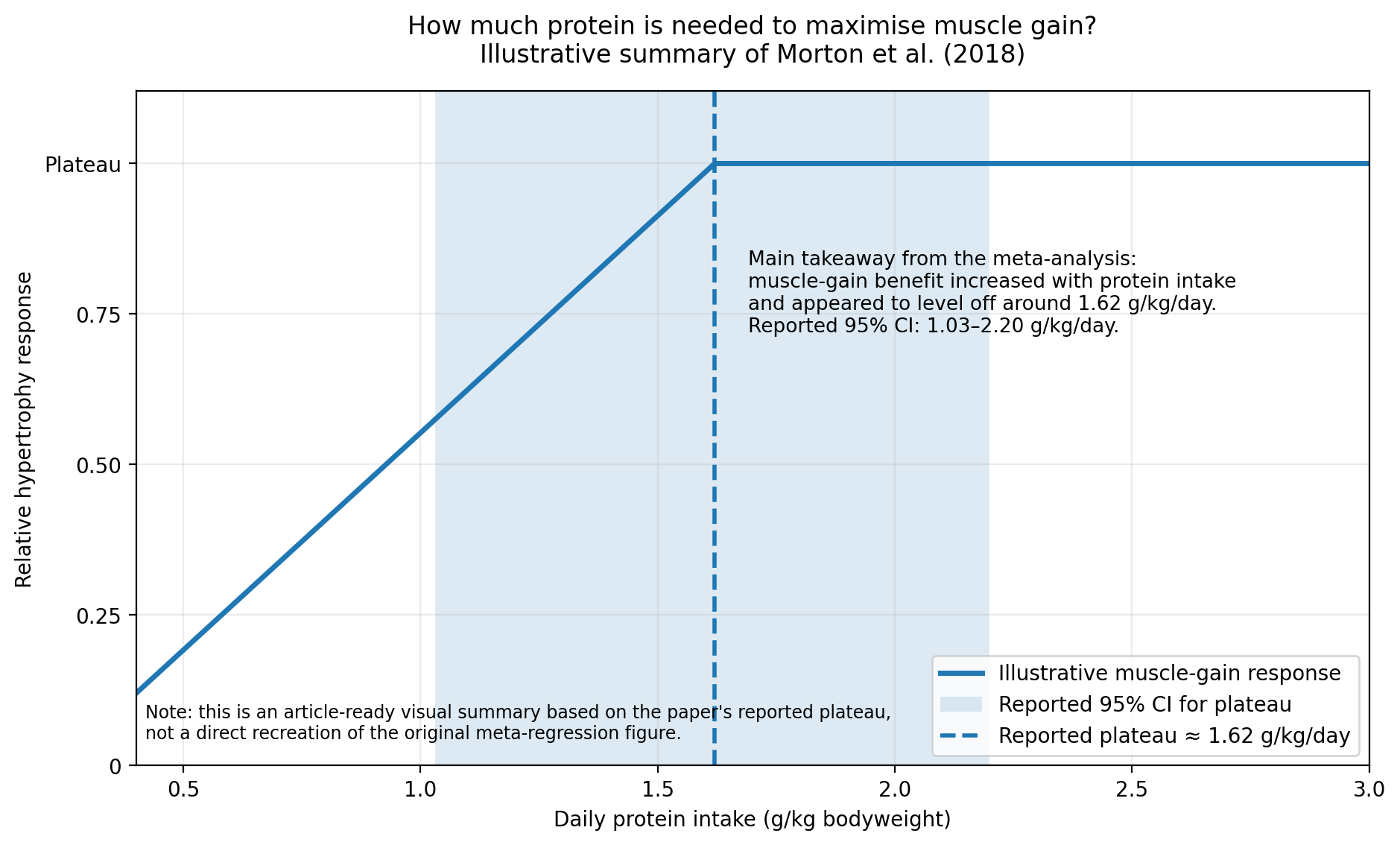
A systematic review, meta-analysis and meta-regression of the effect of protein supplementation on resistance training-induced gains in muscle mass and strength in healthy adults
The meta-analysis (a report on a range of studies) above found no evidence of any increased benefit from a higher protein intake than 1.6g per kg of bodyweight. However, this does not mean there is definitely no benefit for everyone. More research is still needed.
You’ll often see people round this to 0.8–1g per lb, which is a simple and practical target.
You don’t need to hit the exact number perfectly every single day. If you’re roughly in that range most of the time, you’re doing fine.
Here’s what that looks like:
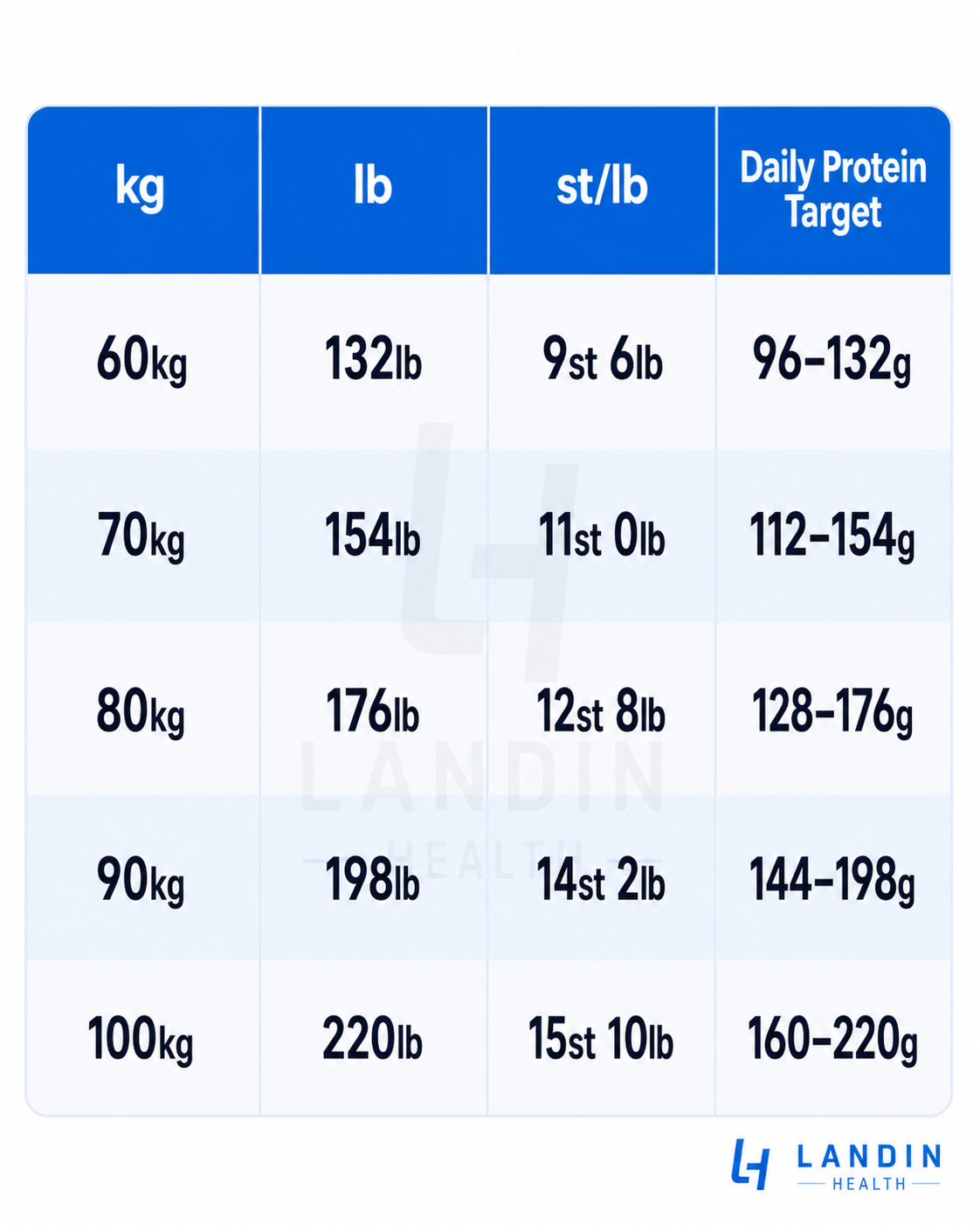
For most people, I’d start somewhere around the middle of the given range.
You don’t need to go straight to the highest number unless you prefer eating more protein or you find it helps keep you full.
This is correct for 99% of the population. For people who have a lot of muscle mass and therefore more of their weight is taken up by muscle, they would require a slightly higher protein intake.
Why Protein Helps Build Muscle
When you lift weights, you create stress and small amounts of damage in the muscle.
Protein helps your body repair and rebuild that muscle tissue.
Over time, with enough training, food, and recovery, this is how you build muscle.
Protein helps with:
Muscle repair
Muscle growth
Recovery from training
Keeping you fuller
Holding onto muscle when dieting
That does not mean protein magically builds muscle by itself.
You still need to train properly.
Drinking protein shakes while doing absolutely nothing will not turn you into a Greek statue. It will just make you a person who drinks protein shakes.
Do You Need More Protein When Losing Weight?
When you’re losing weight, your goal is usually to reduce calories.
But you don’t really want to reduce your protein.
You’re better off keeping protein high and reducing calories mainly from carbs and fats.
Protein is especially useful when losing weight because it is very satiating, which means it helps keep you full.
So if you’re dieting, loading your plate with a good protein source is a smart move.
See the chart below for foods that are great protein sources.
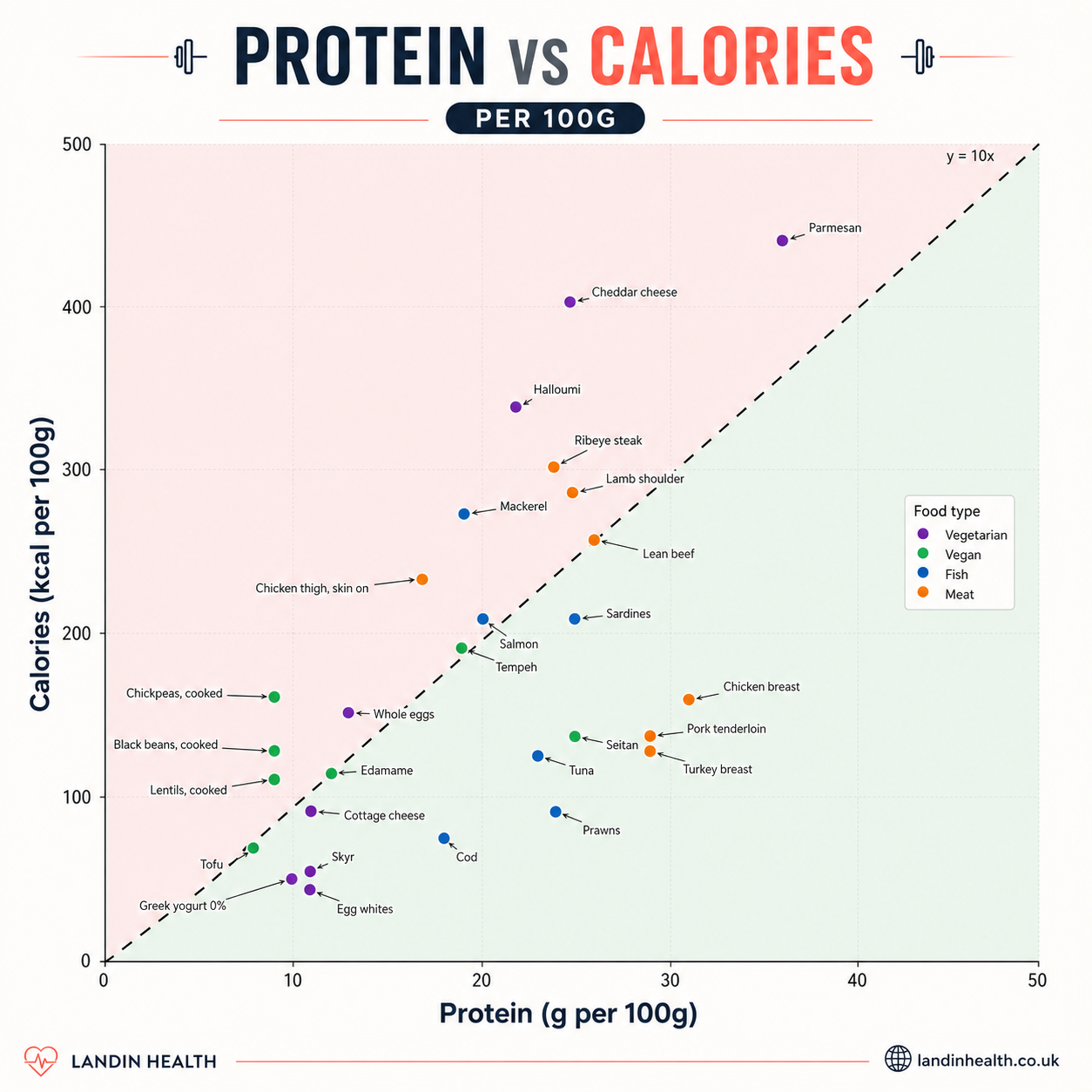
If your goal is simply just maximise protein intake, just look at any food source the to right side of the graph. If you want to maximise your protein intake whilst either dieting, choose the foods on the green side of the dotted line, as they are less calorific. It’s also colour coded for vegetarian, vegan, fish and meat protein sources.
When you’re in a calorie deficit, your body is losing weight. Ideally, you want most of that weight to come from fat, not muscle.
Keeping protein high, lifting weights, and not dieting like an absolute maniac gives you a much better chance of holding onto your muscle while you lose fat.
Which is ideal, because losing muscle after spending months building it would be deeply rude.
Does Protein Timing Matter?
No, not really.
At least not as much as people make out.
If you’re reading this, you’re probably not trying to be the next Mr or Mrs Olympia. You probably just want to build some muscle, look better, get stronger, and not have to treat your food like a full-time job.
The most important thing is your total protein intake across the day.
If you hit your daily target, you’re doing the main thing right.
A simple approach is to spread your protein across 3–4 meals per day.
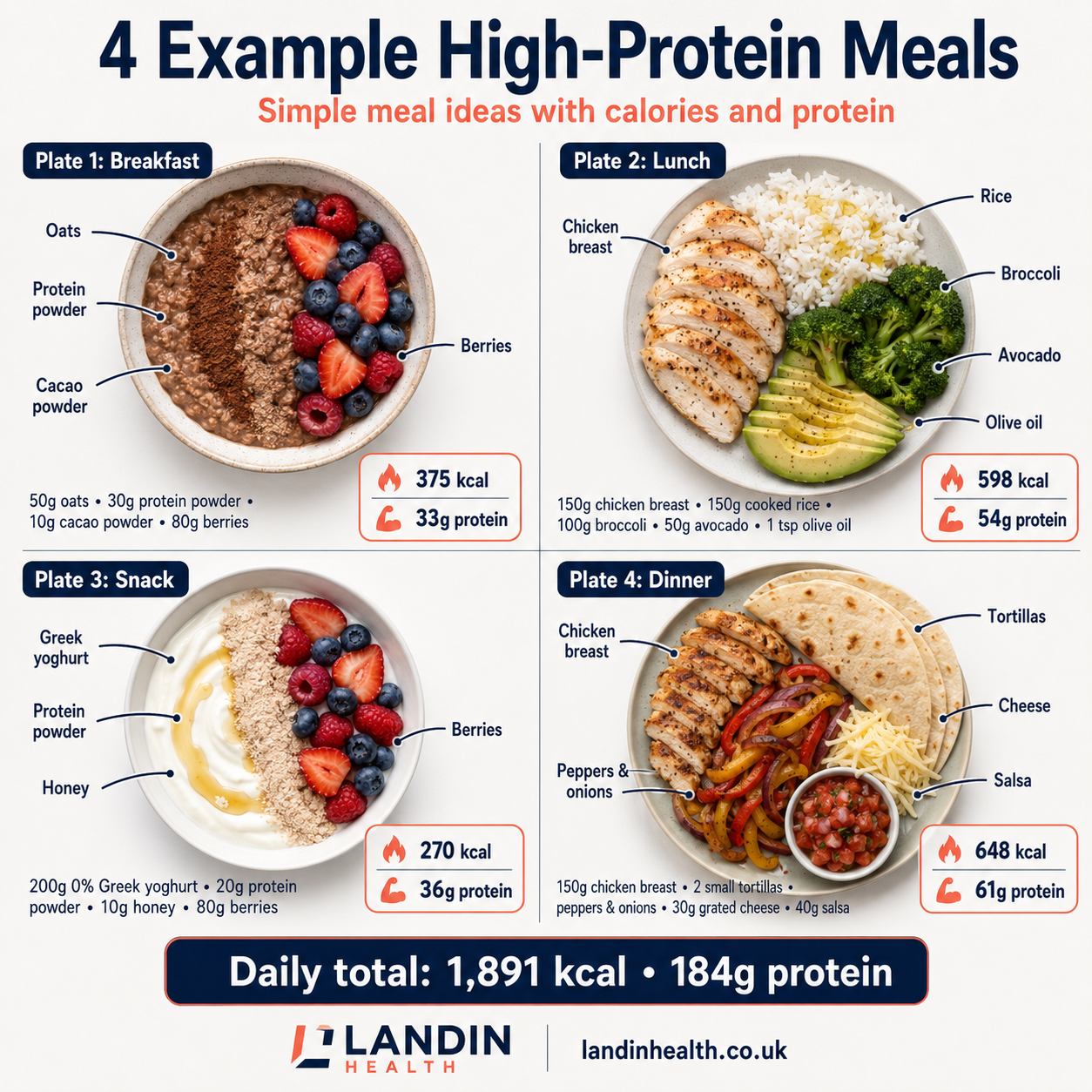
For example:
Breakfast: 30g protein
Lunch: 40g protein
Dinner: 40g protein
Snack or shake: 25g protein
But if you prefer intermittent fasting and only eat two meals, that can work too.
You just need to make sure those meals contain enough protein.
Don’t obsess over the perfect timing. Just hit your minimum daily amount consistently.
Do You Need Protein Powder?
No, you don’t need protein powder to build muscle. But it can definitely help.
Protein powder is not magic. It’s not steroids. It’s not a shortcut.
It’s just a convenient way to get more protein in.
If you struggle to hit your protein target, I’d recommend using it.
I barely ever have a protein shake these days, but I daily use protein powder mixed in with other foods.
I always use this protein powder. My favourite at the moment is the white chocolate flavour to add to my ninja creami ice cream, honestly unreal.
One scoop of whey protein usually gives you around 20–25g of protein, which can make a big difference.
It’s especially useful if you add it to foods you’re already eating.
For example:
Add half a scoop or a full scoop to oats
Mix it into Greek yoghurt
Blend it into a smoothie
Have it as a quick shake after training
Use it when you’re busy and don’t have time for a proper meal
If you already hit your protein target through food, you don’t need it.
But if you’re constantly falling short, protein powder is an easy fix.
Slightly less exciting than a steak, but much easier to put in a shaker.
Simple Ways to Hit Your Protein Target
If you struggle to eat enough protein, don’t leave it all until the evening.
That’s where people go wrong.
They eat barely any protein at breakfast, a small amount at lunch, then realise at 8pm they need 90g more protein and start panic-eating chicken like they’re in a survival documentary.
Instead, spread it out.
Simple ways to hit your protein target:
Build each meal around a protein source
Add Greek yoghurt or skyr to breakfast
Use lean meat, fish, tofu, or eggs as your meal base
Add protein powder to oats or yoghurt
Choose higher-protein snacks
Keep easy protein options in the house
Don’t wait until dinner to start thinking about protein
Common Protein Mistakes
Here are a few mistakes people make with protein.
1. Thinking more protein always means more muscle
Protein helps build muscle, but more is not always better.
Once you’re already eating enough, adding loads more protein won’t magically speed things up.
Training, calories, sleep, and consistency still matter.
Annoying, I know.
2. Relying only on protein shakes
Protein shakes are useful, but they shouldn’t be your whole diet.
Get most of your protein from normal foods, then use shakes if they help you fill the gaps.
3. Eating enough protein one day, then barely any the next
Consistency matters.
You don’t need to be perfect, but you do need to be roughly on target most days.
4. Forgetting calories still matter
If you want to build muscle, you probably need enough overall food.
If you want to lose fat, you need a calorie deficit.
Protein is important, but it doesn’t override basic energy balance.
Very inconvenient of biology, but there we are.
5. Ignoring training quality
Protein supports muscle growth.
It does not replace training.
If your workouts are random, inconsistent, or too easy, protein alone won’t save you.
You need to give your body a reason to build muscle.
Final Thoughts
Protein is important, but you don’t need to overcomplicate it.
For most people trying to build muscle, a good target is:
1.6–2.2g of protein per kg of bodyweight per day
Or roughly:
0.7–1g per lb of bodyweight per day
If you’re dieting, keep protein high and reduce calories mainly from carbs and fats.
Protein helps keep you full, supports recovery, and helps protect the muscle you’ve built.
Protein timing does not need to be perfect. Your daily intake matters most.
Spread it across a few meals if you can, use protein powder if it helps, and focus on being consistent.
Get your protein roughly right, train hard, recover properly, and you’ll be doing the important stuff.
No need to make it weird.
