

We’ve all had those days where the workout window suddenly disappears.
You wake up late. Traffic is worse than usual. A meeting overruns. Work runs late. Your lunch break gets swallowed by someone saying, “This should only take five minutes,” which, as we all know, is corporate code for “there goes your afternoon.”
Before you know it, the 60-minute workout you had planned has turned into 30 minutes. Or 25. Or maybe even less.
And this is where a lot of people just sack it off completely.
The thinking is usually:
“My normal workout takes an hour. I’ve only got half that. What’s the point?”
But that’s the wrong way to look at it.
A shorter workout is still worth doing if you structure it properly. You might not get the exact session you planned, but you can still get a very good workout in, keep momentum, and avoid turning one busy day into a week of missed sessions.
This article is for those days when time is tight, but you still want to train.
Not perfectly. Not with a 12-exercise bodybuilding masterpiece. Just effectively.
Need something you can just follow? Download my free Fast Workout Plan with simple, effective workouts designed for days when time is tight. The workouts should take no longer than 35 minutes.
1. Use Supersets to Save Time
One of the easiest ways to shorten a workout is to use supersets.
A superset is when you perform two exercises back-to-back, usually with little to no rest between them.
Instead of doing one exercise, resting, doing another set, resting again, and then eventually moving onto the next exercise, you pair two movements together.
This can save a lot of time without ruining the quality of your workout, especially when you choose the right exercises.
The best option is usually an antagonist superset, which means pairing opposing muscle groups.
For example:
Biceps and triceps
Chest and back
Quads and hamstrings
Chest fly and rear delt fly
Because the muscles are doing different jobs, one muscle can work while the other gets a bit of rest.
So instead of doing dumbbell curls, finishing all your sets, then walking over to a cable machine for triceps, you could do:
Cable bicep curls
straight into
Cable triceps pushdowns
That way, you’re training both muscles in less time, without one exercise completely ruining the other.
Very efficient. Slightly annoying that it works so well.
2. Good Superset Examples
Here are some practical supersets that work well when you’re short on time.
Biceps and Triceps
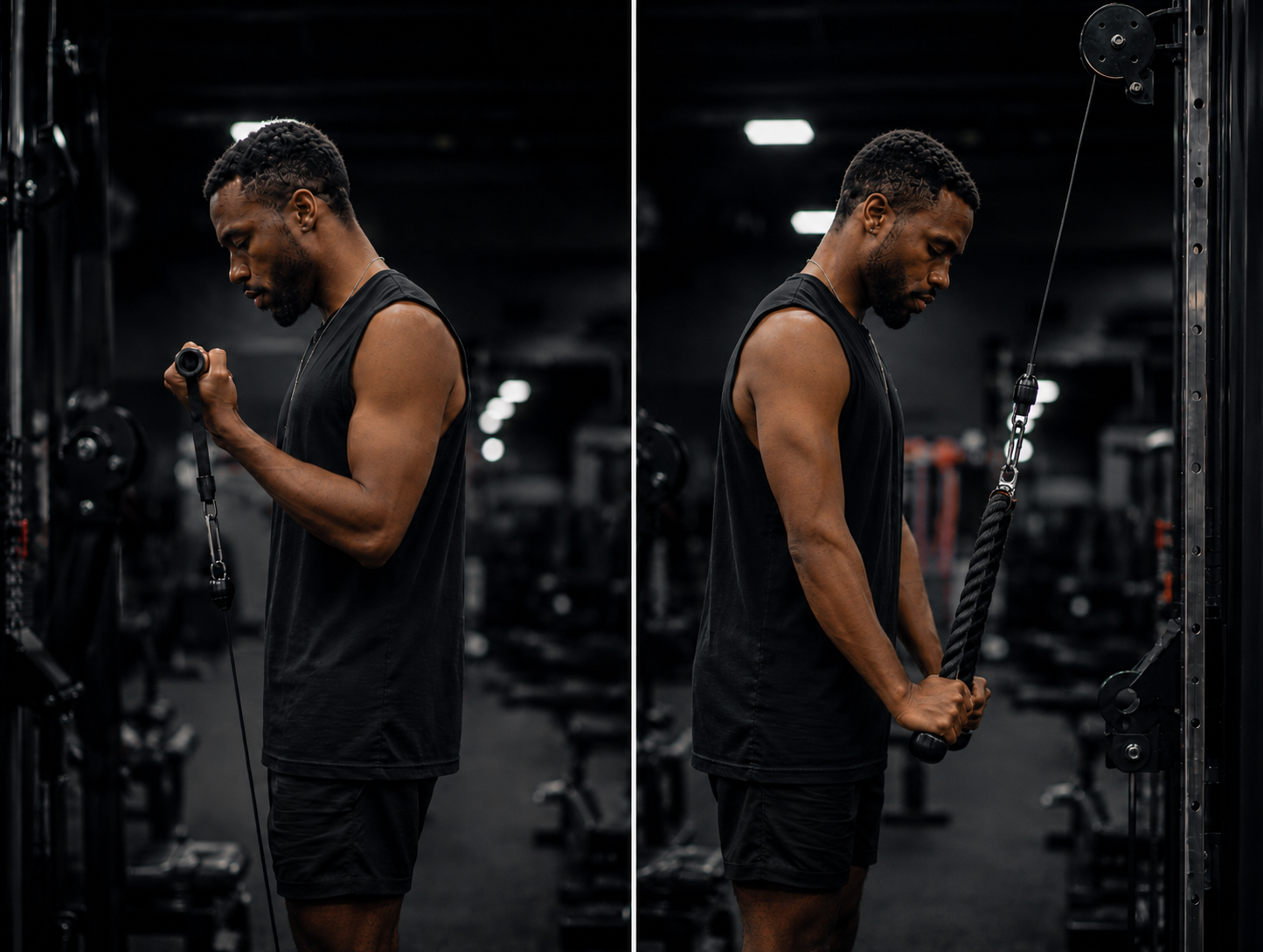
Cable bicep curl
superset with
Cable triceps pushdown
This is a great one because you can usually do both on the same cable station. That means less walking around, less waiting for equipment, and less pretending you’re not staring at someone who has been on the machine for 18 minutes.
Chest and Back
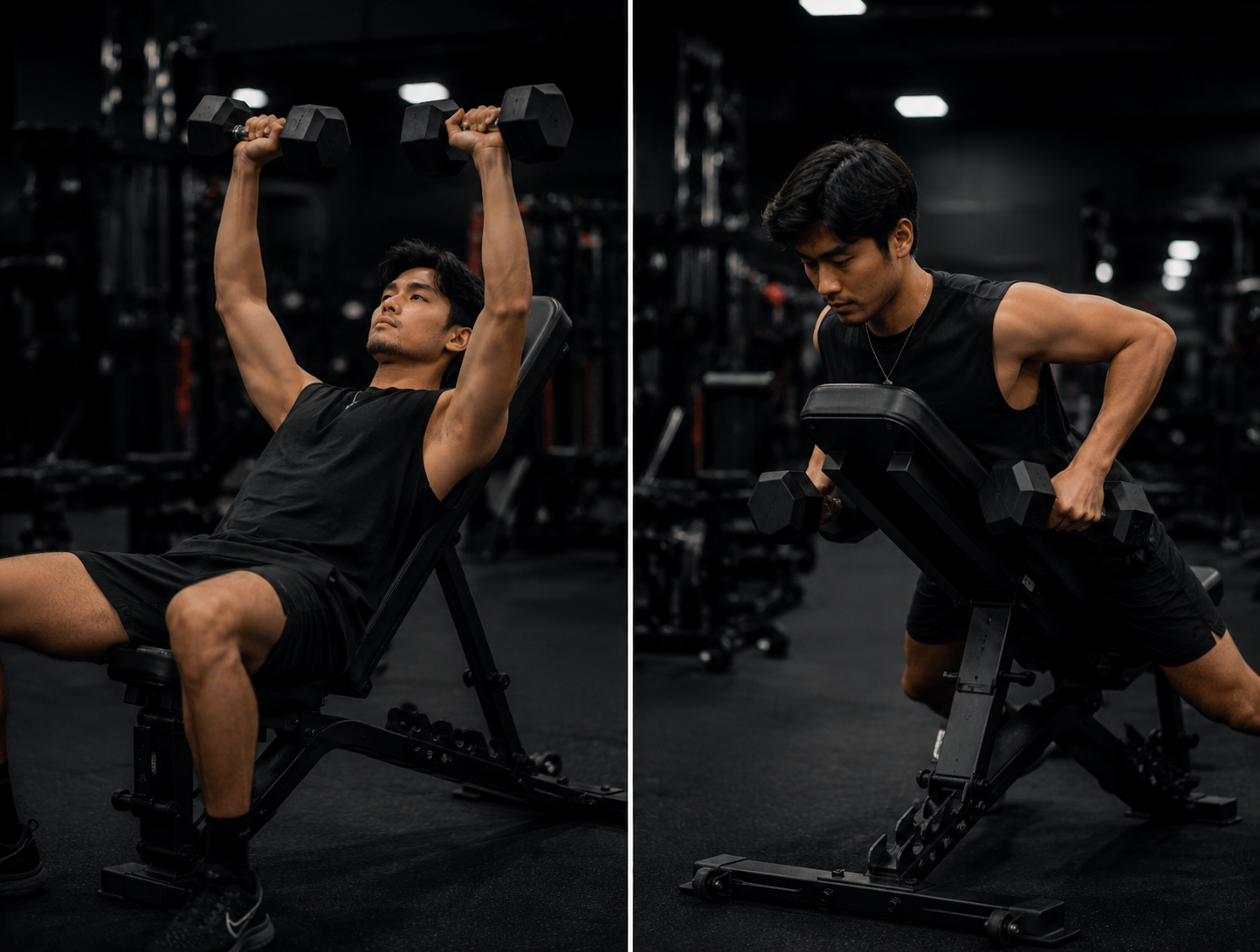
Incline dumbbell press
superset with
Incline dumbbell chest supported row
This works well because you’re pairing a pressing movement with a pulling movement.
Your chest, shoulders, and triceps work during the press, then your back and biceps work during the row. This means you can keep moving without completely destroying performance on either exercise.
Pec Deck and Rear Delt Fly
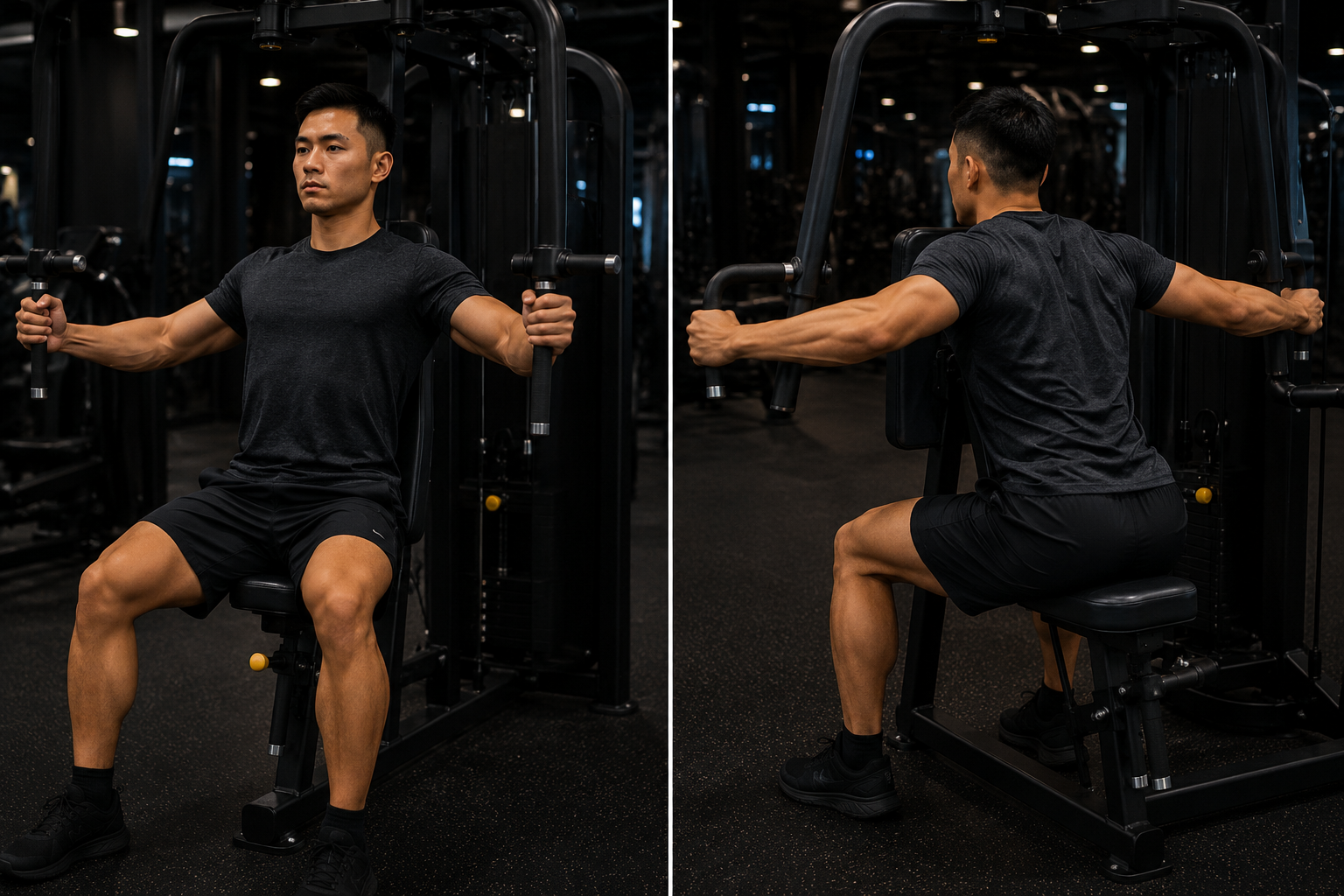
If your gym has a pec deck machine that also allows rear delt flys, this is perfect.
You can do:
Pec deck chest fly
superset with
Rear delt fly
Same machine. Opposing muscles. Minimal faffing.
That is basically the holy trinity of a time-saving gym session.
Legs
Legs are a bit trickier because big lower-body movements are more tiring, so you need to be sensible.
But you could do:
Leg press
superset with
Calf raises
This works because calf raises won’t usually interfere too much with your leg press performance, but they let you get extra work done while saving time.
Other leg options:
Leg extension
superset with
Leg curl
What you probably don’t want to do is superset heavy squats with heavy Romanian deadlifts unless you enjoy seeing sounds and questioning your life choices.
3. Train Opposing Muscle Groups, Even If You Don’t Superset
You don’t always need to do full supersets to save time.
Another simple strategy is to arrange your workout so you move between opposing muscle groups.
For example, instead of doing a typical chest and triceps workout where everything uses similar muscles, you could train chest and back together.
Let’s say you start with bench press.
Normally, after your last set of bench press, you might rest for two or three minutes before moving on to your next chest exercise. But if your next exercise is a lat pulldown, you can often start much sooner because your back is fresh.
So instead of sitting around waiting for your chest, shoulders, and triceps to recover, you move straight into a pulling movement. That might only save 90 seconds at a time, but across a whole workout, it adds up.
If you do that between several exercises, you can easily knock 5–7 minutes off your session.
Add in a couple of smart supersets, and suddenly your normal 50–60 minute workout can become a solid 30–40 minute session.
4. Do Fewer Exercises, But More Useful Sets
Another easy way to shorten your workout is to stop doing loads of different exercises for the same muscle group.
This is especially common on back day.
Someone might do:
Pull-ups
Seated row
Lat pulldown
Dumbbell row
Another row machine
Face pulls
Two or three biceps exercises
That can be a good workout if you have plenty of time.
But if you’ve only got 30 minutes, it’s too much faffing.
You’ll spend half the session moving between machines, adjusting seats, waiting for equipment, finding attachments, and wondering why someone is doing seated rows with the entire stack and the range of motion of a doorbell.
Instead, simplify it.
For a back workout, you mainly want:
One vertical pull
One horizontal pull
That’s it.
A vertical pull could be:
Pull-ups
Assisted pull-ups
Lat pulldown
A horizontal pull could be:
Seated cable row
Chest-supported row
Dumbbell row
Machine row
So instead of doing five different back exercises, you could do:
Lat Pulldown — 4–5 sets
Seated Row — 4–5 sets
Preacher Curl — 3–4 sets
That gives you 8–10 solid sets for your back, plus direct biceps work, without needing to tour every machine in the building like you’re viewing a rental property.
And honestly, for most people, that is more than enough for a good short workout.
If you train hard and take those sets seriously, you do not need endless exercise variety.
You need enough good-quality work to stimulate the muscle, then you need to go home.
Wild concept.
5. Choose Exercises That Are Quick to Set Up
When you’re short on time, exercise choice matters.
Some exercises take longer to set up than others.
That doesn’t mean they’re bad exercises. It just means they might not be the best option when you’ve got 25–30 minutes and the gym is busy.
Take legs, for example.
A normal leg workout might include:
Barbell squats
Romanian deadlifts
Leg press
Leg extension
Leg curl
Calf raises
That’s fine if you’ve got time.
But if you’re rushing, barbell squats can take longer to set up, warm up, and get into.
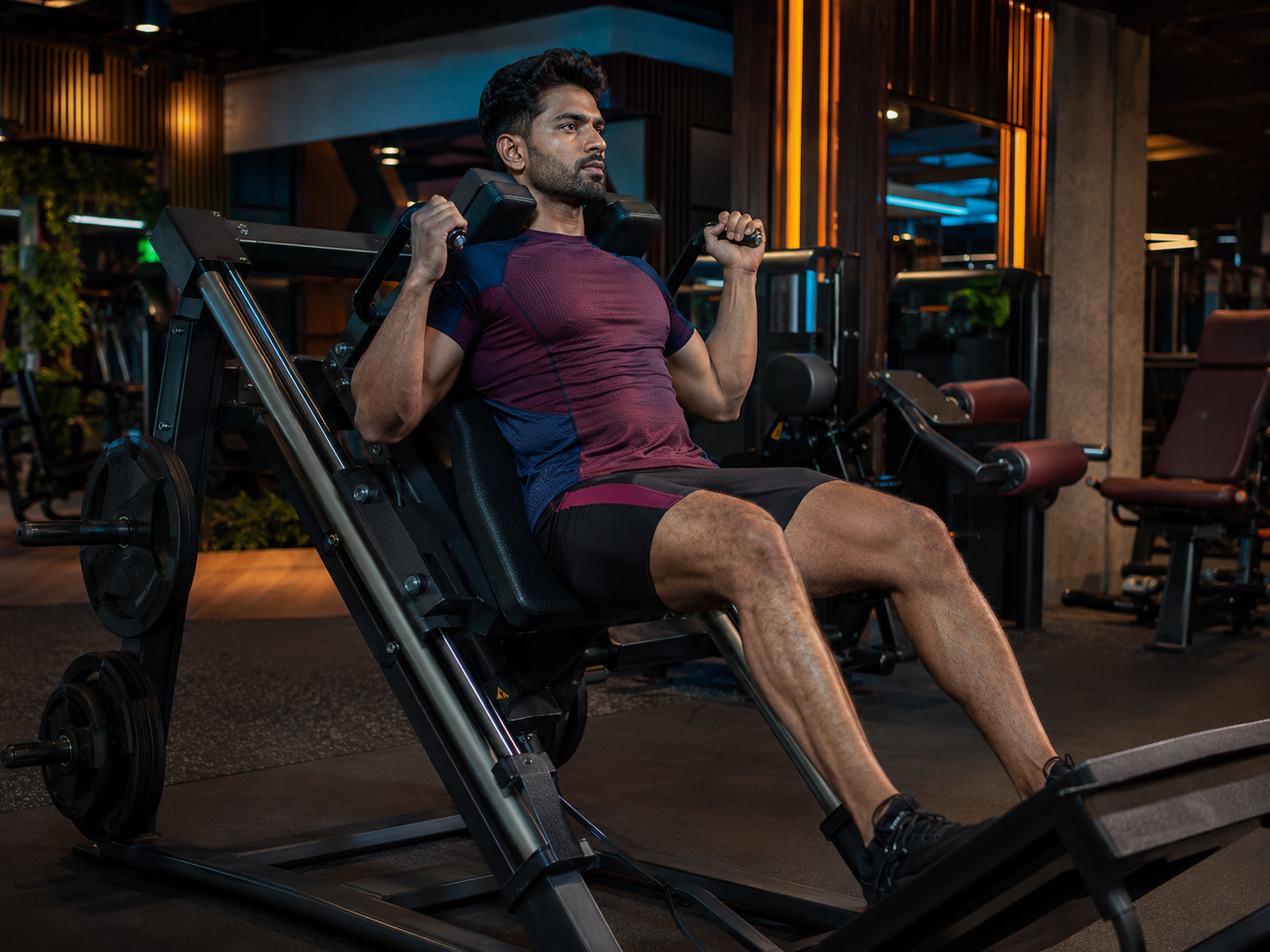
Leg press can also be a pain because loading and unloading plates takes time, especially if you’re reasonably strong or someone before you has left it looking like they were trying to move a small car.
So for a short leg workout, I’d make it simpler.
For example:
Hack Squat — 3–4 sets
Romanian Deadlift — 3–4 sets
Leg Extension — 3 sets
superset with
Leg Curl — 3 sets
That’s a solid leg session.
You’ve got:
A main quad-focused lift
A hip hinge/hamstring movement
Extra quad work
Extra hamstring work
And you can get that done much faster than trying to perform every leg exercise known to mankind.
The goal is not to create the most complete leg day ever written.
The goal is to get a useful workout done in the time you actually have. Getting a less than optimal workout done is far better than sacking off a optimal workout.
6. Prioritise the Exercises That Matter Most
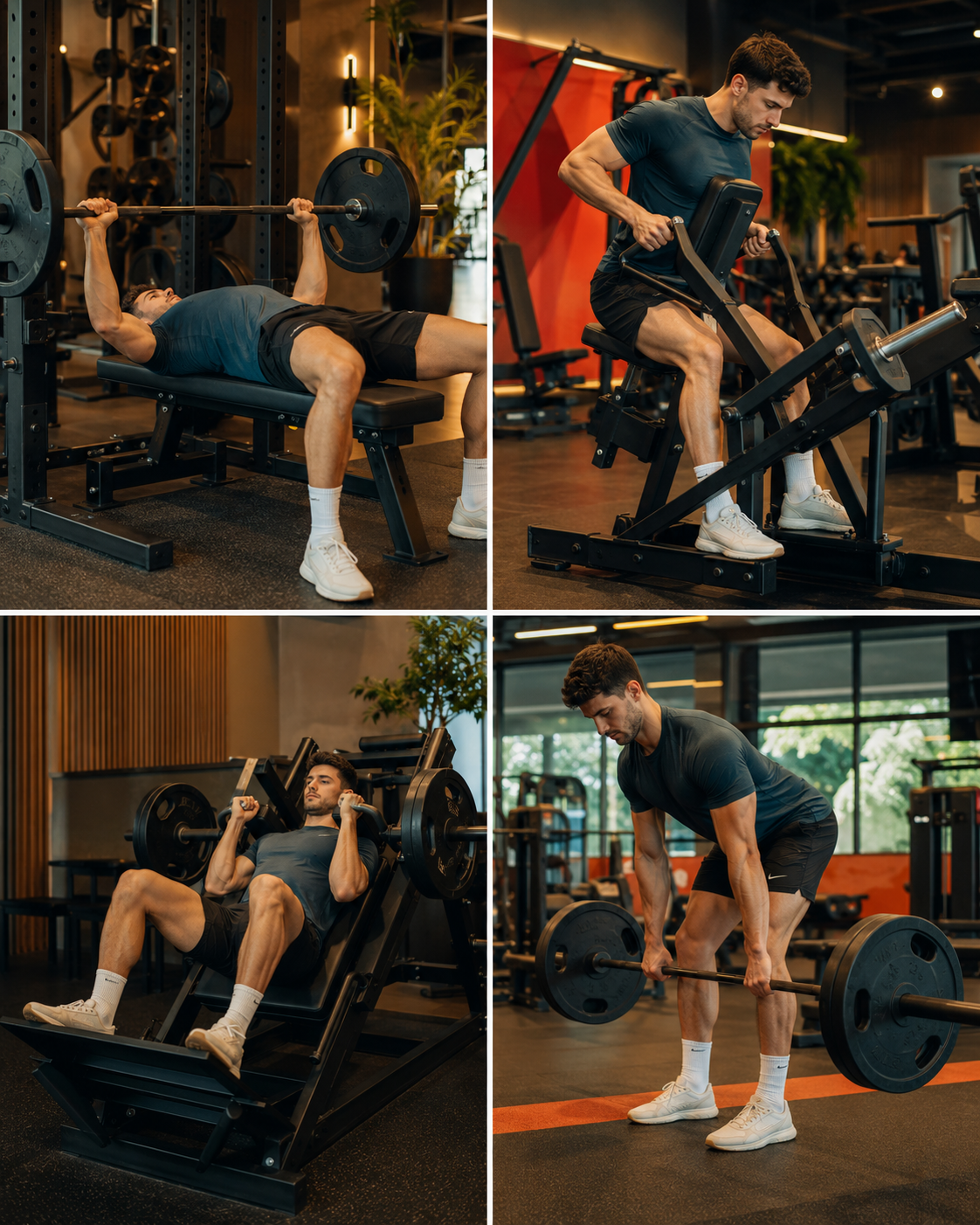
When you’re short on time, you cannot train everything.
This is where people go wrong.
They try to cram their normal full workout into half the time, rush everything, cut rest periods too aggressively, and end up doing a frantic little gym tapas session.
A bit of chest.
A bit of arms.
A random set of lateral raises.
One half-hearted leg curl.
Chaos.
Instead, pick the exercises that matter most and do them properly.
A good short workout might only need 3–5 exercises.
For example, if you’re doing upper body, you might choose:
One press
One pull
One shoulder or chest accessory
One arm superset
That is enough to have a useful session.
If you’re doing lower body, you might choose:
One squat or leg press movement
One hip hinge or hamstring movement
One accessory
Calves or abs if there’s time
The goal is not to do everything.
The goal is to do the most important things well.
7. Cut the Fluff, Not the Hard Work
A short workout does not mean an easy workout.
It means you remove the things that waste time.
That might include:
Too many warm-up sets
Exercises that don’t really fit the goal
Long rests on easy isolation movements
Random finishers
Spending five minutes choosing the perfect song
Scrolling between sets like you’re conducting urgent government business
You still need to train hard.
You just need to be more selective.
If you only have 30 minutes, your workout needs to earn its place in the day. Every exercise should have a reason for being there.
No passengers. No filler. No “I saw this on Instagram so I’ll do it badly for two sets.”
Example 30-Minute Upper Body Workout
Here’s a simple example.
Superset 1
Incline Dumbbell Press — 3 sets of 8–12
superset with
Incline Dumbbell Chest Supported Row — 3 sets of 8–12 each side
Superset 2
Pec Deck Fly — 3 sets of 8-12
superset with
Rear Delt Fly — 3 sets of 8-12
Superset 3
Cable Bicep Curl — 2–3 sets of 8-12
superset with
Cable Triceps Pushdown — 2–3 sets of 8-12
Then finish with some lateral raises - 2-3 sets of 8-12
That gives you chest, back, rear delts, biceps, and triceps in a pretty short amount of time.
Not bad for a session you nearly skipped because you “only had 30 minutes.”
Example 30-Minute Back Workout
If you want a short back and biceps session, keep it simple.
You do not need six back exercises and three different curls.
Try this:
Lat Pulldown or Pull-Up — 4–5 sets of 6–12
Seated Row or Chest-Supported Row — 4–5 sets of 8–12
Preacher Curl — 3–4 sets of 8–15
That’s your vertical pull, your horizontal pull, and your biceps work done.
Simple. Effective. Very low on gym wandering.
Example 30-Minute Lower Body Workout
Exercise 1
Hack Squat — 4–5 sets of 8–12
Exercise 2
Romanian Deadlift — 3–4 sets of 8–12
If you do not like Romanian deadlifts or they don’t feel right for you, skip them and move on or add an extra set to your hack squat and leg curl.
Superset 1
Leg Extension — 3 sets of 10–15
superset with
Leg Curl — 3 sets of 10–15
This is simple, efficient, and much better than doing nothing.
Will it replace the most perfect lower-body session ever written? No.
Will it keep you progressing when life gets busy? Yes.
And that matters more.
What Should You Avoid When Trying to Save Time?
There are smart ways to make workouts shorter.
There are also stupid ways.
Try not to do these.
Don’t rush heavy lifts too much
If you’re doing heavy squats, deadlifts, bench press, or anything that needs proper setup and focus, don’t turn it into cardio just because you’re short on time.
Rest enough to keep your technique safe and controlled.
Saving 60 seconds is not worth folding yourself in half under a barbell.
Don’t superset exercises that ruin each other
Some supersets make sense. You want to be doing supersets of opposing muscles to save time (biceps and triceps) as opposed to the same muscle groups (bench press then chest flys)
For example, supersetting heavy squats with with Bulgarian split squats will ruin you, ruin your workout, your week and probably your life. You’ll be tired, your technique will suffer, and your legs may start communicating with you in a language only pain understands.
Don’t cut the warm-up completely
You can make your warm-up shorter, but don’t skip it entirely.
Do enough to feel ready for your main lift.
That might mean fewer warm-up sets if the exercise is lighter or machine-based, but you still want to prepare your joints, muscles, and nervous system before jumping straight into hard sets.
Final Thoughts
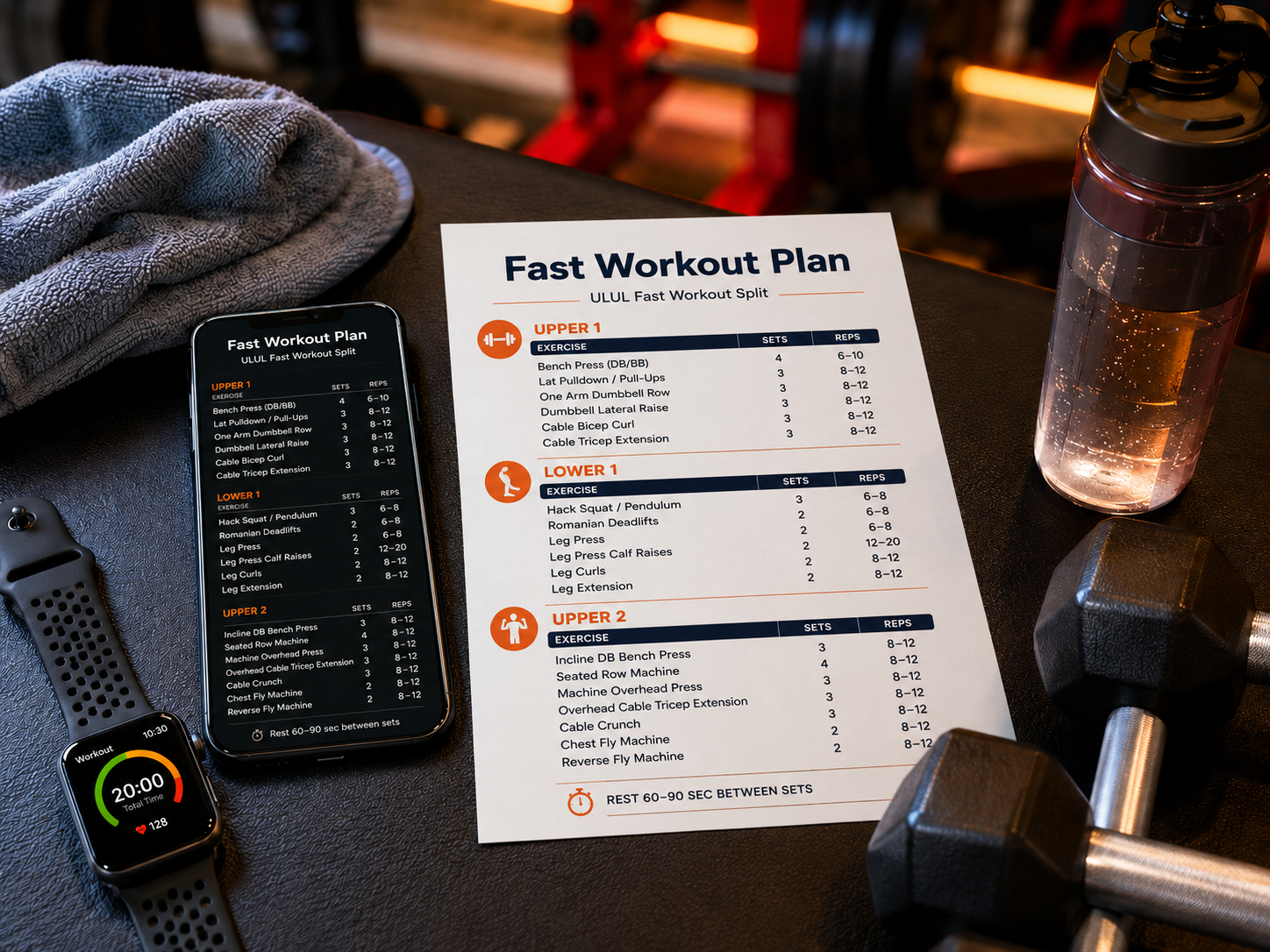
Download free workout plan with all sessions taking less and 35 minutes
You do not need every workout to be perfect. You need workouts you can actually do consistently.
If you only have 25–30 minutes, don’t automatically skip the gym. Adjust the session.
Use supersets. Train opposing muscle groups. Do fewer exercises but more useful sets. Choose exercises that are quick to set up. Prioritise the important movements. Cut the fluff.
A shorter workout done well is far better than the perfect workout you never actually do. Because consistency is what gets results.
Not waiting for the magical day where your schedule, energy, gym equipment, sleep, work, traffic, and motivation all line up perfectly. That day is probably not coming.
Train anyway.
