
How I Hit A 2 Plate Bench For The First Time
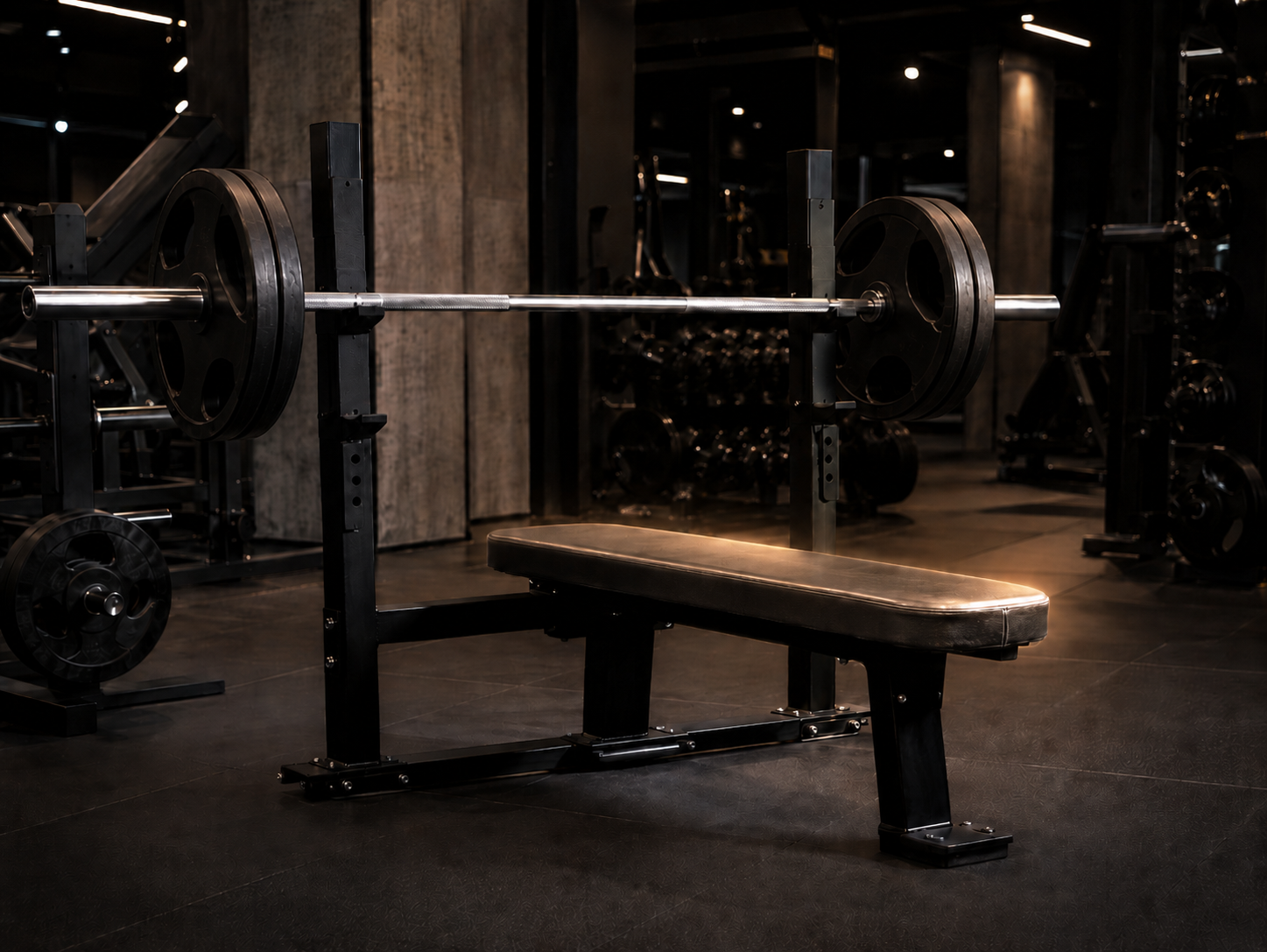
A 2-plate bench press — or 100kg — is one of those gym milestones that means something to a lot of people.
It’s not world-record strength but for most regular gym-goers, benching 100kg is a proper achievement. A very small percentage of the general population can actually do it, so when you finally get there, you feel like you 100 of you could definitely take on that gorilla.
I still remember the day I hit my first 100kg bench. I remember where I was, how it felt, and the slightly ridiculous level of confidence I had immediately afterwards.
This article is the story of how I got there, what I was doing wrong, what I changed, and what I’d do differently if I was starting again.
And if you want the actual structure I’d now use to build towards a 2-plate bench, I’ve put together a free 2-Plate Bench Press Programme you can download.
Where I Started

Me as a young skinny teenager with the skinniest wrists in the UK
This was probably a longer journey for me than it is for some people.
I was always quite a skinny kid.
For a lot of my teenage years, and probably even up until around 20 years old, I weighed under 10 stone. So I wasn’t exactly walking into the gym looking like I’d been carved out of granite. More like someone had lightly assembled me from coat hangers.
When I first started going to the gym and bench pressing properly, I realised I could actually put on muscle. I started getting a bit bigger, a bit stronger, and like most people who discover the bench press, I quickly started caring a lot about what I could lift.
At some point, I saw online that a 2-plate bench was a big milestone.
So naturally, I thought:
“Right. I’ll have some of that.”
I started bench pressing more seriously and, after a while, I worked my way up to around the 80kg mark for reps.
At that point, I thought I was well on my way.
In my head, 100kg was just around the corner. I’d hit 80kg for reps, so surely 100kg was basically booked in. Just a matter of time.
Unfortunately not, I stalled hard!
What I Was Doing Wrong
The main problem was that I didn’t really have a plan. I was just going into the gym, trying to get 3 sets of 10 on a certain weight, failing somewhere near the end, then coming back the next week hoping it would magically happen.
Usually, I’d get something like:
8 reps.
8 reps.
Fail on the 7th or 8th rep.
Then I’d come back the next session and do almost exactly the same thing again.
This went on for far too long before I finally admitted that maybe just repeatedly failing the same thing wasn’t elite programming.
I was chasing the same target every week without actually changing anything that would help me reach it.
I also didn’t really understand bench press technique. I just sort of lay down on the bench and pressed.
No proper setup. No real shoulder positioning. No tightness. No leg drive. Just real beginner technique.
Looking back, I was probably pressing a lot with my shoulders rather than using my chest properly. My setup was loose, my technique wasn’t consistent, and I wasn’t giving myself the best chance to actually get stronger.
At the time, I thought I was just stuck because I wasn’t strong enough.
In reality, I was stuck because I wasn’t training properly.
Subtle difference. Slightly annoying.
What I Changed
The biggest change I made was benching twice per week instead of once.
That alone made a huge difference.
Bench press is not just a strength exercise. It is also a skill. The more often you practise it with good technique, the better you tend to get at it.
Instead of only benching once per week and hoping for the best, I started getting more quality practice in.
One day was more focused on my main bench press work. The other day was there to build more volume and work on what was holding me back.
I also started learning proper bench press form.
The moment I learned how to retract my shoulder blades, create tightness through my upper body, and use leg drive to stay stable, my bench immediately felt better.
I stopped just lying on the bench like a man waiting for a medical examination and actually started setting up like I was about to lift something heavy.
That helped a lot.
Another big thing I noticed was that I was failing near the top of the lift.
My chest strength was decent. I was pretty strong on chest-focused exercises. But compared to that, my triceps were weak.
And when I thought about it, that made sense.
For months, I’d been doing chest work properly, then maybe doing a few lazy sets of triceps at the end. Sometimes I’d skip them completely.
So I started adding close-grip bench press on another day and actually progressing it properly.
That made a big difference because close-grip bench press has a great carryover to the regular bench press, especially if your lockout is the weak point.
The final major change was using a proper progression scheme.
Instead of walking into the gym and repeatedly failing at the same weight, reps and sets, I started following a progressive overload system.
I knew what weight I was lifting.
I knew what reps I was aiming for.
I knew what I’d do the next week if I hit it.
I knew what I’d do the next week if I missed it.
That structure made a massive difference.
It stopped every session feeling like a test and turned it into actual training.
The Day I Finally Got It
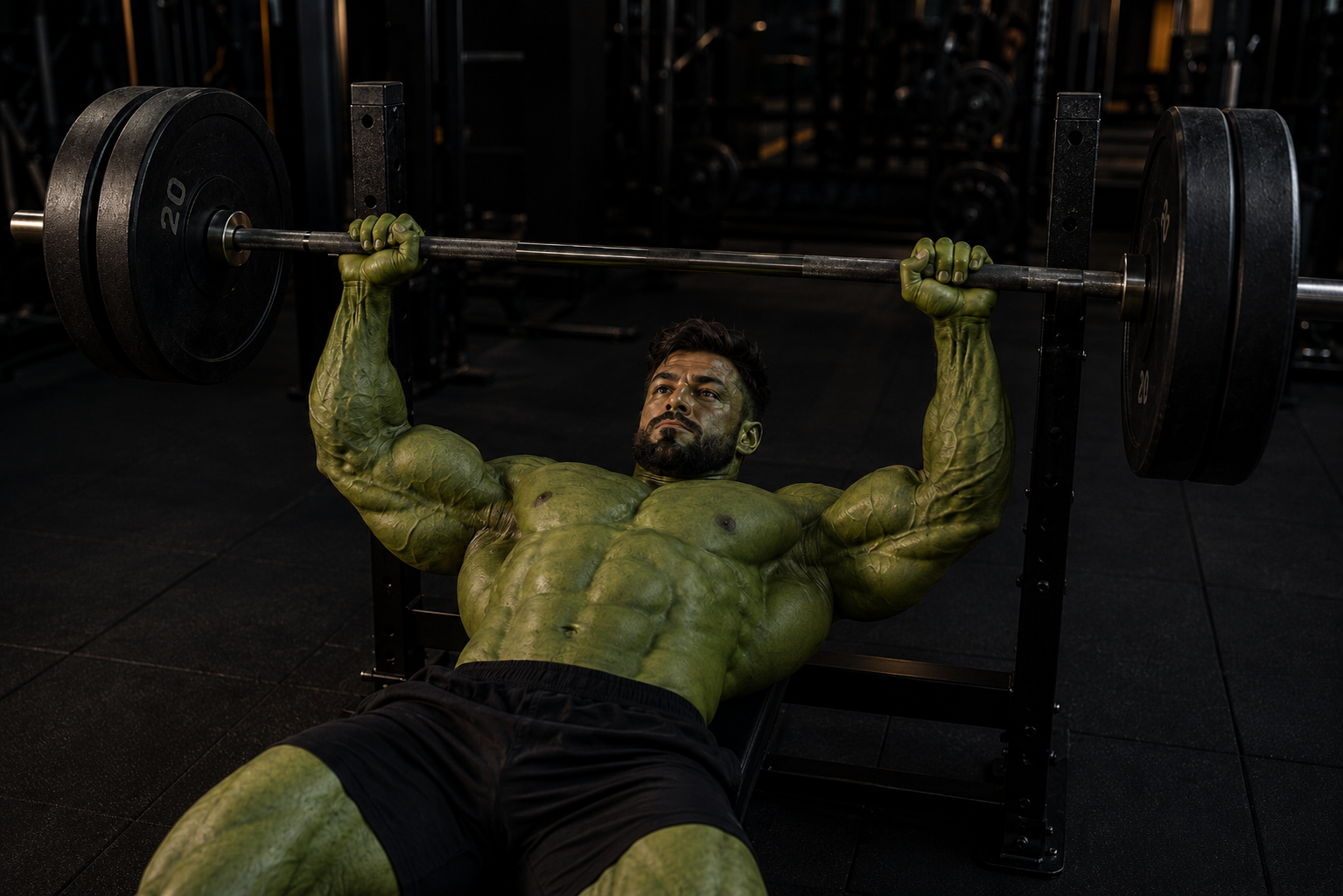
What I thought I looked like benching 2 plates
The funny thing is, the day I finally benched 100kg, I wasn’t actually planning to do it.
I knew I was close, but I didn’t quite have the confidence to go for it yet.
I got to the gym and the bench press was taken up by three teenage lads. They were just working out, which is obviously fine, but they were also spending a lot of time talking. And I mean a lot!
I was waiting around, doing warm-up sets on a chest press machine, hoping they’d be finished soon.
Twenty-five minutes later, they were still on it.
By this point, I was getting annoyed. Not raging. Just that quiet gym annoyance where you start doing mental maths on how long someone can possibly need between sets and how much their rent should be for how long they are there.
Eventually, they got off the bench.
And because I was already irritated, I thought:
“F it. I’m loading 100kg.”
I did a warm-up, put the plates on, lay down, and went for it.
And it flew up, way faster than I was expecting.
I’d probably had 100kg in me for weeks. Maybe I could have done 105kg that day. Maybe it was the anger. Maybe those lads accidentally gave me the greatest pre-workout of all time by taking forever on the bench.
Either way, it moved.
And the feeling after was unreal.
I had finally hit my first 2-plate bench.
For the rest of that session, I was absolutely convinced I was a superior being and everyone else was mere mortals.
What Actually Helped The Most
Looking back, it wasn’t one magic trick that got me there.
It was a few simple things done consistently.
1. Benching twice per week
Going from one bench day to two gave me more practice, more volume, and more chances to improve my technique. If you’re going to take one thing away from this article, it’s this - bench more!
2. Learning proper technique
Getting my shoulders set, creating tightness, controlling the bar, and using leg drive all made the lift feel stronger and more stable.
3. Training my weak point
Because I was failing at the top, close-grip bench press made sense. It helped bring up my triceps and improve my lockout.
4. Using a progression system
This was huge.
Having a clear plan meant I stopped guessing. I knew what I needed to do each week, and that made my training much more focused.
5. Actually sticking with it
Not very exciting, but probably the most important bit.
A 2-plate bench is not usually built in one heroic session. It comes from weeks and months of showing up, training properly, and not turning every workout into a random max attempt.
What I’d Do Differently If I Was Starting Again
If I was trying to build towards my first 100kg bench again, I’d do a few things differently.
First, I’d learn proper bench press technique much sooner.
I wasted a lot of time just pressing with poor setup and hoping strength would solve everything. Better technique would have saved me a lot of stalled progress.
Second, I’d bench twice per week earlier.
Once per week can work, but if you want to improve a lift, more quality practice usually helps.
Third, I’d train my weak points properly.
If your bench always fails at the top, there’s a reason. If it always fails off the chest, there’s a reason. Just repeating the same failed lift every week does not magically fix the problem.
Fourth, I’d follow a proper progression system sooner.
This was the biggest difference between “turning up and hoping” and actually training with purpose.
Finally, I’d pay more attention to recovery.
If you want your bench to go up, your sleep, food, protein intake, and bodyweight all matter. If you’re under-eating, sleeping badly, and expecting your bench to fly up every week, you’re making life harder for yourself.
The gym is already hard enough. No need to play it on expert mode.
Want To Build Towards Your First 2-Plate Bench?
If you’re trying to hit your first 100kg bench, I’ve put together a free 2-Plate Bench Press Programme.
It shows you how to structure your bench training, how to progress your main bench day, and how to choose the right second bench day based on where you fail the lift.
Inside, you’ll get:
A main bench day
A second bench day based on your weak point
A progression system for your main bench press
A rep goal system for your second bench day
Accessory lift guidance
A checklist for technique, recovery, protein, and bodyweight
It is not a magic programme.
You still have to do the work.
Deeply inconvenient, I know.
But if you follow it consistently, train properly, and recover well, it gives you a clear structure to build towards your first 2-plate bench.
Final Thoughts
Hitting my first 2-plate bench felt brilliant.
Not because 100kg is some impossible superhuman lift, but because it represented a lot of work, a lot of mistakes, and finally figuring out what actually helped me progress.
For me, the biggest lessons were simple:
Bench more than once per week.
Learn proper technique.
Train your weak points.
Use a progression system.
Eat, sleep, and recover properly.
A 2-plate bench is not built from one perfect session.
It is built from better structure, better technique, and finally treating the lift like something that needs a plan instead of just vibes and caffeine.
If you want help getting there, download the free programme and start building your bench properly.
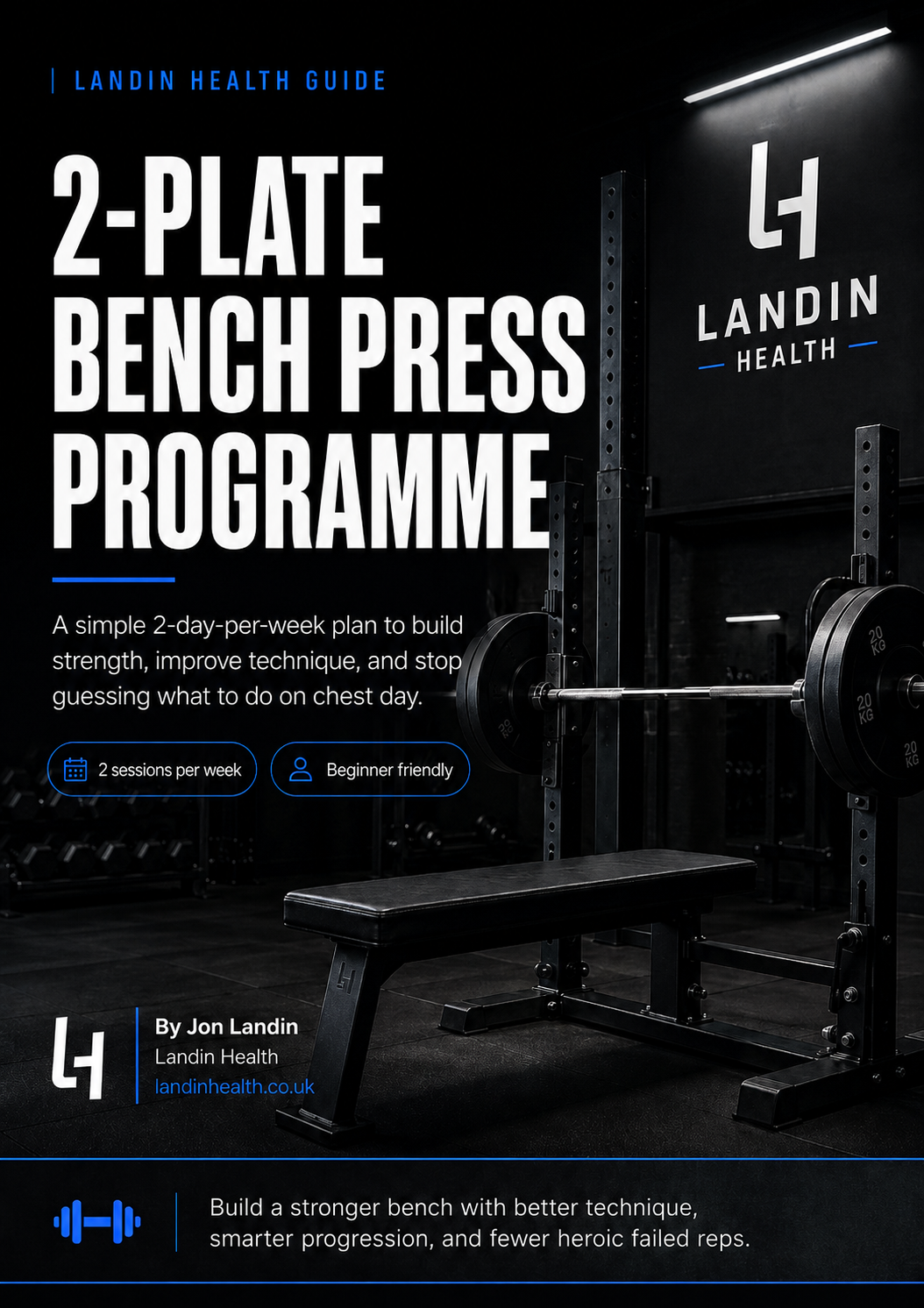
Download my free e-book on how to hit your first 100kg bench press.
It contains:
What it takes
Example workouts
Which lifts help you
Technique Checklist
Recovery Checklist
Structured Progression
Guaranteed Results
