
7 Common Bench Press Mistakes I See Beginners Make All The Time

The bench press looks simple enough.
Lie down. Lower the bar. Press it back up. Try not to make weird eye contact with the person waiting for the bench.
But once you actually start trying to get stronger, you quickly realise there’s a bit more to it than just throwing weight on the bar and hoping your chest gets the memo.
The good news is that most beginner bench press mistakes I see are easy to fix once you know what to look for. The bad news is that if you ignore them, your progress can stall, your shoulders can start complaining, and your form can slowly turn into something that looks like a gym-based cry for help.
Here are seven common bench press mistakes beginners make, and how to fix them.
1. Adding Weight Before Fixing Technique
One of the biggest beginner mistakes is adding weight to the bar before your technique is ready for it.
At first, this can feel like progress. You add a bit more weight, grind out a rep, and think, “Lovely. I’m getting stronger.”
But sometimes what’s actually happening is your form is getting worse.
Your bum starts lifting off the bench. Your wrists bend back. Your elbows flare. The bar path goes rogue. Your shoulders take over. Before you know it, your bench press has gone from a controlled lift to a full-body negotiation.
The goal is not just to lift more weight. The goal is to lift more weight with good, repeatable technique.
Before increasing the load, ask yourself:
Can I control the weight on the way down?
Is my setup staying the same?
Are my shoulders staying tight?
Is the bar touching the same point on my chest?
Can I press without my form falling apart?
If the answer is no to any of these, don’t rush to add weight. Spend more time practising the lift properly.
Progression is important, but adding weight to bad technique is like building an extension on a shed that’s already leaning sideways. Bold, but probably not wise.
2. Not Setting the Shoulders Properly
Your shoulder position matters a lot in the bench press.
If you just lie flat on the bench with your shoulders loose, you’ll often end up pressing too much with your front delts instead of using your chest properly.
A better setup is to pull your shoulder blades back and down before you unrack the bar. Think about gently pinching your shoulder blades together and tucking them into the bench.
This does a few useful things:
It creates a more stable base to press from
It helps protect your shoulders
It puts your chest in a stronger position
It stops your shoulders rolling forward during the lift
A good bench press should not feel like your shoulders are doing all the work. Your chest, shoulders, and triceps will all be involved, but if your setup is loose, your front delts can end up taking over more than they need to.
This is why setup is so important. You don’t want to start the lift already in a poor position and then hope it magically fixes itself halfway through. Sadly, the barbell is not known for its generosity.
3. Flaring the Elbows Too Much
Another common mistake is letting the elbows flare straight out to the sides.
When your elbows are at roughly 90 degrees from your body, it can place a lot of unnecessary stress on the shoulders, especially the front of the shoulder.
That doesn’t mean your elbows need to be pinned tightly against your ribs either. That can turn the lift into something closer to a close-grip bench press.
For most people, a good starting point is to have the elbows around a 45-degree angle from the body. A little bit more is usually fine, depending on your build, grip width, and comfort.
The key is to avoid this:
Elbows straight out, shoulders under loads of stress, and your future self wondering why your shoulder now clicks when you reach for a mug.
Instead, think:
Elbows slightly tucked
Wrists stacked over elbows
Shoulders pulled back and down
Bar lowered under control
This usually puts you in a stronger and safer pressing position.
4. Bouncing the Bar Off Your Chest
The bar should touch your chest.
It should not crash into your chest like it’s trying to win a trampoline competition.
Bouncing the bar off your chest is a common way people cheat the hardest part of the lift. The bottom position is usually where the bench press is most difficult, so bouncing helps you skip some of that work.
The problem is that it reduces control, makes your reps less consistent, and can increase the risk of annoying your shoulders, chest, or ribs.
A better approach is simple:
Lower the bar under control, let it touch your chest lightly, then press it back up.
Not a massive pause. Not a dramatic powerlifting moment where time stops and people in the gym think you’ve failed the lift so come over to help. Just a controlled touch and press.
Think of it as touching the chest, not using your ribcage as a springboard.
5. Pressing the Bar in a Straight Line
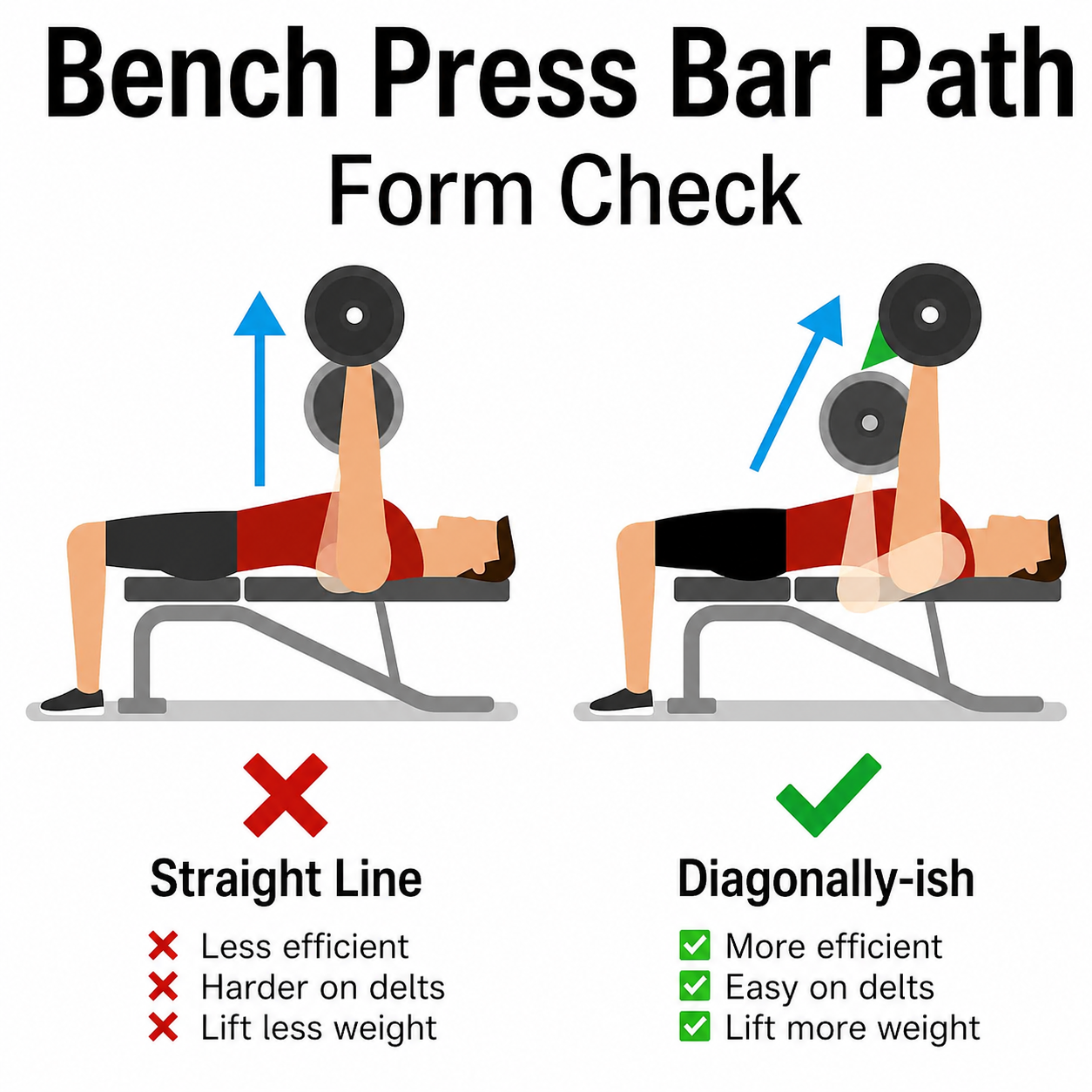
A lot of beginners assume the bench press should move straight up and down.
It sounds logical. You lower the bar, then press it straight back up.
But in a good bench press, the bar path is usually slightly curved.
You generally want to lower the bar to around the lower chest or nipple line. Depending on your anatomy, it may be slightly lower. Then, as you press, the bar travels slightly back towards your shoulders.
So instead of pressing in a perfectly vertical line, the bar moves in a small arc.
This helps keep the bar in a stronger position over the shoulder joint at the top of the lift.
A simple way to think about it:
Lower the bar to your lower chest
Press up and slightly back
Finish with the bar above your shoulders
This is also why your setup matters so much. If your shoulders are loose and your elbows are flared, your bar path will usually be all over the shop.
Like a shopping trolley with one dodgy wheel. Technically moving, but not exactly efficient.
6. Ignoring Leg Drive
Leg drive sounds like something only powerlifters need to care about, but it can help beginners too.
Your legs are not there for decoration during the bench press. They help create stability and allow you to press from a stronger base.
If your feet are moving around, your legs are relaxed, and your body is loose on the bench, you are leaking power from the lift.
Good leg drive starts before you press.
Set your feet firmly on the floor. Keep your upper back tight. Then, as you press, push through your legs as if you are trying to drive your body up the bench towards your head.
You should not actually slide up the bench. The feeling should be tension and stability, not movement.
Leg drive becomes more important as the weight gets heavier, but it’s worth practising early. It helps you learn how to make the bench press feel like one connected lift, rather than your upper body doing one thing while your legs have mentally gone home.
7. Doing Too Much Too Soon
Trying to max out every week is one of the fastest ways to stall your bench press.
A lot of beginners get stuck in this cycle:
Try a weight.
Fail it.
Try it again next week.
Fail it again.
Announce that next week is definitely the week.
Repeat and then think they’re in a plateau.
Testing your strength is not the same as building your strength.
If you want a bigger bench press, you need structure. That usually means spending most of your time doing quality reps with weights you can actually control.
For strength, that might mean working in lower rep ranges, gradually increasing the weight over time, and leaving a rep or two in the tank on most sets.
Then, if you want to test your one-rep max, you can build up to it properly by slowly increasing the weight over several weeks while reducing the reps.
If your main goal is muscle growth, you can use a wider range of reps. Sets of 3–10 can work well, and even sets up to 15 can be useful depending on the exercise and programme.
The key is effort and control. For hypertrophy, you usually want to train reasonably close to failure, but not with a barbell hovering over your chest while you question every decision that led you there.
Optional: Wrist Wraps Can Help If Your Wrists Struggle
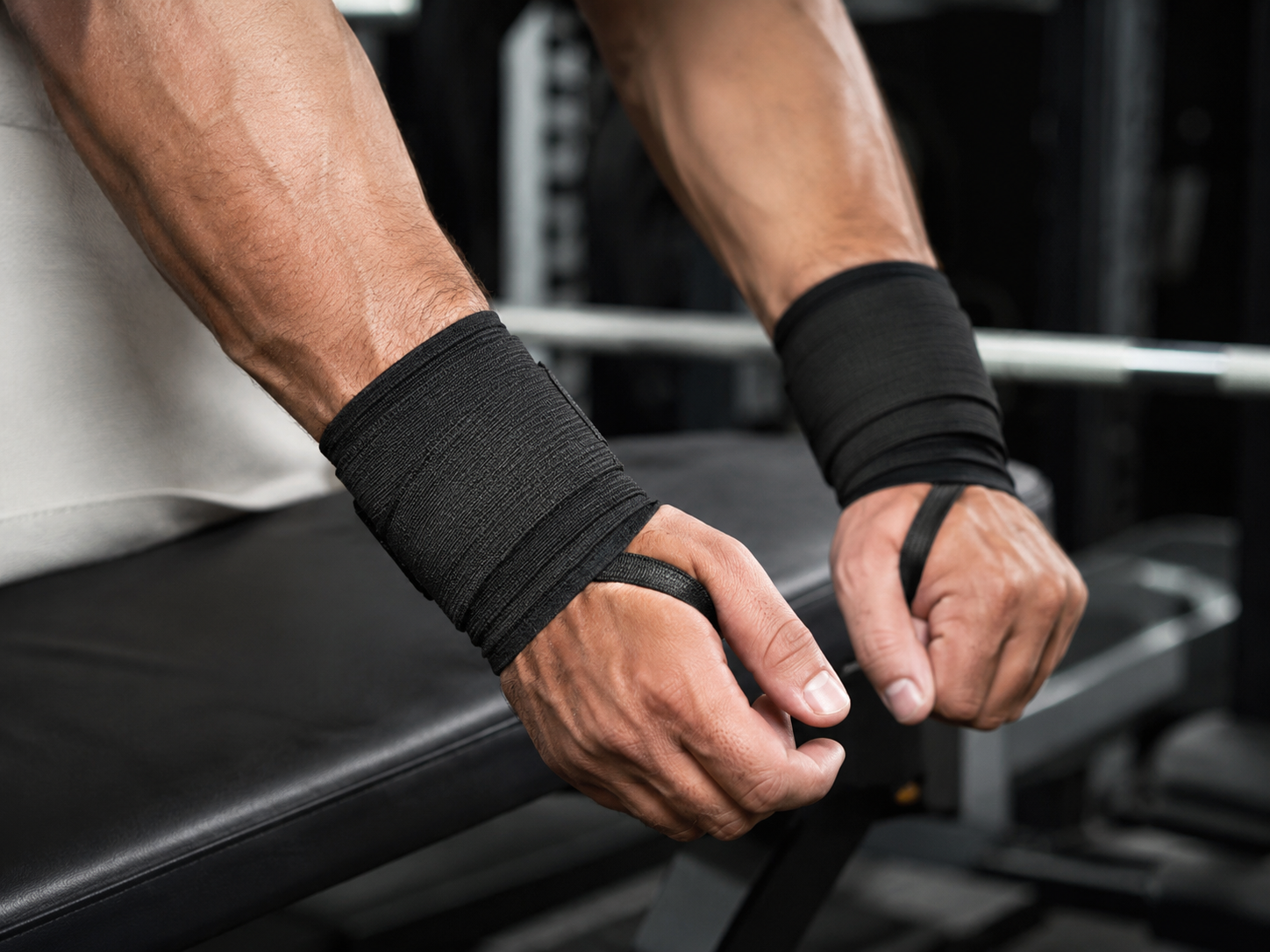
This is not a magic fix, but wrist wraps can be useful if your wrists feel weak or unstable during the bench press.
When benching, you want your wrists to stay fairly stacked over your elbows. If your wrists bend too far back, the lift can feel less stable and less comfortable.
Wrist wraps can help support the wrist joint and make heavier pressing feel more secure. I’ve used these Bear Grip ones for a while now. I only use when going very heavy but they make my wrists feel super secure.
That said, they are not a replacement for good technique. You still need to grip the bar properly, keep your wrists in a strong position, and avoid letting the bar sit too high in your hand.
Use wrist wraps as support, not as a way to cover up awful positioning. Very on-brand for the gym, but still not ideal.
Simple Bench Press Mistake Checklist
Before your next bench press session, run through this quick checklist:
Are my feet planted?
Are my shoulder blades pulled back and down?
Is my chest up?
Are my wrists stacked?
Are my elbows slightly tucked?
Am I lowering the bar under control?
Is the bar touching my lower chest?
Am I pressing up and slightly back?
Am I adding weight because I’m ready, or because my ego has taken over?
If you can tick most of those boxes, your bench press is probably heading in the right direction.
Final Thoughts
The bench press is simple, but that does not mean it is easy.
Most beginners do not need advanced programmes, fancy variations, or someone on TikTok shouting about “optimal chest activation” while standing next to a ring light.
They need to fix the basics.
Set your shoulders properly. Control the bar. Stop bouncing reps. Use a sensible bar path. Keep your feet planted. Add weight gradually. And don’t turn every session into a max attempt.
Do those things consistently, and your bench press will improve.
Maybe not overnight. But definitely faster than if you keep flaring your elbows, bouncing the bar off your chest, and pretending your form breakdown is “grit”.
