
Creatine for Beginners: What It Does and How to Take It
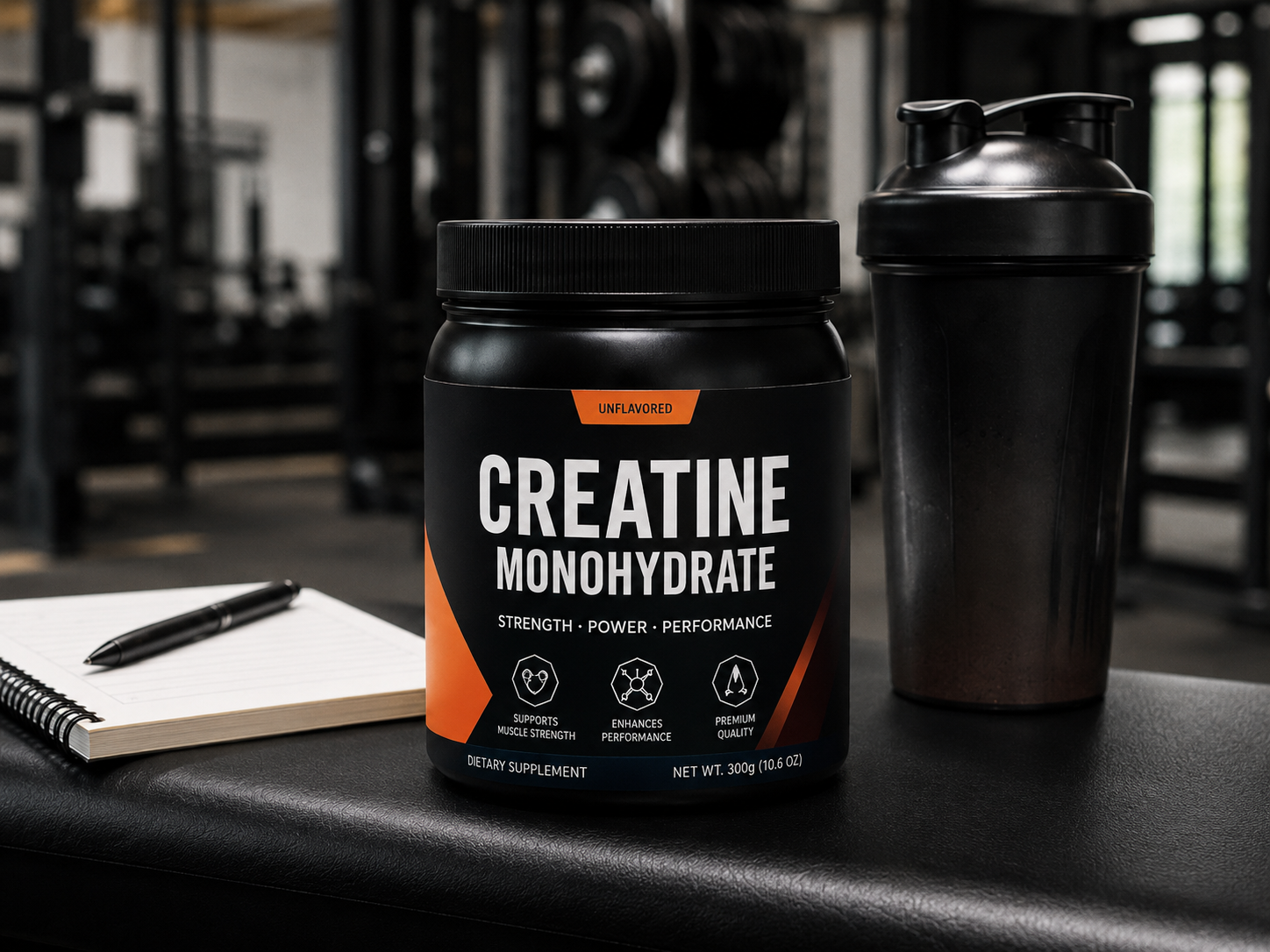
Creatine is one of the few supplements that is actually worth talking about.
Which, in the supplement world, is suspiciously rare.
Most supplements either do very little, cost too much, or come with a label that looks like it was designed by someone shouting the word “BEAST” in a meeting.
Creatine is different.
It is cheap, well-studied, easy to take, and can genuinely help with strength and performance when used alongside proper training. But it is still just a supplement. It won’t replace good workouts, enough protein, decent sleep, and actually turning up to the gym.
Annoying, I know.
TL;DR: Creatine for Beginners
Creatine can be useful if you train consistently.
Here’s the short version:
Creatine may help improve strength and performance
It helps your body regenerate ATP during hard efforts
3-5g per day is enough for most people
You do not need to load creatine
Timing does not matter much
It may increase scale weight slightly from water stored in muscle
Creatine monohydrate is the best option for most people
It is not steroids
It will not do the work for you, tragically
Get it from Bulk. Cheap and reliable
What Is Creatine?
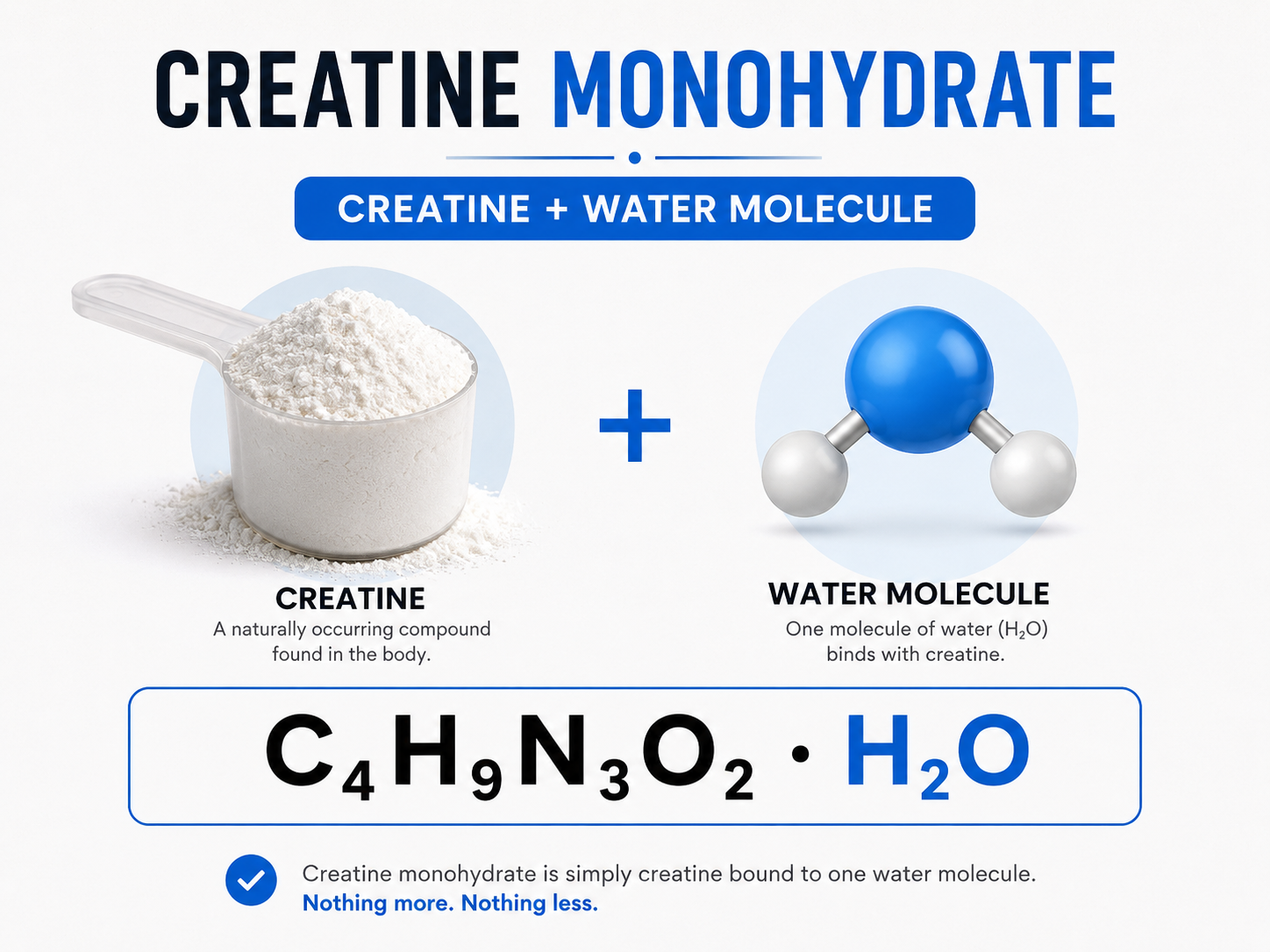
Creatine is a compound your body naturally produces and stores mainly in your muscles. You also get small amounts from foods like meat and fish.
The most common supplement form is creatine monohydrate.
Its chemical name is often written as methylguanidinoacetic acid, which sounds like something you should not willingly put in your body, but is just the scientific name. Science has a branding problem.
Creatine helps your body produce energy during short, hard efforts like:
Heavy lifting
Sprinting
Repeated sets
Explosive exercise
In simple terms, creatine helps your muscles access quick energy when training gets difficult.
What Does Creatine Actually Do?
Creatine helps your body regenerate ATP faster.
ATP stands for adenosine triphosphate. It is your body’s quick energy source for hard efforts. During intense exercise, ATP gets used quickly, and creatine helps recycle it so you can keep producing force for a little longer.
That is useful near the end of a hard set.
For example, creatine might help you squeeze out another rep, maintain performance across multiple sets, or recover slightly better between repeated high-intensity efforts.
But it does not work like this:
“I bench 100kg. I took creatine. I now bench 110kg.”
Sadly, no.
Creatine does not suddenly make you stronger overnight. It supports the training that makes you stronger.
That distinction matters.
Research generally supports creatine’s role in improving performance during short-duration, high-intensity exercise, especially when combined with resistance training.
Does Creatine Help Build Muscle?
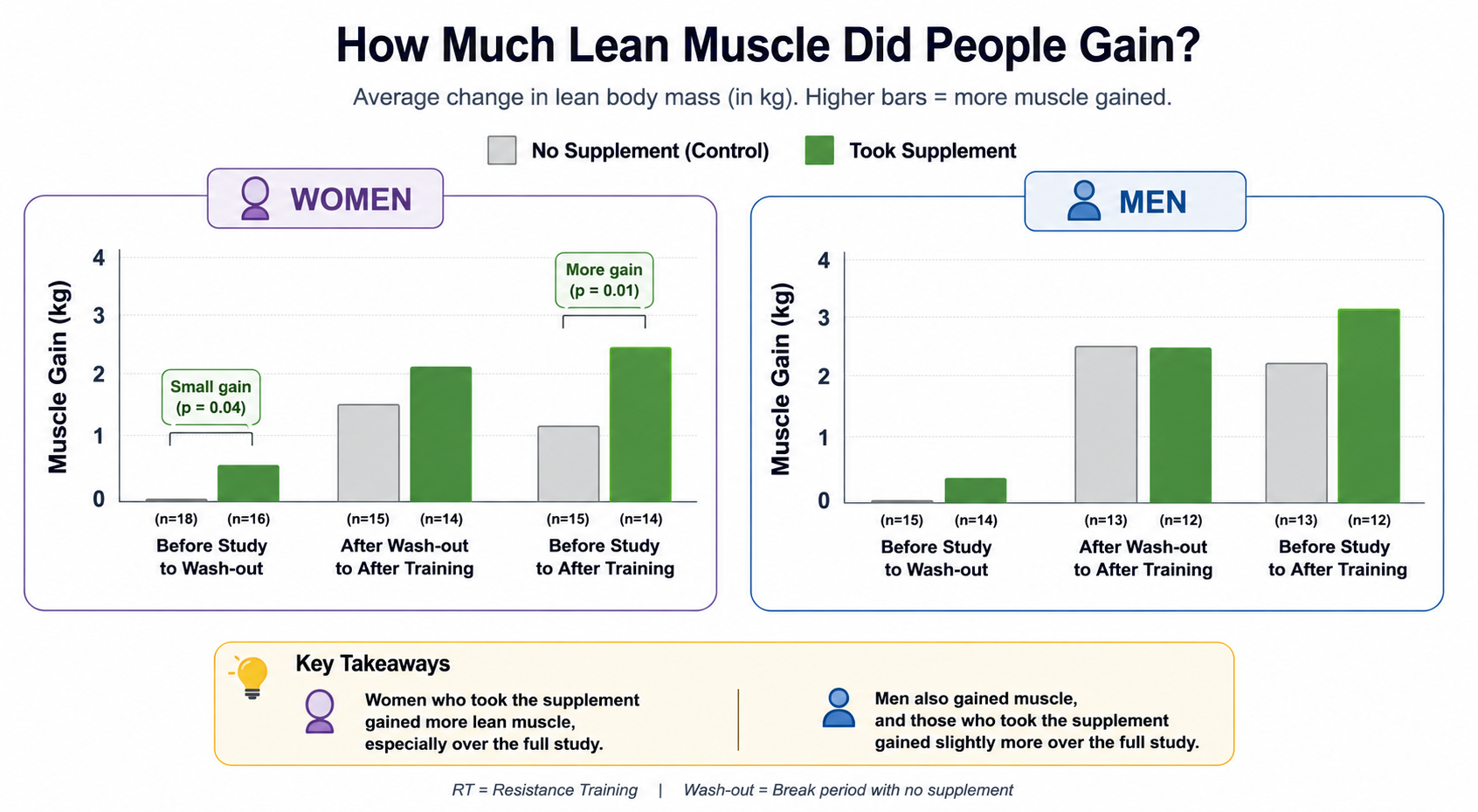
2025 study showing effect of creatine on lean muscle gained when taking creatine monohydrate
Yes, but not directly in the way some people think.
Creatine does not build muscle while you sit on the sofa.
Which feels unfair, but there we are.
Creatine may help muscle growth indirectly because it can help you train harder over time. If you are able to get more reps, maintain better performance, and progress your lifts more consistently, that can contribute to building muscle.
So the chain looks more like this:
Creatine → slightly better training performance → better progress over time → more potential muscle gain
Not:
Creatine → instant biceps
A tragedy for us all.
There is also growing interest in higher-dose creatine for brain and cognitive function, but this is a different conversation from basic gym performance. Some newer research found improvement in memory, processing speed and attention time.
How Much Creatine Should You Take?
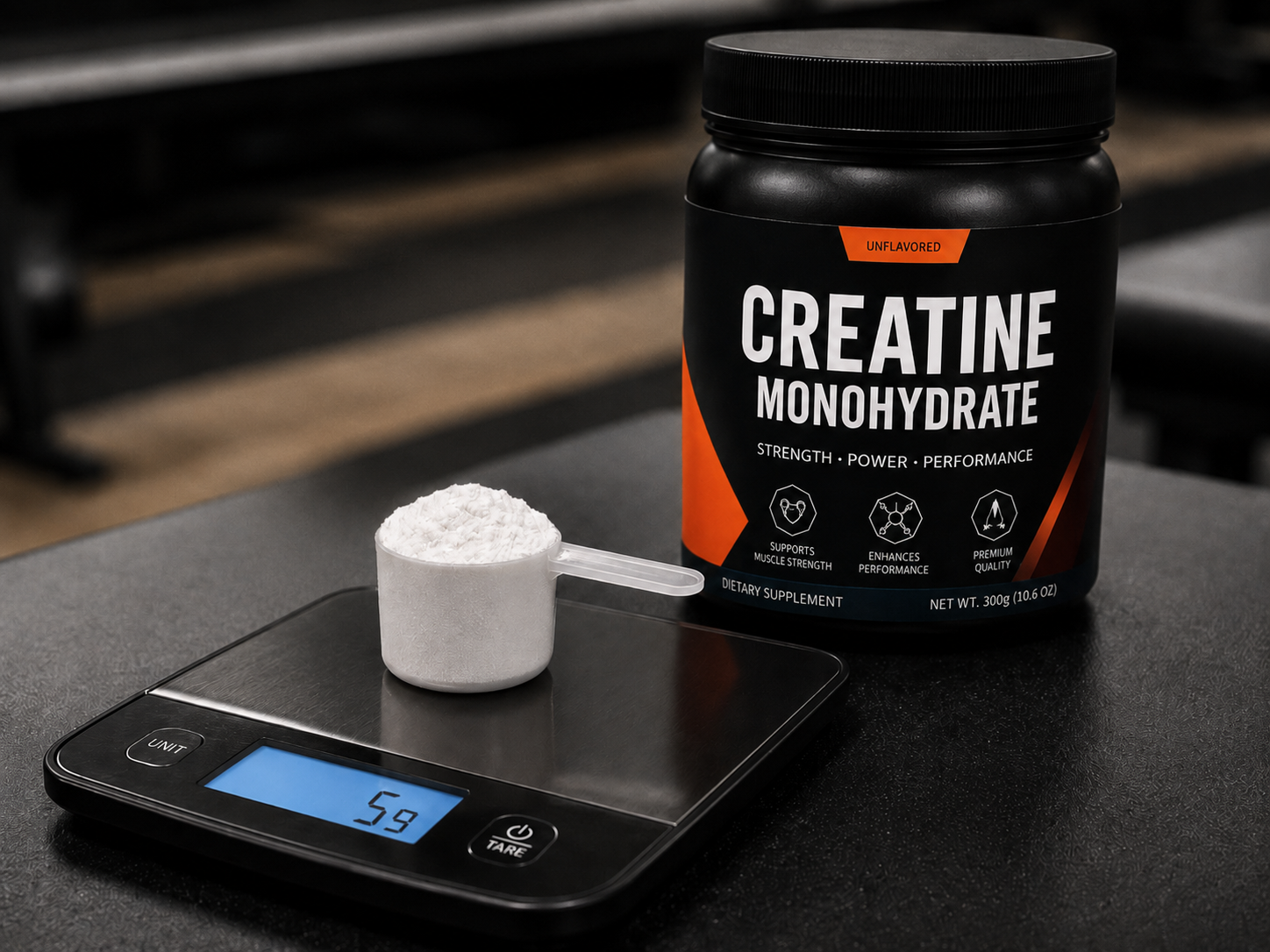
For most people, 3-5g of creatine monohydrate per day is a sensible amount.
That is enough to gradually increase and maintain creatine stores in the muscles for most users. The International Society of Sports Nutrition notes that creatine stores can be increased either with a loading phase or by taking around 3-5g daily for about four weeks, with the daily approach being more gradual.
This study concluded that 5g is sufficient to elicit muscle growth advantages from creatine, and sometimes more if the individual is larger.
For a beginner trying to build strength and muscle, keep it simple:
3-5g per day.
That’s it. No ceremony required.
Do You Need to Load Creatine?
No, you do not need to load creatine.
Creatine loading usually means taking around 20g per day for 5–7 days, then dropping to a maintenance dose. This can saturate your muscles faster, but it is not essential. Taking 3–5g per day will still get you there; it just takes longer.
If you ask a company selling creatine, they may be very enthusiastic about loading.
Incredible coincidence.
In reality, loading might help slightly if you want quicker saturation, but for most beginners, it is not necessary.
You might as well save your money and just take a normal daily dose consistently.
Very boring. Very effective.
When Should You Take Creatine?
Creatine timing does not matter much.
You can take it:
In the morning
After training
With food
In a shake
At night
The most important thing is taking it consistently.
If you are taking 3-5g per day, just pick a time you will remember.
If you are taking a higher amount, such as 10g per day, you may prefer to split it into 5g in the morning and 5g later in the day to reduce the chance of stomach discomfort.
But for most people, timing is not worth stressing about.
Your body is not sitting there thinking, “Oh, 7:04pm? Absolutely not.”
Will Creatine Make You Gain Weight?

Creatine can make the scale go up slightly.
This is usually because creatine increases water stored inside your muscles. That is not the same as gaining fat.
Some people may gain a couple of pounds. Others may gain a bit more. It varies.
The important point is this:
Creatine-related weight gain is usually water stored in muscle, not belly fat.
So if your weight goes up after starting creatine, don’t immediately panic and accuse your creatine tub of betrayal.
It is normally just water being pulled into the muscle. And since muscle tissue is already made up largely of water, you could very cheekily say you have “gained muscle” if you want to feel better about it..
Is Creatine Safe?
For healthy adults, creatine monohydrate is generally considered safe when taken responsibly.
It is one of the most studied supplements in sports nutrition, and research reviews generally support its safety at standard doses in healthy people.
That said, use common sense.
Speak to a GP or qualified health professional before taking creatine if you:
Have kidney disease
Have liver disease
Are taking medication that affects kidney function
Are pregnant or breastfeeding
Have any medical condition you are unsure about
That is not me trying to ruin the fun. That is just the sensible bit.
Creatine Side Effects and Myths
Creatine is usually well tolerated, but some people may notice mild stomach discomfort, especially if they take too much at once.
Possible issues include:
Bloating
Stomach discomfort
Nausea
Diarrhoea if taking large doses at once
This is one reason why splitting larger doses can help.
Now let’s talk about the big one.
Does Creatine Cause Hair Loss?
Nope. The creatine and hair loss idea mostly comes from one older study that found an increase in DHT, a hormone linked to male pattern hair loss. The problem is that this finding has not been consistently repeated, and later reviews have not found strong evidence that creatine increases testosterone, free testosterone, or DHT.
A more recent randomised controlled trial directly looked at hair-related outcomes and reported no evidence that creatine caused hair loss over the study period.
So, based on the current evidence:
Creatine does not appear to cause hair loss.
Creatine Monohydrate vs Other Types
Stick with creatine monohydrate.
It is cheap, effective, well studied, and widely available.
Other versions often claim to be more advanced, better absorbed, or easier on the stomach. Some may be fine, but there is usually no strong reason for beginners to pay extra.
In most cases, the more exotic versions are just a way to charge more money for something that does not clearly work better.
Creatine monohydrate is the boring option.
And in fitness, the boring option is often annoyingly effective.
If the tub sounds like it was named by a Marvel villain, you probably don’t need it.
Should Beginners Take Creatine?
Beginners can take creatine, but they do not need to.
That distinction is important.
Creatine may help a little, especially if you are training consistently and trying to build strength or muscle. But it is not going to be the main thing driving your progress.
As a beginner, the biggest wins are still:
Training consistently
Following a structured programme
Eating enough protein
Getting enough sleep
Progressing your lifts over time
Creatine can support that.
It cannot replace it.
So yes, if you want to take it, creatine is a reasonable supplement choice for many beginners.
But if your training and diet are all over the place, creatine is not going to save the operation.
That would be like putting premium fuel in a car with no wheels.
Final Thoughts
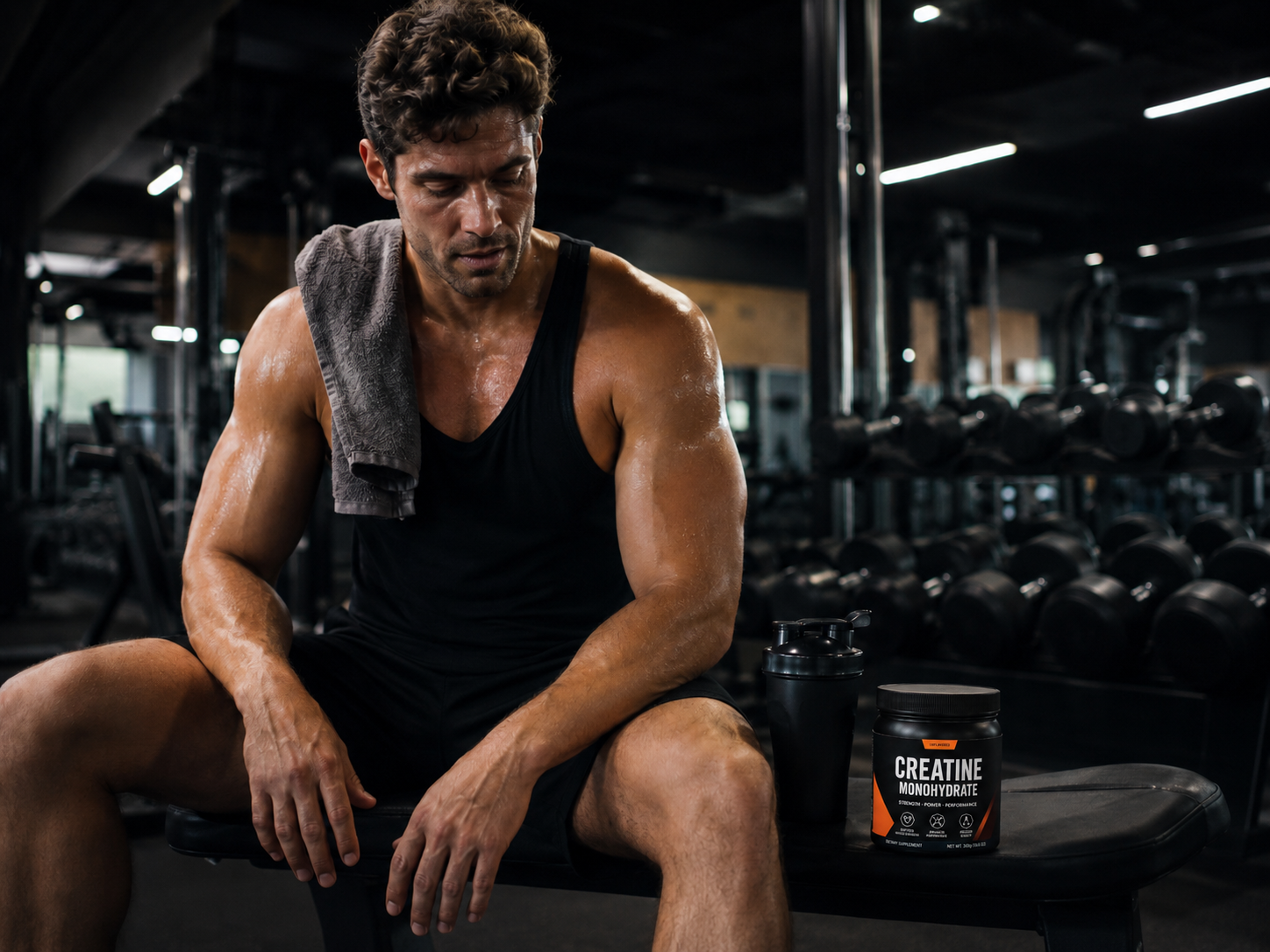
Creatine is useful. But it is still just a supplement.
It might give you a small edge — maybe that extra few percent that helps your training move slightly better over time.
But the main work is still your training, your diet, your sleep, and your consistency.
Creatine is not the 95%. It is the little extra on top. So if you train properly, eat well, recover, and take creatine consistently, it can be worth using.
Just don’t expect it to do the hard part for you. Supplements are called supplements for a reason. Deeply inconvenient, but true.
Where should I get my creatine?
Creatine is quite easy to get at a decent price from most supplement stores. I’ve used Bulk for years now as they’re always around the cheapest price point and they deliver pretty quick which helps!
Yes I get a kickback from any purchase made with them. They are the only supplement brand I promote, purely because they’re good.
