
How to Structure a Beginner Gym Programme

Having structure in your workouts matters because structure is how you measure progress.
If you go into the gym and hop from one machine to another every session, you might still get slightly stronger at first. Beginners can get away with a lot. But after a while, you’re mostly guessing.
You’re guessing what exercises to do.
You’re guessing what weight you lifted last time.
You’re guessing whether you’re actually improving.
And, to put it scientifically, guessing is a bit sh*t.
A good gym programme gives you a plan. It means you’re doing the same, or mostly the same, exercises week after week, tracking your progress, and building towards your goals in a structured and achievable way.
It doesn’t need to be complicated. It just needs to be something you can follow consistently.
TL;DR: How to Structure a Beginner Gym Programme
A good beginner gym programme should:
Be built around the number of days you can actually commit to
Use a simple structure
Be enjoyable
Include the main compound lifts
Track your sets, reps and weights
Use progressive overload
Be repeated long enough to measure progress
Not change every 11 minutes because you saw a new TikTok workout
The goal is simple: train with enough structure that you know whether you’re getting stronger.
Download my free beginner friendly programme below.
What Makes a Good Gym Programme?
A good gym programme is one that you enjoy, stick to, repeat, and progress on.
That sounds basic, but it’s where a lot of people go wrong.
A programme doesn’t need to include every exercise you’ve ever seen. It doesn’t need seven different cable angles, three types of curl, and something you saw an influencer do with a resistance band and a dream.
A good programme should be:
Repeatable - you can do it week after week
Enjoyable - you don’t want to dread going into a session, be excited
Structured - you know what you’re training and why
Progressive - you can track improvement over time
Realistic - it fits your actual life, not your imaginary perfect week
The best programme is not the fanciest one. It’s the one you actually do.
Annoying, but true.
How Many Days Per Week Should Beginners Train?
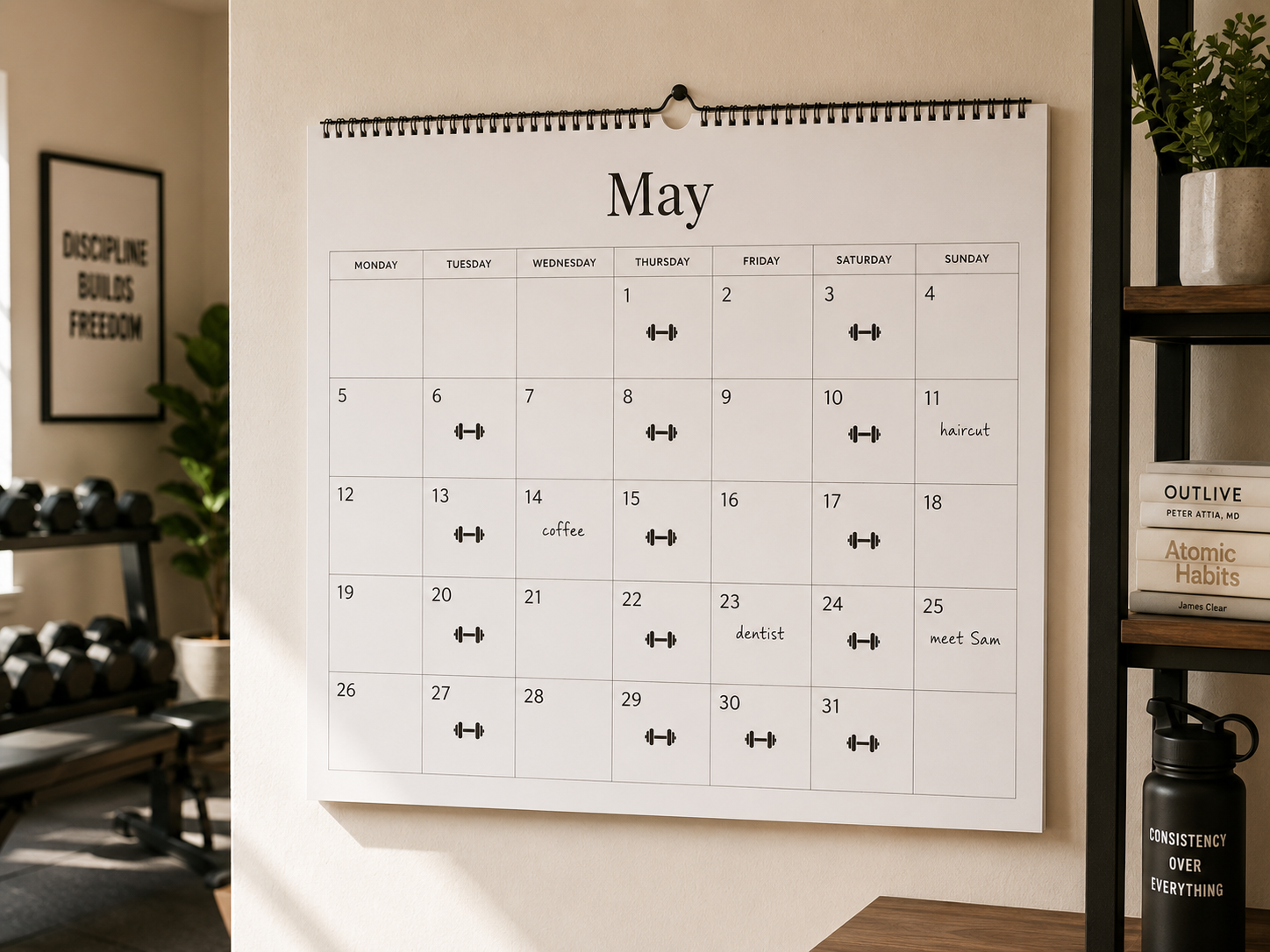
The best number of days to train is the number you can consistently commit to.
If you can train three days per week, build your programme around three days. If you can train four days, great. If you can only train two days, that’s absolutely fine too.
What you don’t want to do is write yourself a five-day programme, manage it for two weeks, then realise life exists and suddenly you’re only making three sessions.
Now your training week is a mismatch. You’re missing key sessions, repeating random ones, and your programme has turned into fitness admin with dumbbells.
Start with what you can genuinely do.
Consistency beats ambition.
There’s no point planning the perfect five-day split if you only manage half of it.
What Exercises Should You Include?
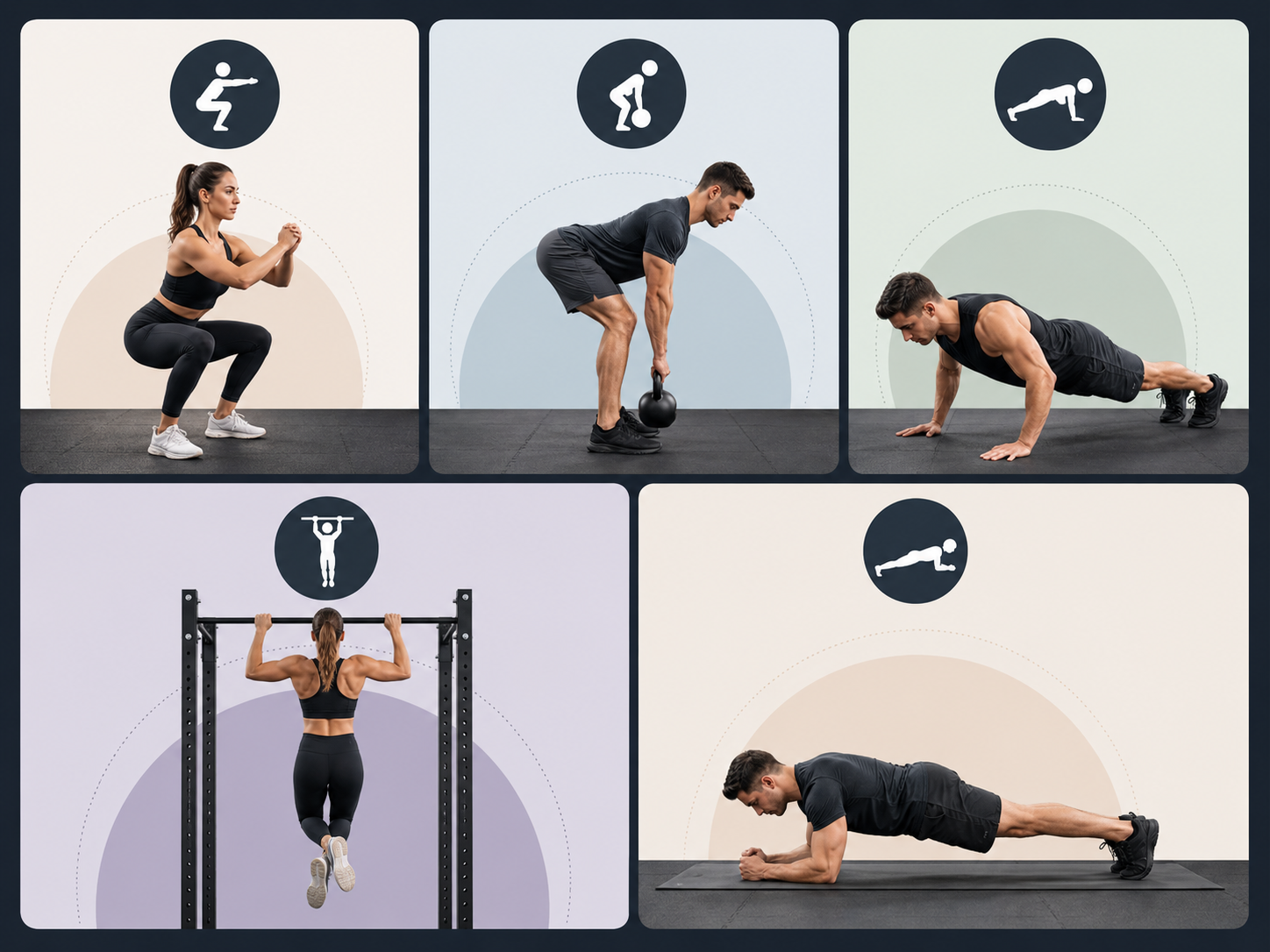
A good beginner programme should cover the main movement patterns.
This helps you train your whole body properly and avoid turning into someone who only trains chest and arms because “legs are boring.”
Your programme should include:
1. A Squat Pattern
Examples:
Squat
Leg press
Goblet squat
Split squat
This trains your quads, glutes and legs in general.
2. A Hip Hinge
Examples:
Deadlift
Romanian deadlift
Hip thrust
Back extension
This trains your glutes, hamstrings and lower back.
3. A Push
Examples:
Bench press
Dumbbell press
Overhead press
Machine chest press
This trains your chest, shoulders and triceps.
4. A Pull
Examples:
Pull-ups
Lat pulldown
Seated row
Chest-supported row
This trains your back and biceps.
5. Core Work
Examples:
Plank
Dead bug
Cable crunch
Pallof press
Core training helps with stability and control.
Not just having visible abs, which unfortunately are still mostly decided in the kitchen. Rude system.
6. Optional Isolation Work
Examples:
Bicep curls
Tricep pushdowns
Lateral raises
Leg curls
Calf raises
These are useful, but they should support the main work rather than take over the whole session.
How Many Sets and Reps Should You Do?
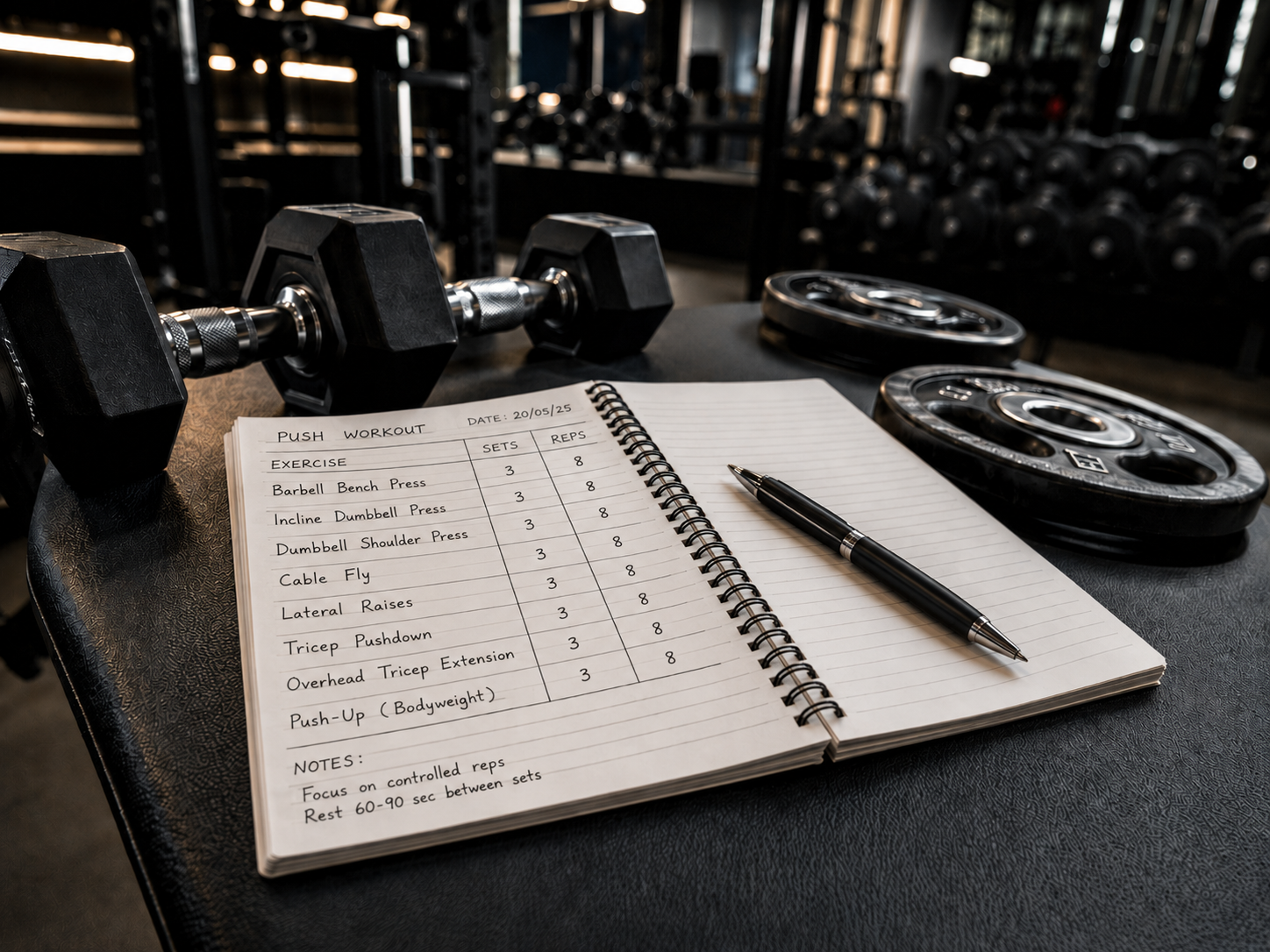
Your sets and reps depend on the exercise, your goal, and how hard you’re training.
But for beginners, you don’t need to overcomplicate it.
For bigger compound lifts
For exercises like:
Squat
Deadlift
Bench press
Overhead press
Pull-ups
A good range is usually around 5–10 reps.
You can technically do higher reps on some compound lifts, but doing 15-rep squats is a very quick way to question your life choices.
For most beginners, 10 reps is probably the upper end for big lifts.
For accessory exercises
For smaller exercises, a wider rep range works well.
Something like 6–15 reps is a good starting point.
Examples:
Rows
Lat pulldowns
Leg curls
Tricep pushdowns
Bicep curls
Lateral raises
These exercises are usually easier to control at higher reps and don’t completely ruin your soul in the same way high-rep deadlifts might.
How many sets per muscle per week?
This depends on:
How many exercises you do
How hard you train
How well you recover
Your experience level
But as a simple starting point, 8–12 hard sets per muscle group per week is a solid place for many beginners. However, if you struggle for time and can only get 2 sessions in a week, 6 sets will still get you progress, just make sure you’re putting in the effort on them.
That assumes you’re training with decent effort — usually around 1–2 reps away from failure on most working sets.
Not every set needs to be a dramatic near-death experience, but it should be hard enough that your body has a reason to adapt.
How to Progress Your Programme
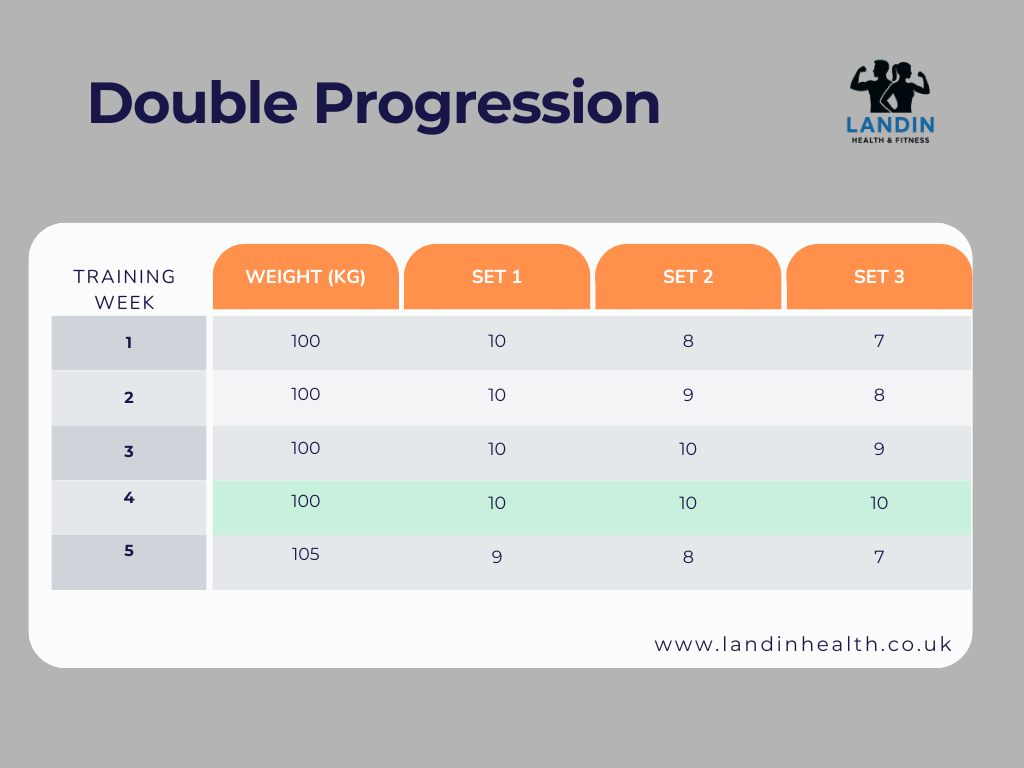
Once you have a structure, the next step is making progress.
This is where progressive overload comes in.
Progressive overload simply means gradually increasing the challenge over time so your body has a reason to get stronger or build muscle.
You can progress by:
Adding more reps
Adding more weight
Improving technique
Improving control
Adding an extra set where needed
Making the same weight feel easier
The important part is that you track it.
If last week you benched 60kg for 8 reps, this week you might aim for 9 reps. Once you can hit the top of your rep range, you increase the weight slightly and build back up.
That’s structured progress.
Not guessing. Not vibes. Not “I think I did this weight last time but I also think I had a haircut, so who knows.”
For a deeper explanation, link to your progressive overload article here.
Common Beginner Gym Programme Mistakes
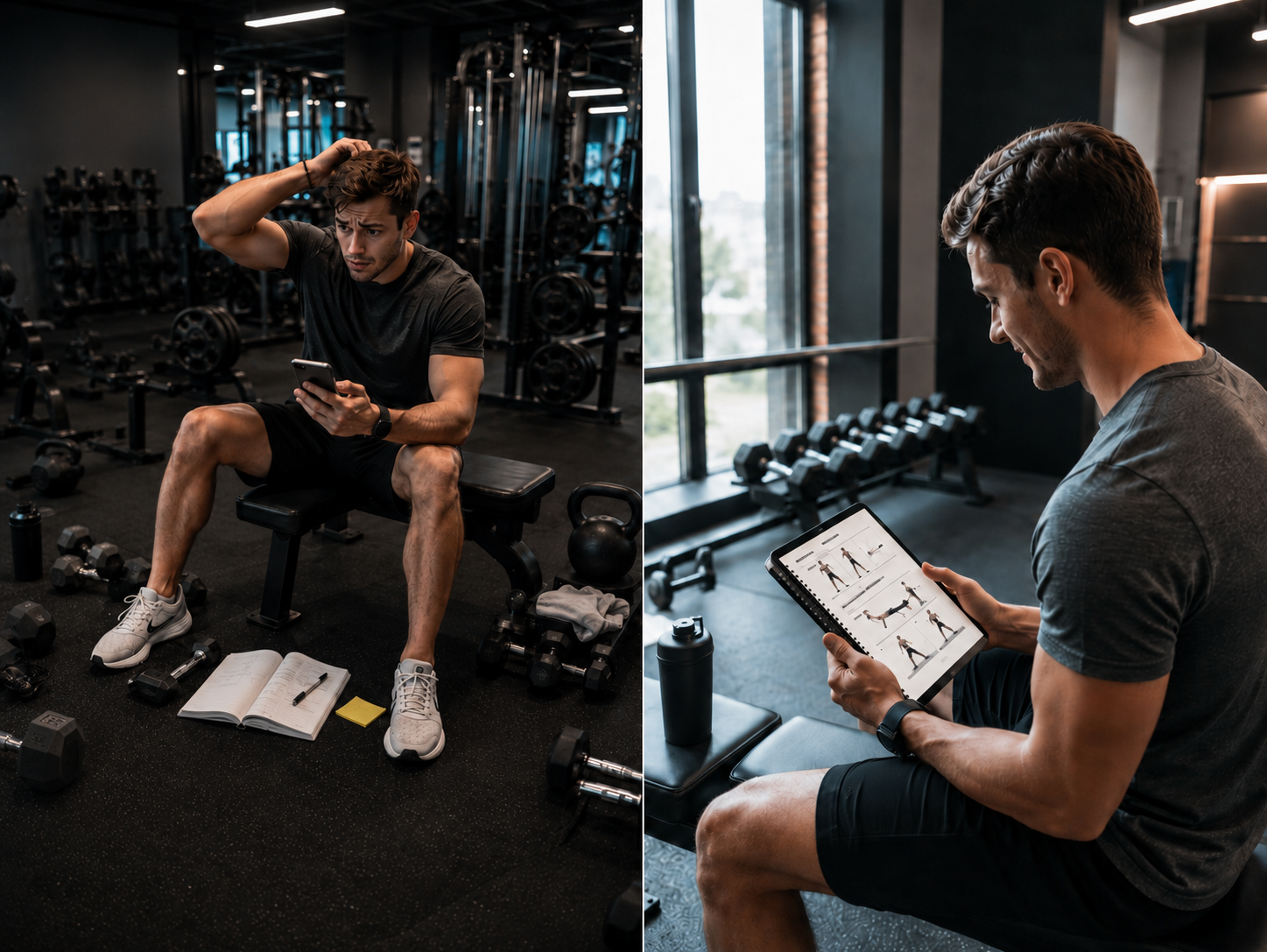
Here are the mistakes that usually stop beginners making progress.
1. Doing Too Much
More exercises doesn’t always mean better results.
If your workout has 14 exercises and takes two hours, there’s a good chance half of it is just decorative suffering.
Start simple.
2. Changing Your Programme Constantly
If you change your exercises every week, you can’t properly track progress.
Your body needs time to adapt. Your notebook also needs a fighting chance.
3. Skipping Legs
You knew this was coming.
A balanced programme should train your whole body, not just the muscles you can see in the mirror.
4. Training to Failure on Everything
Training hard is good.
Training every set like you’re Rocky Balboa is not necessary.
Most of your sets should be challenging but controlled, usually stopping with around 1–2 reps left in the tank.
5. Not Tracking Anything
If you don’t track your lifts, you’re guessing.
And guessing is exactly what we’re trying to avoid.
Track:
Exercises
Sets
Reps
Weight
Notes on form or effort
Simple, boring, effective.
When Should You Change Your Programme?
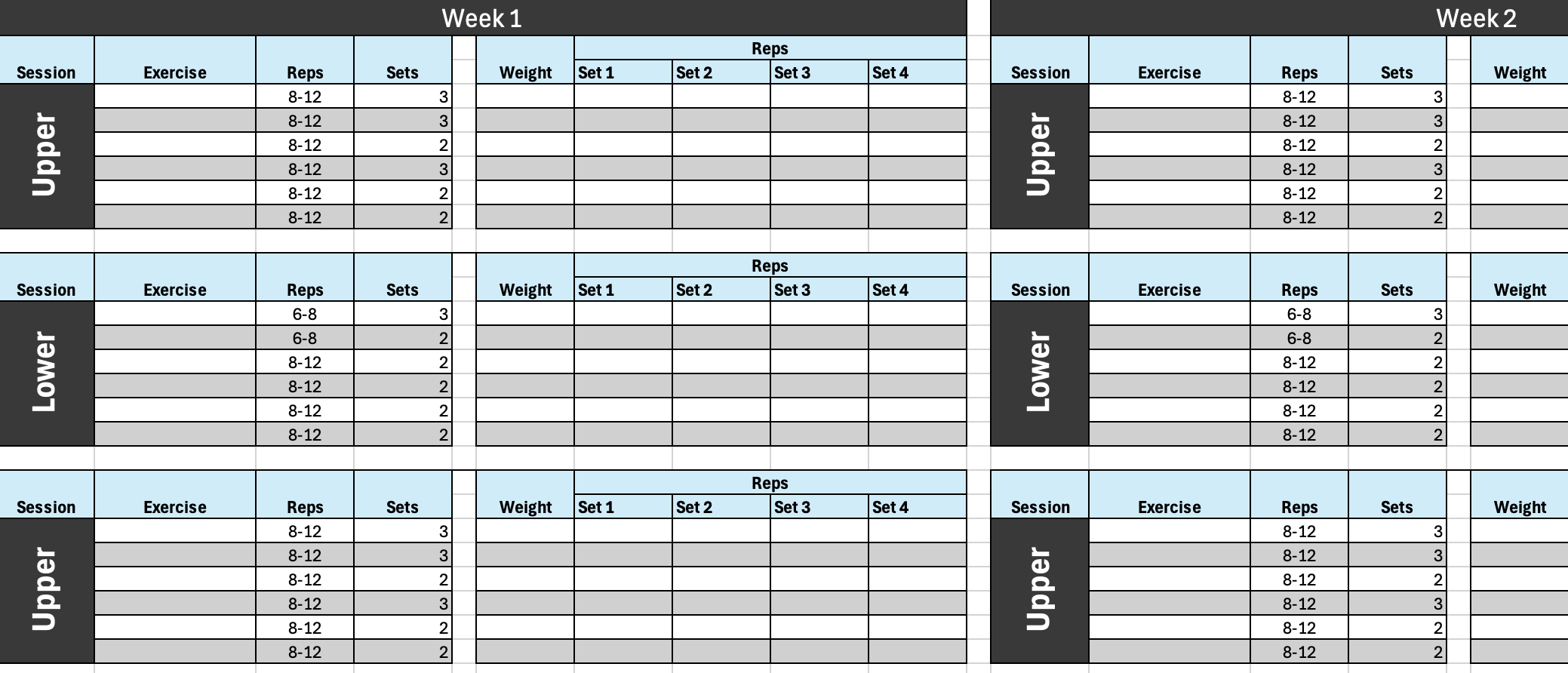
Give your programme at least 8 weeks before making major changes.
That doesn’t mean you can’t adjust anything.
If you really don’t get on with a certain machine, that’s fine. For example, if a chest-supported row feels awkward, swap it for a different row variation.
Small changes are fine.
But your key lifts should mostly stay the same.
Try to keep exercises like:
Squat or leg press
Deadlift or Romanian deadlift
Bench press
Pull-ups or lat pulldown
Overhead press
Main row variation
These are the lifts where you want to measure progress over time.
You can tinker more with smaller isolation exercises, but don’t rebuild the whole thing every week because you got bored.
If you’re training three days per week for eight weeks, that’s only 24 workouts.
You can do 24 workouts with the same structure… I hope!
If you’re bored after two weeks, there’s a decent chance you picked exercises you don’t actually like in the first place.
Choose exercises you enjoy enough to repeat, then give them time to work.
Final Thoughts

A good beginner gym programme should be simple, repeatable and easy to progress.
It doesn’t need to be fancy.
It doesn’t need 40 exercises.
It definitely doesn’t need to be changed every time someone on Instagram discovers a new cable movement.
Pick a realistic number of training days. Include the main movement patterns. Track your sets, reps and weights. Progress slowly over time.
That’s how you stop guessing and start actually training with purpose.
Our 12-week personalised training plan is tailored to your goals and lifestyle. Using progressive overload, it gradually increases workout intensity for continual improvement. Each session features effective, enjoyable exercises to keep motivation high. Whether building strength, boosting fitness, or enhancing wellbeing, this structured, supportive plan ensures sustainable results.
