
How to Build Muscle Fast (The Right Way)
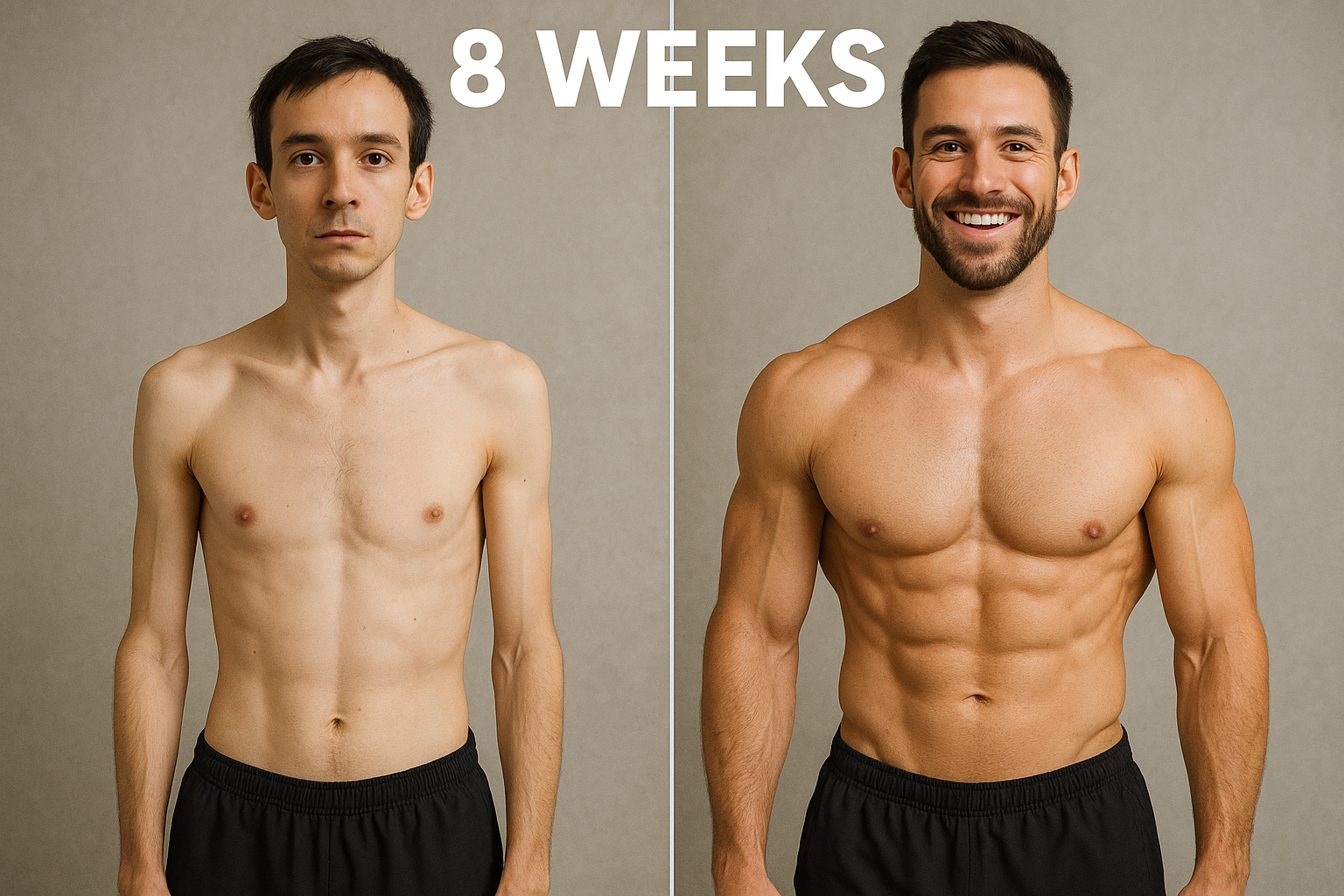
People are always asking how to build muscle fast — but the truth is, muscle growth is a slow process. It’s a bit quicker when you’re just starting out, but the longer you’ve been training, the more gradual it becomes. There’s no real shortcut; it comes down to consistent effort over time.
In today’s world, where we’re used to instant results, that can be hard to accept. Social media doesn’t help either — it’s easy to see someone online claiming to have gained a ridiculous amount of muscle in a few months and feel like you’re behind (like the image above). But what you don’t see are the things happening behind the scenes: enhanced substances, clever lighting, or just plain editing.
In this article, I’ll explain how to build muscle as efficiently as possible, the right way — with tried and trusted methods that help you get stronger, stay consistent, and actually enjoy the process.
1. Training: The Foundations of Muscle Growth
Progressive Overload
Progressive overload simply means gradually increasing the challenge placed on your muscles — whether that’s by adding more weight, doing extra reps, slowing down the tempo, or adding another set. Over time, your body adapts to handle that increased workload, and that’s what drives growth.
If you want more detail on how to apply it, I’ve written a full article breaking down the best ways to use progressive overload effectively.
Training Intensity
Training hard enough is crucial. Research shows that training within 1–2 reps of failure is one of the most effective ways to stimulate muscle growth. Some people like to go all the way to failure, which is fine if you enjoy it, but it’s not necessary. The key is knowing what failure actually feels like — many people think they’re close when they’ve still got 4–5 reps left in the tank.
As a general rule of thumb, the more intense your sets are, the less volume you will need. If you go all out to muscular failure, on your first working set of an exercise, that may be enough to stimulate growth. However, this type of training is more suited to experienced lifters.
Exercise Selection
Don’t get lost in the social media noise about which exercises are “best.” The best exercises are the ones you enjoy and can perform safely and consistently. If you love barbell rows, do them - even if someone tells you a chest-supported row is “better.” Enjoyment leads to consistency, and consistency drives progress.
Of course, there are some exercises I would say that are just that bad that you’re wasting your time on, so don’t just pick any exercise you see and enjoy.
A good general guide for training a certain muscle would be to choose 1, maybe a max of 2 compound lifts. Then follow that up with 1-2 isolation exercises.
Consistency
This is the most important piece. You can have the best plan in the world, but if you’re not showing up and putting in the work regularly, you won’t get results. Stay consistent by setting clear goals, finding training you actually enjoy, and avoiding injuries through smart recovery, proper technique, and listening to your body.
Without consistency in your training, you are very unlikely to see the results you like. It’s common for people to have a 8-10 week period of consistency and then follow that up with 3-4 weeks of not stepping foot in the gym. Whilst you can certainly stay in shape and retain a decent amount of muscle mass doing this, you will need to be a genetic freak to gain any meaningful amount of muscle mass.
2. Nutrition for Muscle Growth
You can’t out-train poor nutrition. What you eat determines whether your body has the fuel it needs to grow, and it’s way less complicated than you may think.
Calorie Surplus
To build muscle, most people (depending on experience & body fat level) need a small calorie surplus — around 200–500 extra calories per day. You don’t need to go overboard. If you’re new to calorie counting and still working out what your maintenance level is, I would go on the slightly higher side. This just gives you a buffer in case you think you’re eating more calories than you are which is common if you’re someone who has spent most their life skinny.
The days of huge bulks seem to be over as we now know gaining a crazy amount of weight does not lead to any signficant benefit in the long term muscle building process.
That said, if you’re already carrying a higher amount of body fat (e.g., a BMI around 30), you may actually be able to gain muscle while in a calorie deficit, since your body can use stored fat as an energy source.
Protein Intake
Aim for around 0.8–1 gram of protein per pound of body weight. For example, if you weigh 200 pounds, shoot for 160–200 grams per day. More than that won’t give you much extra benefit — consistency matters more. Saying that, you can still get results eating 0.5 grams per pound. However, it’s not optimal and your results won’t be as good as hitting a higher amount.
Food Quality
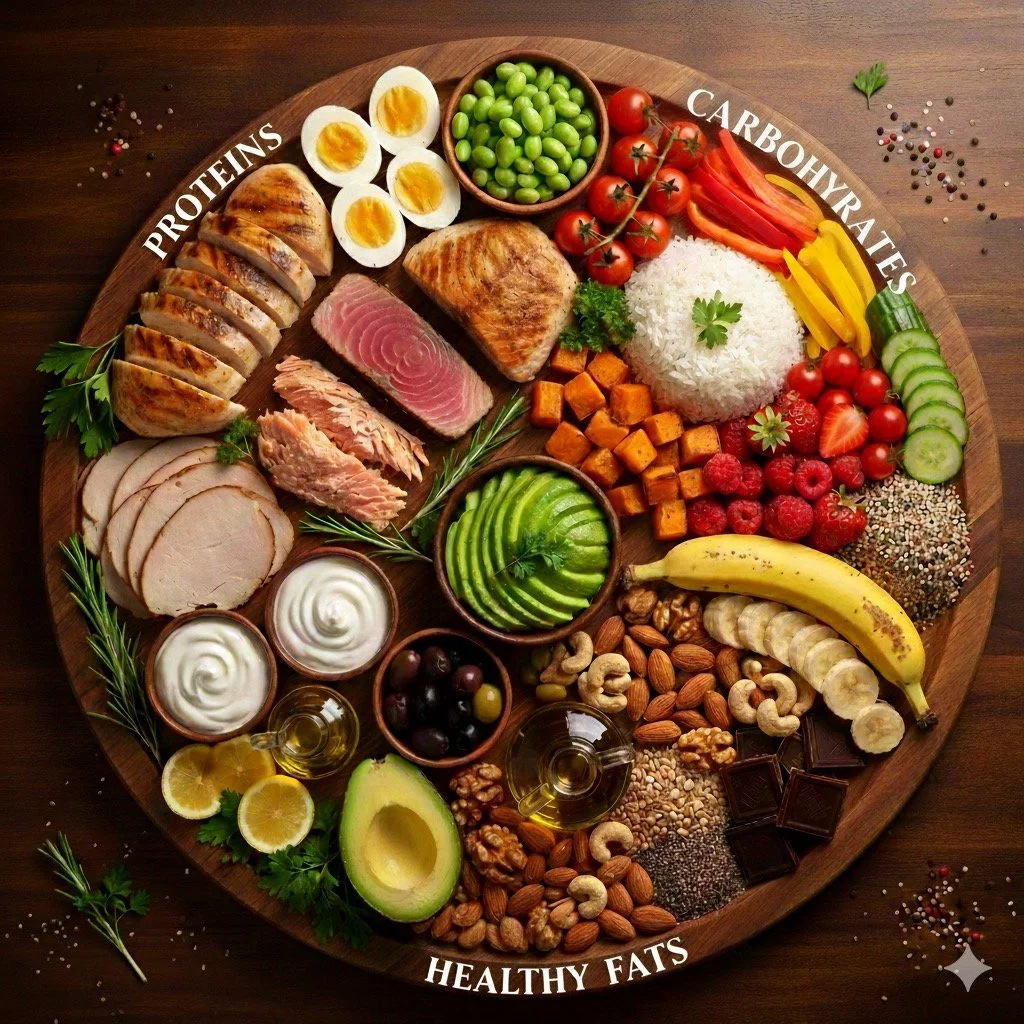
Choose mostly whole, minimally processed foods. Eat plenty of fruit, vegetables, and fibre to support digestion and overall health. Try and hit all your macro and micronutrients as much as possible and you will give yourself a fantastic chance at achieving your goals.
That being said, your diet doesn’t have to be 100% from the platter image above and you don’t have to completely cut out all processed foods, fast food, and takeaways to achieve results. You just need to make sure the bulk of your diet does contain whole foods and you don’t find yourself in Maccies 3 times a week. A Saturday night takeaway isn’t going to harm your progress, it’s important you enjoy your food!
Meal Timing
You don’t need to eat every 2 hours. Meal timing is far less important than total daily intake. Whether you eat two or five meals a day, you’ll make progress as long as your protein and calorie goals are hit.
Common Nutrition Mistakes
Many people simply don’t know how many calories they’re eating. Try tracking for a week or two - it’ll teach you the “language” of calories and portion sizes. Avoid dirty bulks where you eat anything and everything “for the gains.” You’ll just end up adding fat, not muscle.
3. Recovery: The Most Underrated Part of Muscle Growth
Muscle growth doesn’t happen in the gym - it happens when you rest. Recovery allows your muscles to repair, rebuild, and come back stronger.
Sleep
Sleep is one of the most powerful recovery tools. Aim for 7–8 hours a night. During deep sleep, your body releases growth hormone, repairs muscle tissue, and restores energy stores. Studies have shown that poor sleep can significantly reduce strength gains and muscle recovery.
Rest Days
You don’t need to train seven days a week. In fact, you shouldn’t. Most people get the best results training 3–5 days per week at high intensity, leaving time to rest and recover. On rest days, you can stay active with light cardio or stretching, but keep the intensity low.
Managing Stress
High stress levels can elevate cortisol, which can interfere with recovery and muscle growth. Research shows chronic stress negatively impacts strength and overall health, so find ways to manage it — whether that’s through mindfulness, walking, or simply getting more sleep.
Avoiding Overtraining
True overtraining is rare, but under-recovering is common. Listen to your body. If you’re constantly sore, tired, or demotivated, take a deload week or reduce your training volume.
4. Common Mistakes to Avoid
Inconsistency
Going all-in for six weeks, then taking a month off, is one of the biggest progress killers. It’s fine to have dips in motivation, but the key is to keep showing up even when you don’t feel like it. If you have a tendency to do this, ask yourself why? Sometimes it’s because you may be putting yourself on a 5 day a week plan which causes your body to feel knackered after a few weeks so you decide to have a one week break which ends up being a 4 week break instead. Sound familiar? Try programming in 2/3 training days a week and see if you can improve your consistency that way.
Another way to help can be to set goals. When you are working towards a certain target, your training becomes more purposeful rather than going through the motions each session.
Poor Form
Poor form stops you from training the target muscle effectively and increases injury risk. Learn proper technique — watch credible videos or get help from a coach.
It’s common for people to start week one on a certain exercise and by week 6 they have jumped up a lot of weight on the machine and believe they have got a lot stronger. In reality, their form has just got progressively worse, whether it be more swinging or using different muscles to help them lift the weight.
I suggest filming some of your lifts as a form check every now and then. If you don’t really like filming yourself in public, doing it every 12 weeks is a length of time I would say is still ok. That way you can check your form day one vs today and see if you’ve picked up any bad habits.
Program Hopping
Changing routines every few weeks resets your progress. If you change all your exercises, you then have a week of gauging where your strength is at with the new exercises. It’s ok to swap out some of the smaller exercises now and then such as the type of bicep curl of tricep extension you do. Just make sure you keep your main compound lifts consitent.
Stick with a program for at least 12 weeks to see meaningful results. Choose one you enjoy so you’re not tempted to keep switching.
Impatience with Results
Muscle growth is slow - that’s normal. You may see really good results online that certain people have had but that is the very small minority of people, if even real at all.
Take progress pictures, track your lifts, and measure key areas every few months. You’ll often see progress on paper before you see it in the mirror.
Not Tracking Lifts
Guessing your weights leads to inconsistent training. Don’t go into your session looking at the dumbbells debating whether you did the 10s or 12.5s last session. You have decided to take an hour or so out of your day to go to the gym, don’t do yourself a disservice and not bother tracking because it takes 10 seconds between sets.
Keep a record of your lifts — it’s the simplest way to ensure you’re progressing over time and it’s also great to look back at over the years and see how far you have come.
Building muscle isn’t just about doing the right things — it’s about avoiding the wrong ones. Stay consistent, train smart, track your progress, and give it time. The results will come if you keep showing up.
Conclusion
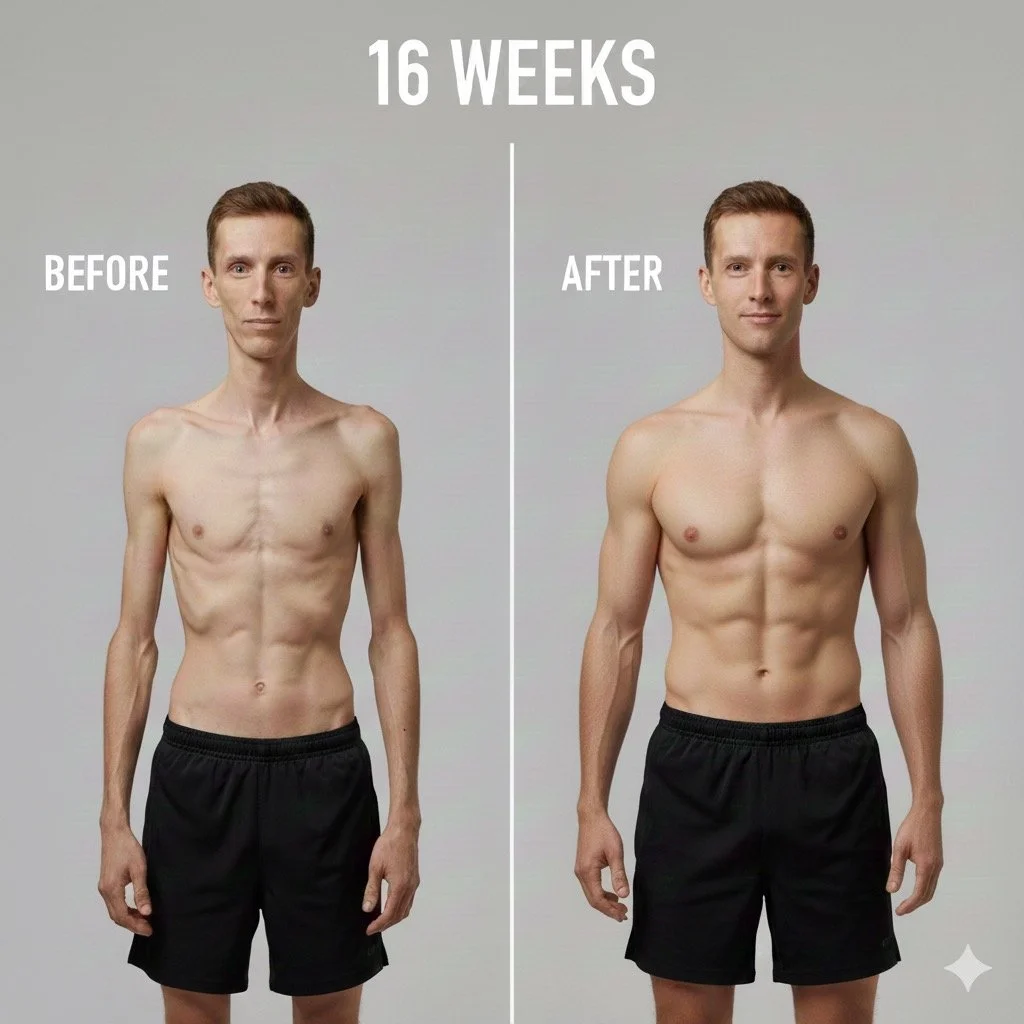
Building muscle fast isn’t about chasing quick fixes - it’s about doing the fundamentals well and doing them consistently. Focus on progressive overload, eat enough to grow, prioritise recovery, and avoid the common mistakes that hold most people back.
If you want to take the guesswork out of it - to know exactly what to do in the gym, what to eat, and how to keep progressing - I can help.
You can get a personalised workout plan tailored to your goals, schedule, and experience level. It’ll give you structure, confidence, and a clear path to faster results.
If there is anything you are unsure about when starting your fitness journey, I’m free to contact.
TL;DR
Muscle growth is slow but can be made efficient with the right approach.
Train with progressive overload and proper intensity.
Eat enough calories and protein to support growth.
Prioritise recovery — muscles grow when you rest.
Avoid mistakes like inconsistency, poor form, and not tracking your lifts.
Need help? Get a custom workout plan built for you.
