
What Are The Best Supplements For Muscle Growth?
Starting out at the gym? Supplements can feel like wandering through a minefield of powders, pills, and promises. Only a few actually deliver. This article breaks down the proven winners, the overhyped pretenders, and the solid-for-health picks—so you know where to spend wisely and build real results.
The Good
Whey Protein
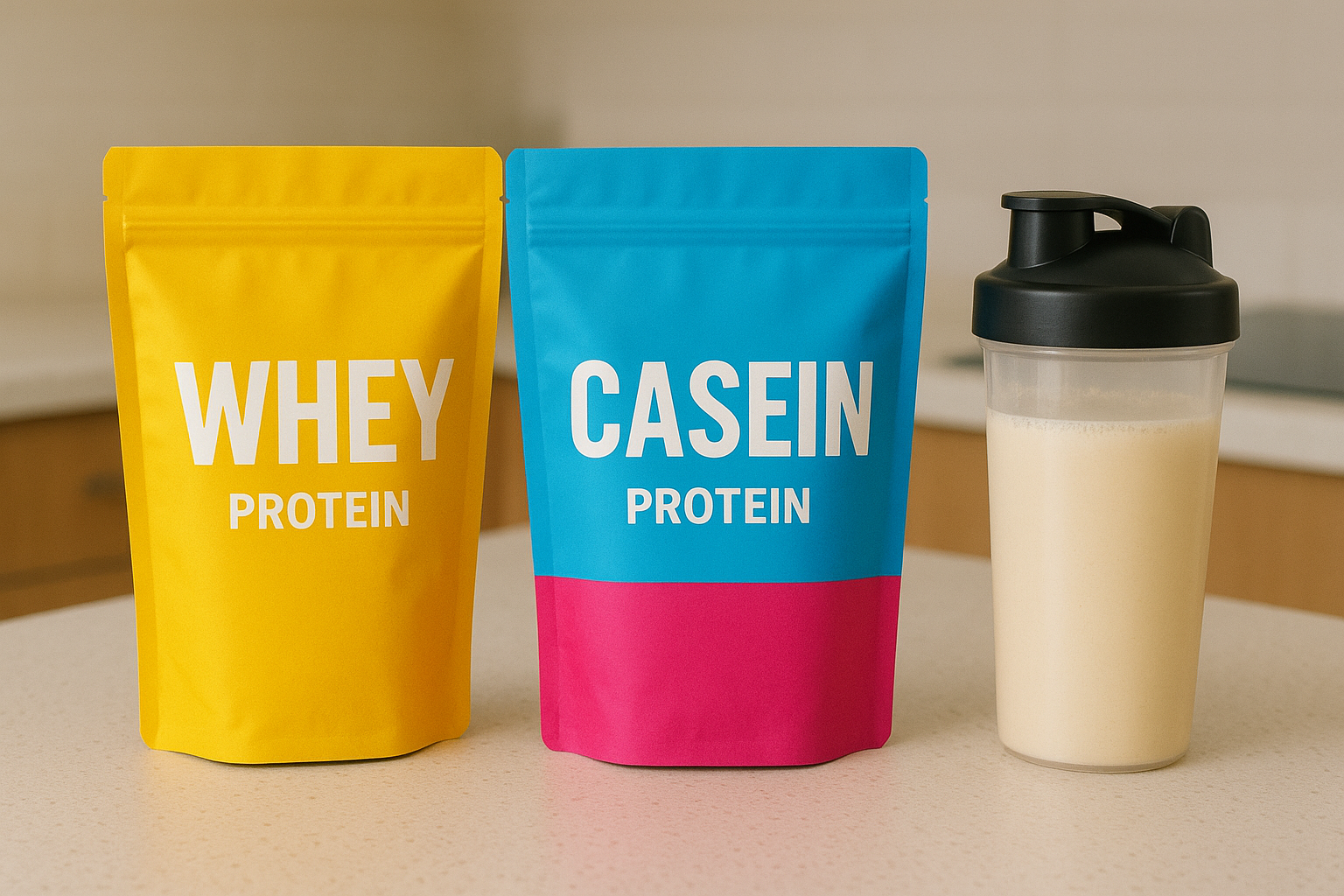
If you’re new to lifting, whey protein is like the training wheels of muscle building—simple, reliable, and hard to mess up. It digests quickly, giving your muscles the amino acids they need to grow. Studies show it helps beginners gain strength and lean mass when combined with workouts (PMID: 24015719).
That being said, you only really need it if you’re not getting enough protein in from your diet. Aiming for a minimum of 1.6g of protein per kilogram of bodyweight is a great baseline. Having a protein shake on your way to work or to the gym helps you add 20-30g of protein to your diet and it’s super convenient. I also like to add a scoop to my greek yoghurt bowl or my oats for breakfast to give it more flavour whilst adding protein.
My go to place for protein powder is Bulk. Although tons of supplement businesses provide very similar products, I use bulk because they’ve always been super reliable with fast deliveries.
There is also the option of casein protein, which is similar to whey and it digests slower. It’s theorised that having casein protein before you sleep could be beneficial to muscle growth due to the protein taking longer to digest overnight. However, we are yet to see studies proving this theory correct when it comes to muscle gain.
Creatine Monohydrate
Creatine is basically your gym cheat code. It helps your muscles make more quick energy (ATP), which means you can push out a few extra reps. Those extra reps add up over time into real progress. Research shows creatine consistently boosts strength and size—even in beginners (PMID: 28615996, 12945830). Recent research has also found creatine to have cognitive benefits, with participant’s memory improving via supplementing with creatine vs not (PMID: 35984306).
A 5g daily is sufficient enough to reap the benefits of creatine, although if you have more muscle mass or you’re a larger person, you could up the dose slightly.
Save your money! Creatine monohydrate is cheap and it works. Don’t get fooled by the other creatine products such as “micronised creatine”. They cost more and are not any more effective than monohydrate. Again, Bulk is my go to for creatine.
Caffeine
That morning coffee? Turns out it’s not just keeping you awake, it can also make your workouts better. Caffeine increases focus, power, and endurance—so you’ll feel more switched-on in the gym. A review found it boosts strength performance (PMID: 32551869).
It’s also useful to just get you to the gym. If I’m ever feeling a bit tired before going, I’ll knock back an espresso and go. By the time I’m doing my first working set the caffeine has kicked in.
The Waste Of Money
Turkesterone
Turkesterone is the new kid on the block, often hyped as “plant steroids.” Sounds cool, right? Problem is, there’s basically no solid human research proving it builds muscle. Most of the buzz comes from marketing, not PubMed. Until real studies show otherwise, it’s more likely to shrink your wallet than grow your biceps.
I tried it a couple of years back and the only effect I had was that I really struggled to sleep. I would say don’t waste your money on Turkesterone if it was fairly cheap. But you’re looking at around £50 which is all due to the marketing hype.
Testosterone Boosters
The name makes it sound like you’ll wake up looking like a Marvel superhero. Sadly, most “test boosters” use herbs like tribulus or fenugreek that show little to no effect on actual testosterone or muscle growth. You’ll also find a lot of the brands selling them label them as “clinically researched”, but this is far from the case in an overwhelming majority of the time (PMCID: 9924584). Unless your doctor prescribes legit testosterone therapy, save your cash for food and gym memberships.
BCAAs (Branched-Chain Amino Acids)
BCAAs are like paying for Netflix but only getting three episodes instead of the whole series. Sure, they contain leucine, isoleucine, and valine, but research shows they’re far less effective than a complete protein source like whey (Human Genetics Journals). If you’ve got whey protein in your cupboard or are getting enough protein in day to day then don’t waste your money. The only time I’d say they are useful is if you genuinely really enjoy a certain flavour, then go for it, it’s better than a can of coke.
Other Recommendations
Vitamin D
Think of vitamin D as sunlight in a capsule. It supports bones, immunity, and even muscle function—especially if you’re deficient (and many people are). A little sunshine helps, but a supplement fills the gaps when skies are grey which they often are in where I live in Manchester! A recent meta-analysis came to the conclusion that vitamin d supplementation reduces the risk of cancer death by 15% (PMCID: 25748703).
Magnesium
Magnesium is the unsung hero of recovery. It’s involved in over 300 processes in your body, including energy production and muscle relaxation. Deficiency can leave you feeling sore, sluggish, or crampy. Supplementation can improve overall function and sleep quality. (PMID: 33865376).
Sleep is an underrated component of muscle building. Although magnesium may not magically make you sleep incredible, research shows it does help in some capacity.
So do you need supplements?
Supplements can be useful, but they’re not magic. Think of them as sprinkles on top of the cake—not the cake itself. If your diet isn’t already rich in protein, fruits, veggies, and micronutrients, no powder or pill will save you. Add in quality sleep, stress management, and consistent training, and you’ve already unlocked 95% of your potential. Whey, creatine, or vitamin D might give you that extra edge, but the real progress comes from showing up day after day. Build the foundation first, then let supplements quietly support the work you’re already doing.
TL;DR
Whey, creatine, and caffeine = proven muscle helpers.
Turkesterone, test boosters, and BCAAs = overhyped wallet-drainers.
Vitamin D, magnesium, and omega-3s = solid for general health.
But remember: diet, sleep, stress control, and consistency do 95% of the work.
Supplements only supplement—they’re the sprinkles, not the cake.
