
How to Increase Your Bench Press: Beginner Guide
Improving your bench press is one of the most rewarding goals in the gym. And let’s be honest, when someone asks you how much you lift, it’s almost always “how much do you bench?”
If you’re reading this your bench press has probably stalled, which is normal so don’t worry. Or maybe you’re just starting and want to begin on the right path. If so, great!
The good news? Increasing your bench press is achievable for everyone. You don’t need to find “the perfect program” to do so. This guide breaks everything down step-by-step so beginners and intermediate lifters can finally build a strong, consistent, pain-free bench press.
What’s Holding Back Your Bench Press? (The 4 Big Reasons)
Before improving your bench press, it helps to understand why most people get stuck:
1. Poor Technique
Your bench press is massively affected by:
Bar path
Grip width
Elbow position
Shoulder stability
Upper back tension
Leg drive
Small issues here create big strength losses. This sounds like a lot to work on as a beginner, but they’re all easy fixes.
2. No Clear Progression System
Many lifters simply “lift and hope.”
No rep targets.
No progression plan.
No structure.
Without a system, progress stalls fast.
You need to go into each session thinking “I want to hit x weight/reps today”
3. Weak Supporting Muscles
The bench press isn’t just a chest exercise. It relies heavily on:
triceps
shoulders
upper back
lats
If these are underdeveloped, your press may struggle to progress.
4. Inconsistent Practice
Bench is a skill.
You get better by practicing it consistently — not by maxing out every few weeks.
How to Set Up a Strong Bench Press (The Foundation of Strength)
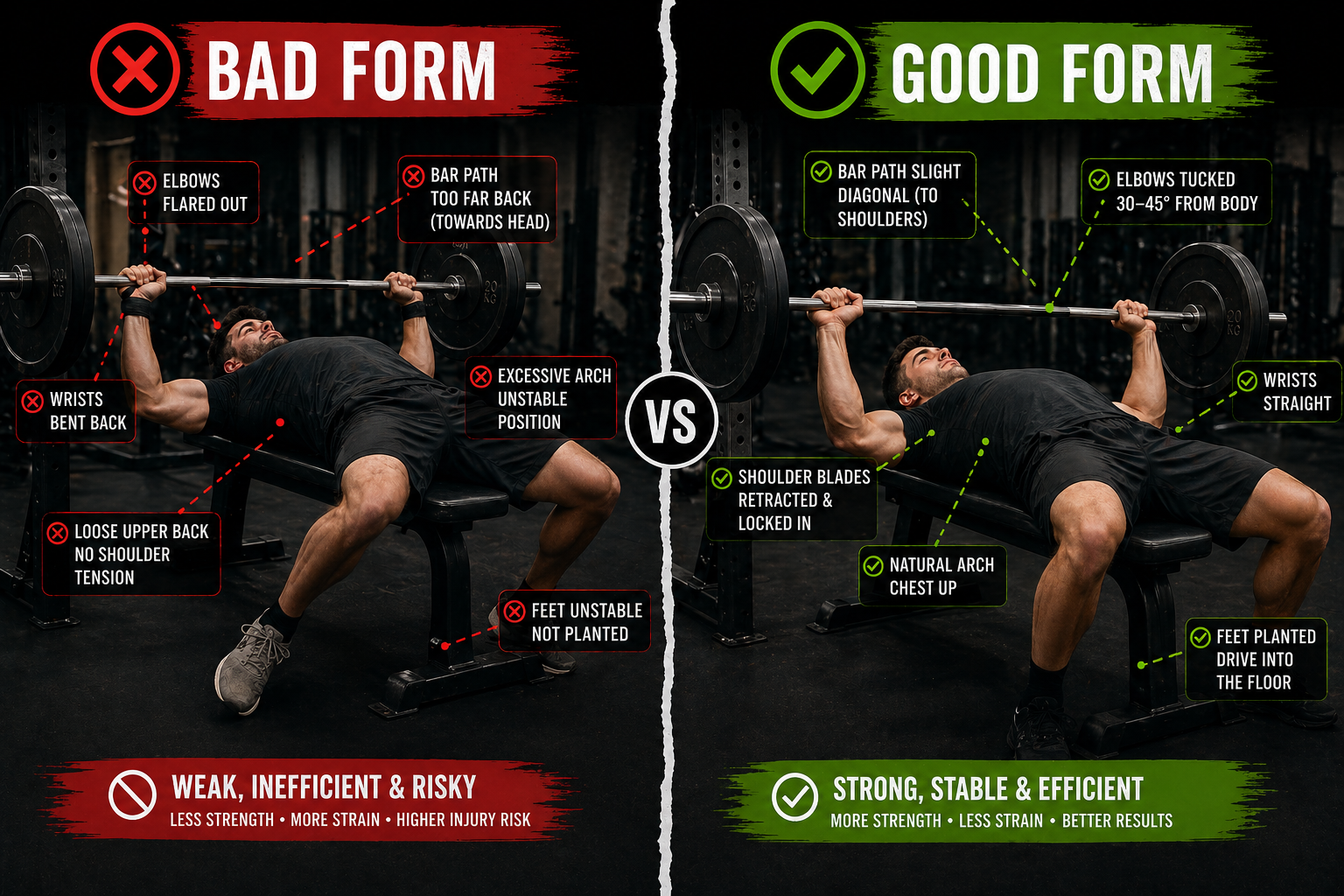
Your setup matters more than the press itself.
A strong setup = more power, better safety, and better bar control.
Step 1: Set Your Upper Back
Squeeze your shoulder blades together
Pull them down into back pockets
Maintain upper-back tension throughout the whole set
This creates a stable base for pressing.
Step 2: Find Your Grip Width
When the bar touches your chest, your forearms should be vertical. Find what feels comfortable for you. For example, I feel strongest and most comfortable having my pinky fingers on the outer ring of the bar. However, this is quite wide grip and may not be best for you.
If you’re really unsure, go for slightly wider than shoulder width to begin with then go wider from there if you feel comfortable.
Step 3: Create a Slight Arch In Your Back
No need for a powerlifter arch — just lift your chest slightly to reduce shoulder stress and improve bar path. Think of puffing your chest out.
Step 4: Plant Your Feet & Use Leg Drive
Your legs should:
be planted hard
create forward pressure
help stabilise your body
Leg drive doesn’t mean pushing your hips up — it means creating full-body tension. This is something you get better at the more you practice. The feeling of the leg drive should be a movement of power shifting from your feet towards your head.
Step 5: Align Your Eyes Under the Bar
Starting too far forward wastes strength and puts you in a poor path for unracking. As a beginner, eyes under the bar is a good cue. However, you use a cue of mouth or nose under the bar if you feel a stronger unrack doing so. Just keep it consistent.
Perfecting Your Bench Press Form
The Ideal Bar Path
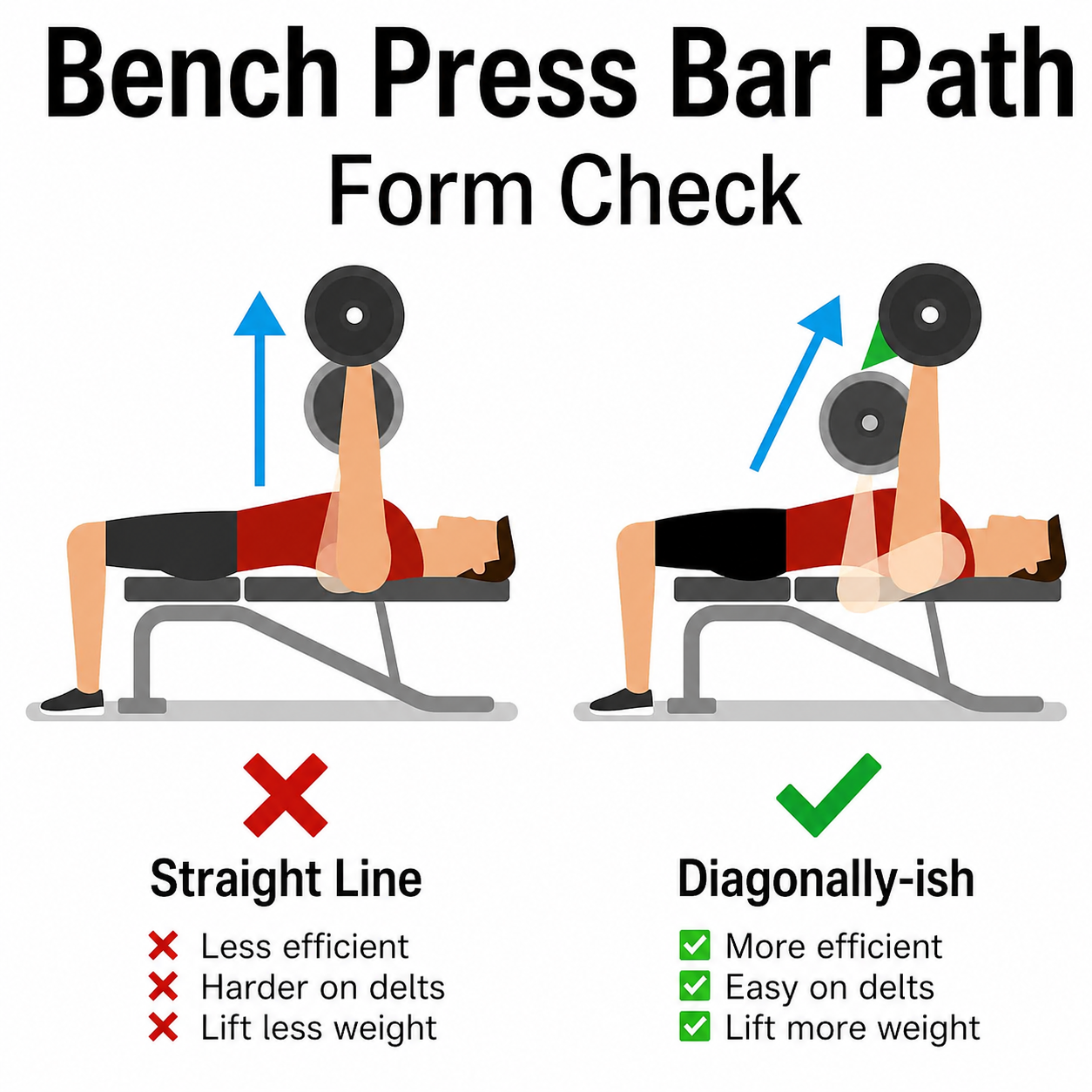
The bar should travel in a slight diagonal line:
down to the lower chest (around nipple line)
up towards the shoulders
This keeps the movement efficient and reduces shoulder strain.
Touchpoint
Aim to touch the lower chest, around the nipples.
Elbow Position
30–45 degrees from your body
not tucked too much
not flared out at 90 degrees
Control the Eccentric
Don’t dive-bomb the bar. Lowering the bar under control improves stability
Press Fast
Once the bar touches lightly, drive it up powerfully.
Warm-Up Routine for a Stronger Bench (5 Minutes)
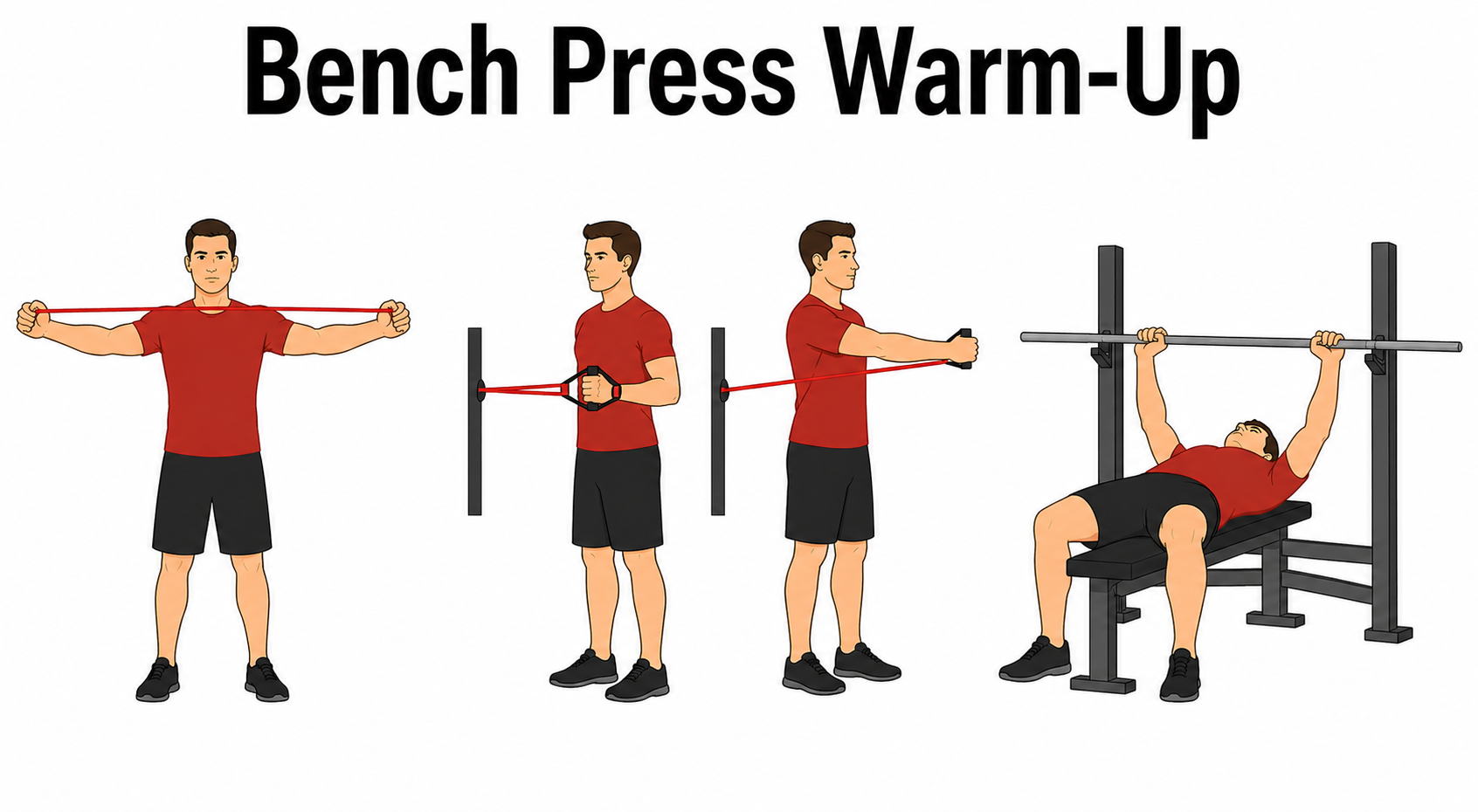
A proper warm-up reduces injury risk as opposed to going into your top set cold.
Phase 1 — Mobility (1 minute)
10–15 band pull-aparts
10 face pulls
10 arm circles
Phase 2 — Activation (2 minutes)
2×10 banded external rotations
1×10 push-ups
1×10 scap push-ups
Phase 3 — Build-Up Sets (2 minutes)
Example warm-up for 60kg working weight:
20kg bar ×10
40kg × 5
50kg x 3
→ Begin your first working set
This is dependent on previous injuries, age and other factors. This is what I recommend but if I’m honest – I skip phase 1 and 2 myself as in still young (kinda) and have always had good shoulder mobility and health.
How to Progress Your Bench Press
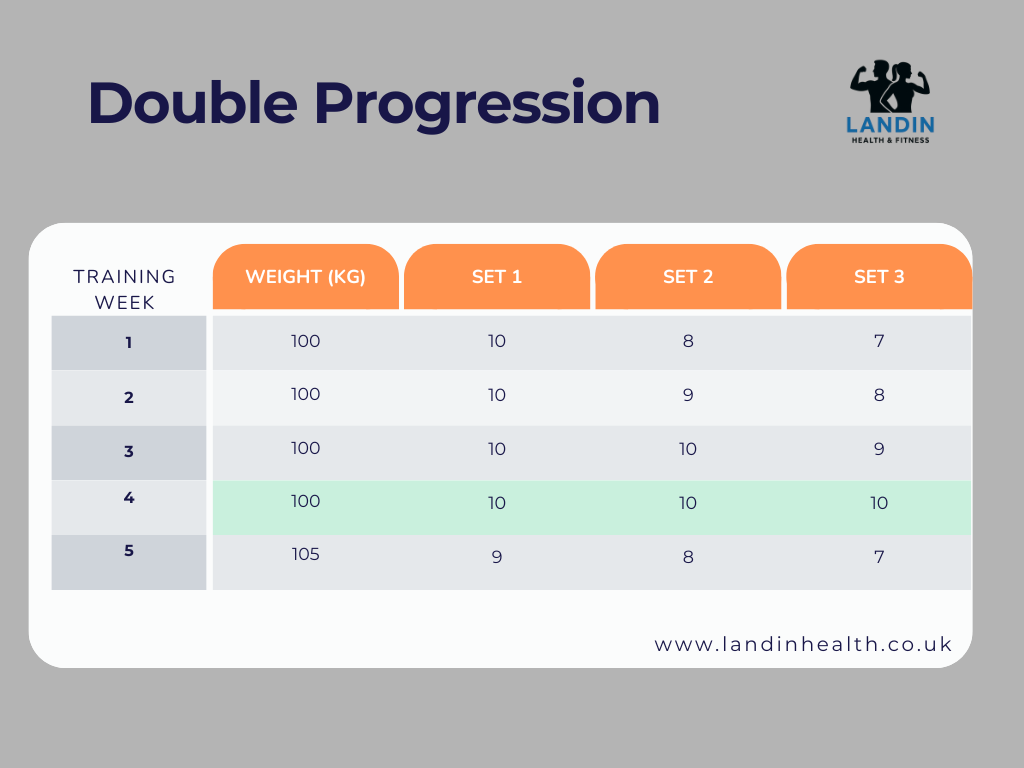
I have multiple progressive overload methods you could utilise in my article here.
Below is the most beginner-friendly progression system:
Double Progression Method
Pick a rep range, e.g., 8–10 reps.
If you hit 10 reps, increase weight by 2.5kg
If you’re in the middle (8–9), stay
If you drop below 8, reduce reps slightly but keep the weight
How Often You Should Bench Press Per Week
For beginners:
2x per week is the sweet spot
Session 1: Heavy bench
Session 2: Lighter bench or dumbbell press
You can get away with 1 per week, however if you’re reading this you are likely to be after decent progress. 1 session per week will get you only so far, so I always recommend 2 if it’s a training priority.
For intermediates:
2–3x per week
Day 1: Strength
Day 2: Volume
Day 3: Technique / accessories
Accessory Exercises That Increase Bench Press
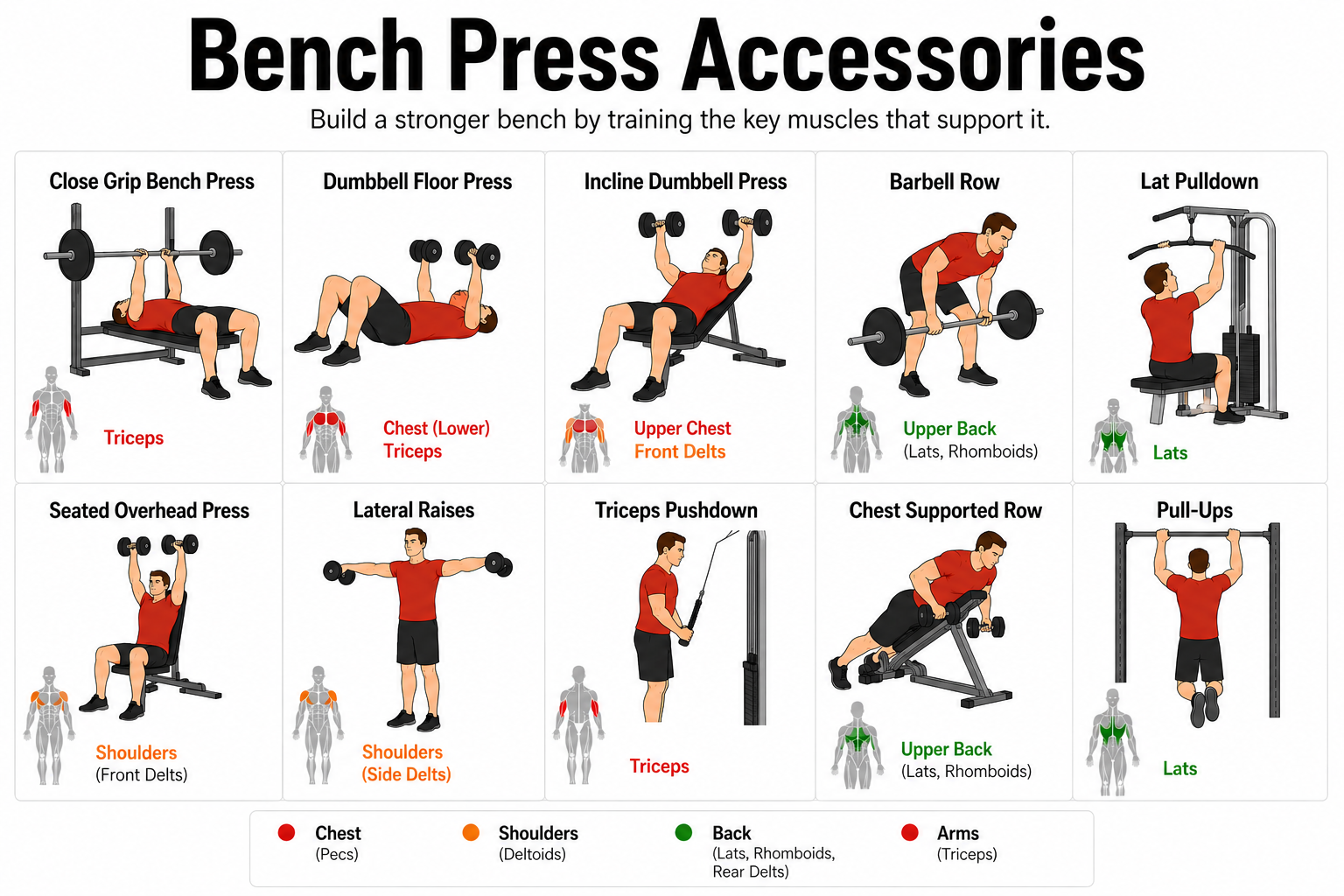
These are your highest ROI movements:
Triceps
Close-grip bench
Dips
Rope pushdowns
Skull crushers
Chest
Dumbbell bench
Weighted push-ups
Chest fly variations
Shoulders
Overhead press
Upper Back & Lats
Barbell rows
Lat pulldowns
Face pulls
Dumbbell rows
Pull-ups
These support the stability & power of your press.
Common Bench Press Mistakes Keeping You Weak:
Touching too high on the chest - poor bar path
Zero tension in upper back - less tension = less power
Loose wrists - less tension = less power
Feet dancing around - less tension = less power
Bouncing the bar - what are you even doing this for?
Ego lifting / maxing out too often - too much fatigue
Frequently Asked Questions
Should beginners arch?
A small arch is ideal. It protects shoulders and improves stability.
Should I pause the bar at the bottom?
Beginners: light touch is fine.
Intermediates: pausing builds more strength in the bottom part of the lift. It’s not essential, but is a good tool.
Is dumbbell bench good for strength?
Yes — it builds stability and improves your barbell bench.
How long will it take to increase my bench?
It depends on your training age. Most beginners can add 5–10kg in 6–8 weeks.
Final Thoughts
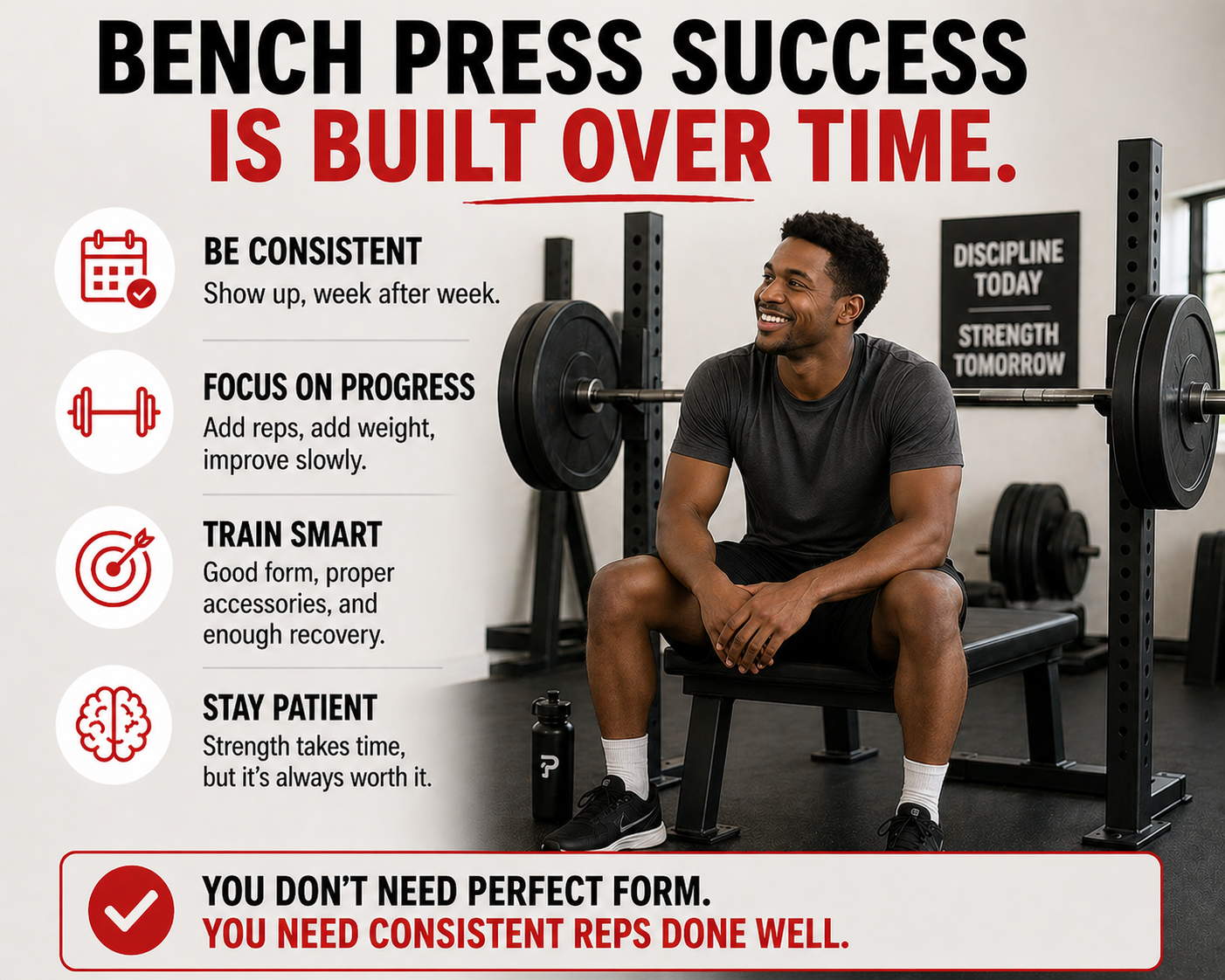
Improving your bench press isn’t complicated.
It’s about:
Proper setup
Smart technique
Consistent progression
Strong supporting muscles
A simple, structured plan
If you feel like you need further help, shoot me over a message below and we can discuss how we can help you progress.
