
How to Break a Bench Press Plateau

You’ve been stuck on the same bench press for weeks.
Same weight. Same reps. Same internal monologue of “this is the day it goes up”…
…and then it absolutely does not.
Before you assume you’ve hit your genetic ceiling (you haven’t), you just need some guidance.
TL;DR
If your bench is stuck:
Bench more than once a week
Fix your technique
Train your weak points
Follow a structured plan
Stop maxing out every session
Be patient
What Is a Bench Press Plateau?
A plateau is simply this:
You’re not getting any stronger.
Not one bad session. Not one random off day where everything feels heavy for no reason (I call them high gravity days).
We’re talking weeks of:
Same weight
Same reps
Same outcome
That said, don’t be too quick to panic.
If the bar is moving smoother or faster, that’s still progress. Your strength is improving — it’s just not showing up as extra reps yet.
The Most Common Reasons Your Bench Press Is Stuck
1. You’re Not Benching Often Enough

If you’re benching once a week and have been for a while, this is probably your issue.
The bench press is a skill as much as it is strength. Doing it once every 7 days isn’t enough to improve consistently once you have been lifting for a while.
Most people progress better at 2–3 times per week
More frequency = more practice + more volume
Once a week is usually maintenance
If you’re only training three times a week, just stick 2-3 sets of bench press at the start of your one of the other two sessions.
2. Your Technique Is Holding You Back

If your setup is loose and your bar path looks like it’s guessing where to go, you’re making the lift harder than it needs to be.
Poor bar path wastes energy
No tightness = less power
Inconsistency = unpredictable reps
Check out my bench press form guide article for more on this.
3. Your Weak Points Are Limiting You
Your bench is only as strong as its weakest link.
Off chest → chest
Mid-range → both
Lockout → triceps
Most people ignore this and just keep repeating the same lift.
4. You Don’t Have a Proper Programme
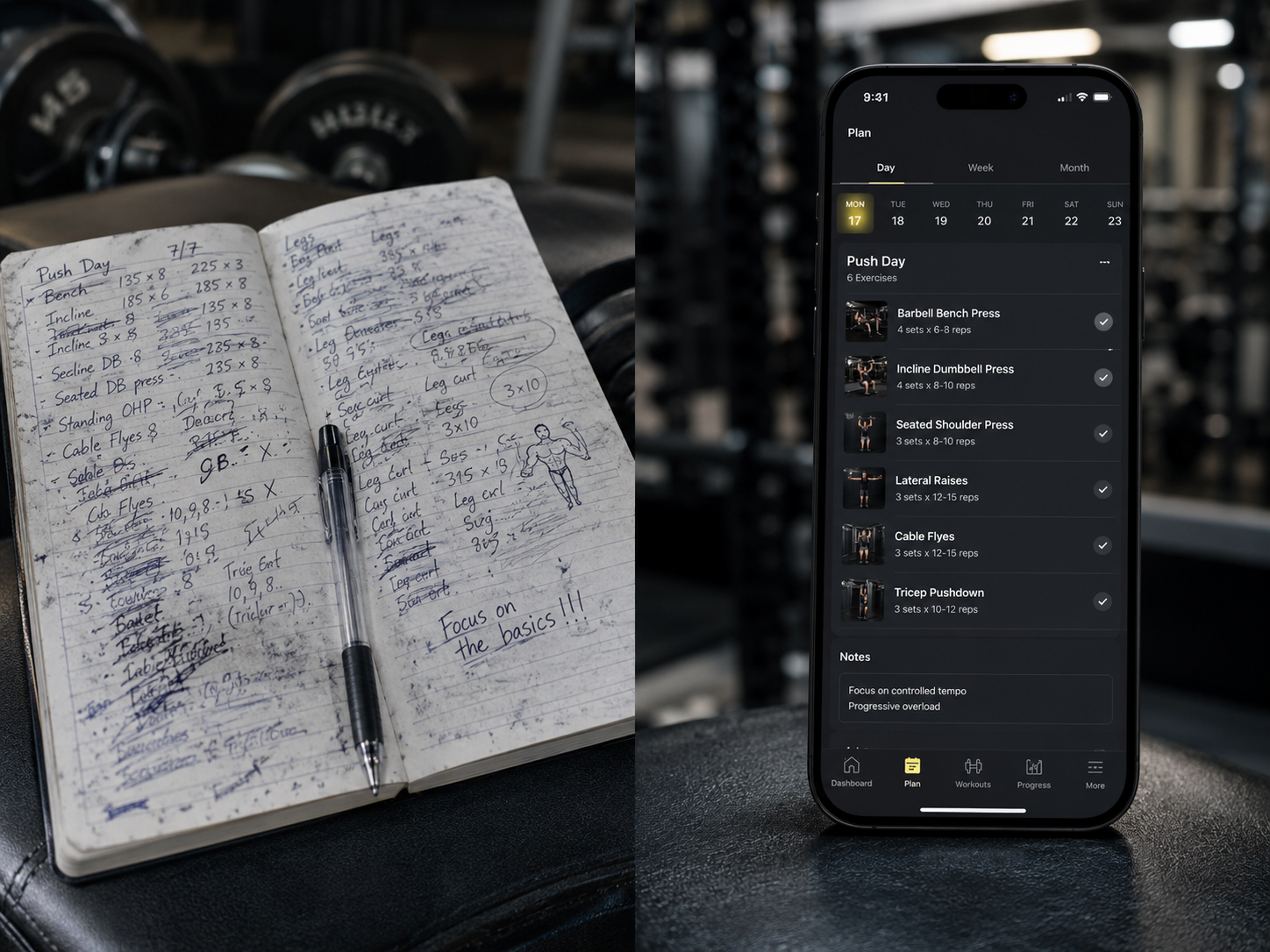
If you’re just “going off feel,” this might be the issue.
Random training = random results
No progression = no progress
For a guide on how to incorporate a progressive overload plan into your bench press, check out this article.
Or if you want more guidance, I provide online coaching that I guarantee will increase your bench.
5. You’re Treating Every Session Like a Max Attempt
Trying to hit your max every week is not a plan.
It’s just a weekly reminder of what you can’t currently do.
Strength comes from volume and consistency
Max attempts should be occasional and you should plan towards them, not weekly.
6. You’re Not Recovering Enough
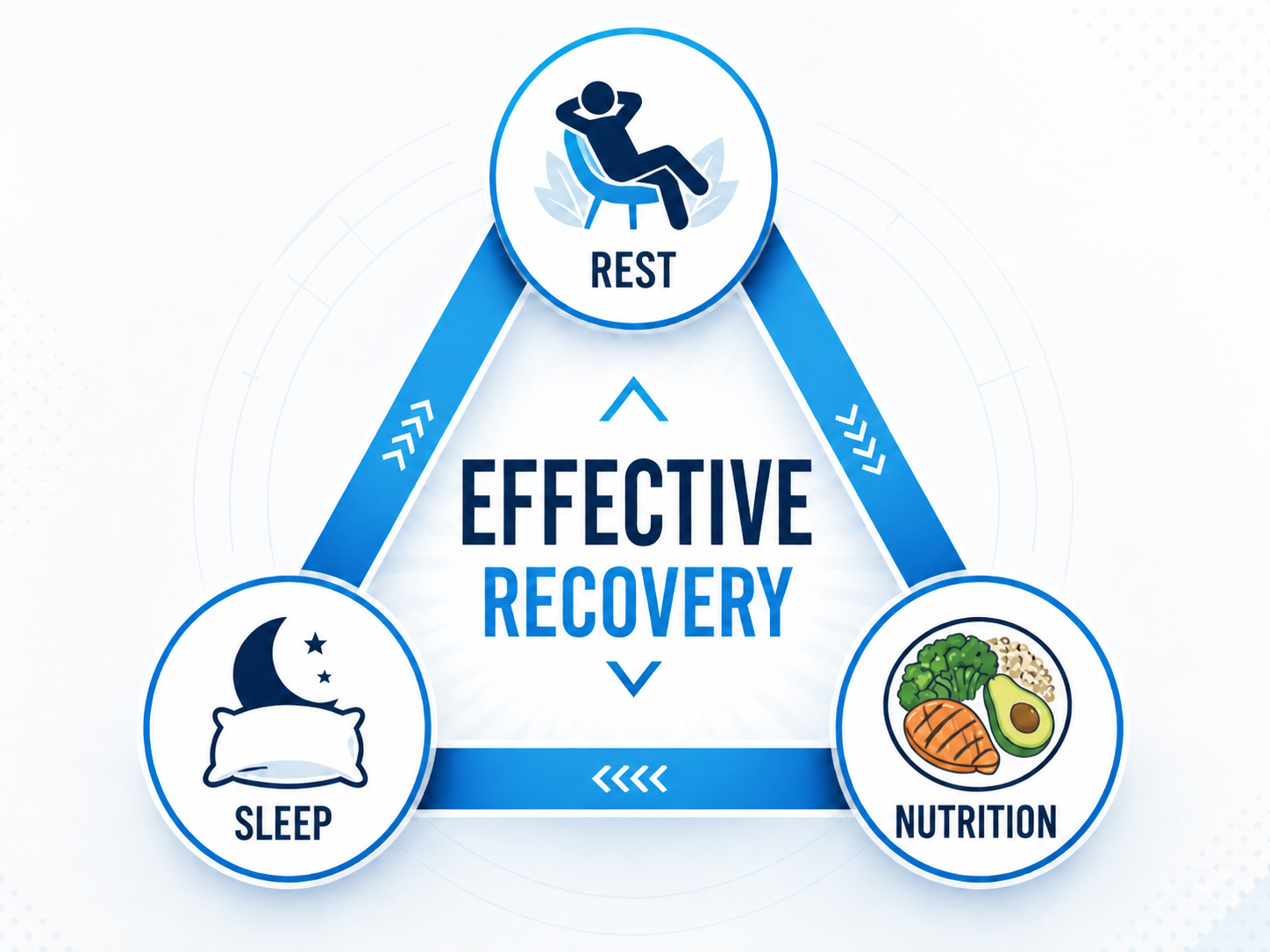
Even if you are going into the workout without soreness, that doesn’t mean you’re fully recovered. Systemic fatigue will sneak up on you. You may be stronger than your lifts are showing, which is a nice problem to have!
How to Fix Your Bench Press Plateau
Now, not all of the above may be relevant to you, but its likely at least one is! Lets get onto how to fix the plateau.
Fix 1: Increase Bench Frequency
Move to a 2x per week bench split.
Heavy + volume split
Fix 2: Use Microloading
You don’t need to jump up 5-10kg. Stick the 1.25kg plates on each side and progress from there.
Fix 3: Add Progression System
Go into the gym every session knowing what your target is. Have a system that allows you to slowly progress in reps and or weight whilst managing your fatigue levels.
If this is something you struggle with, drop me a message for coaching
Fix 4: Target Your Weak Point
Match accessory work to failure point.
For example, if your bench press is weaker at the bottom of the lift, you may want to include some pause reps. If it is weaker at the top of the lift, add some close grip work into your program.
There is more detail in my accessory work article.
Fix 5: Stop Maxing Out Every Week
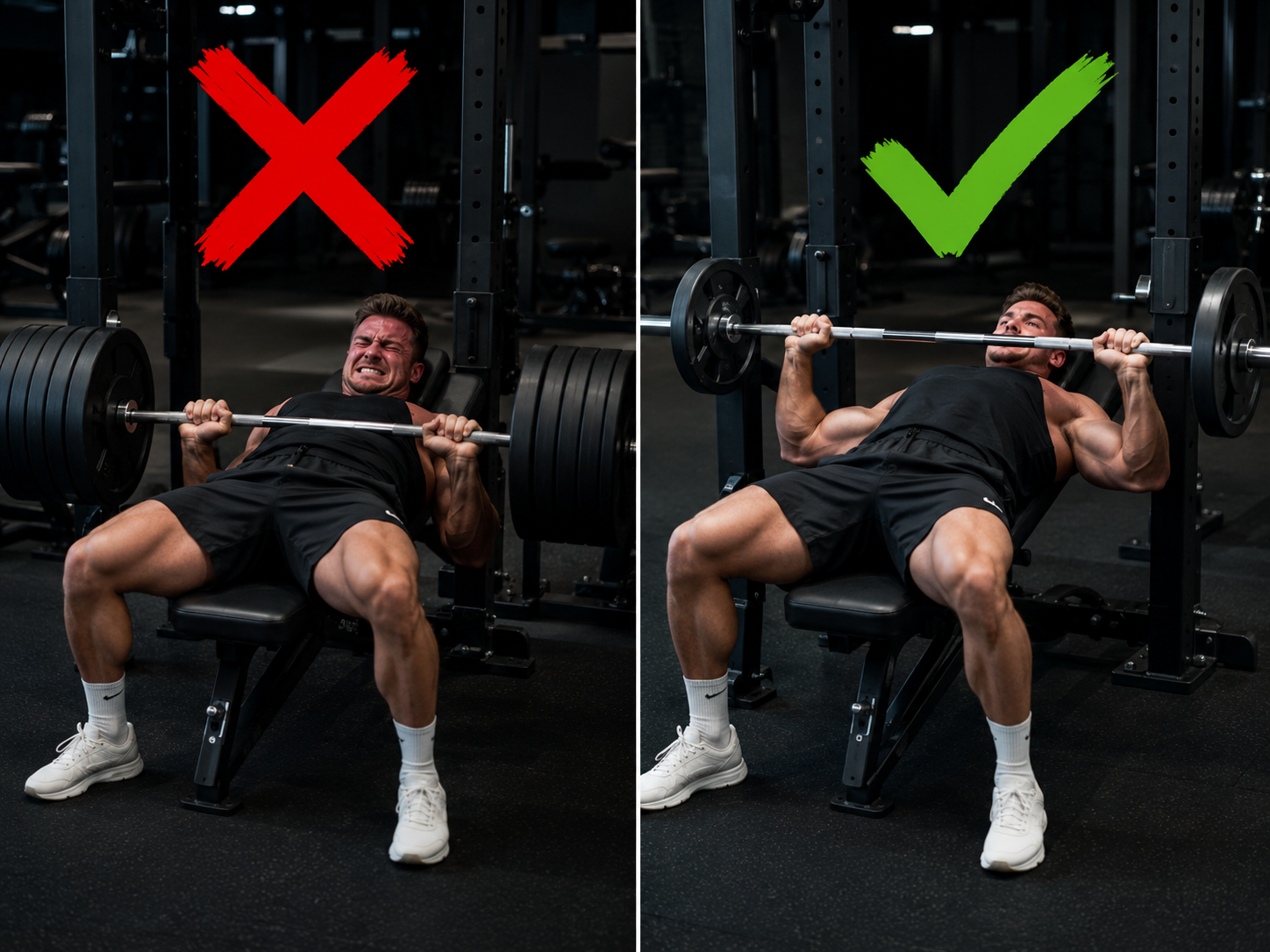
Just stop going for one rep maxes every other bloody week. Progress in higher rep ranges, manage your fatigue whilst improving your skill and that one rep max will inevitably increase.
Your training should build up to a one rep max over the course of multiple weeks, if you even have a valid reason for performing one.
What Should You Do Next?
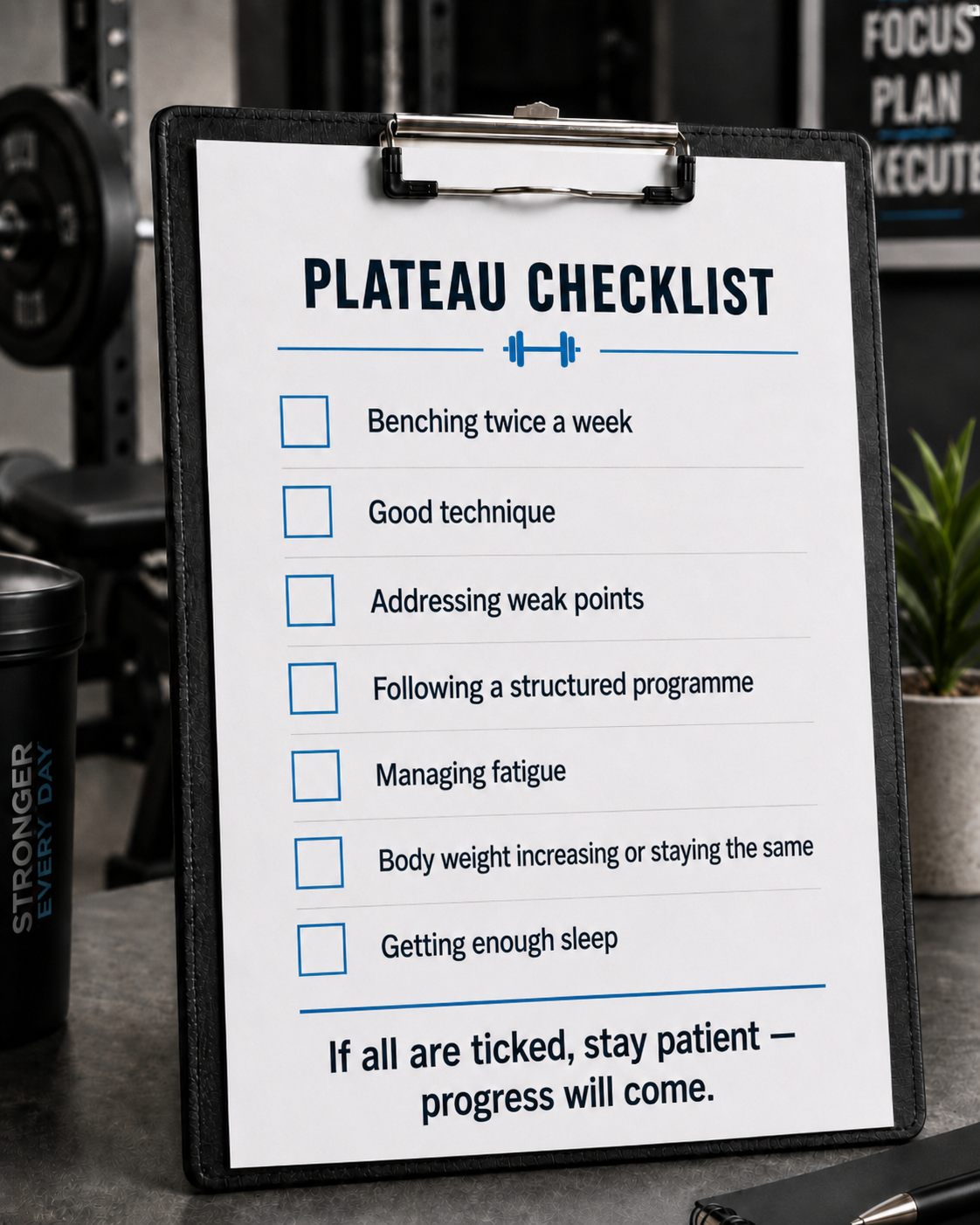
Go through the checklist above and if you can honestly tick all of them, there is no reason for you to be in a plateau.
If managing fatigue, following a structured programme, or staying accountable is where you struggle most, send me a message and I’ll help you build a plan that actually moves your bench forward.
If You’re Losing Weight…
If you’re in a calorie deficit and especially if you’re an experienced lifter your bench press might not go up and that’s completely normal.
In fact, if you’re losing fat and lifting the same weight for the same reps - that’s actually great progress.
You’re effectively getting stronger relative to your bodyweight — which is arguably more impressive. So don’t panic if numbers aren’t increasing during a cut.
Context matters.
Conclusion
If you fix the causes outlined above, you’re no longer truly stuck - you’re moving in the right direction.
Remember, you’re not in a plateau just because you haven’t added a rep in two weeks. If your final rep took three seconds last week but only two seconds this week, that’s progress. It might not be the quick progress you were used to as a beginner, but it still counts.
Trust the process.
Final TL;DR
Bench more often
Fix your form
Train weak points
Follow a plan
Be patient
FAQs
Why am I stuck on the same reps?
Because progress isn’t always reps - it can be control and bar speed first.
Should I test my max every week?
No. Unless you enjoy failing regularly.
Can I gain strength while losing weight?
Yes - but don’t expect it to increase quickly. Maintaining strength is already a win.
Should I deload if my bench press is stuck?
Maybe. If you feel tired, your reps are getting slower, and the unrack of the bar feels a bit heavier, a deload can help reduce fatigue so you can actually progress again.
Why does my bench feel weaker some weeks?
Because strength isn’t perfectly linear. Sleep, food, stress, fatigue and even how well you warm up can affect performance. One weaker session doesn’t mean you’ve lost strength. It means you’re human. Deeply inconvenient, I know.
Do I need to change my whole programme if my bench is stuck?
Nope. Sometimes you just need a small adjustment, like benching twice a week, adding more volume, improving technique, or managing fatigue better. Don’t throw the whole programme in the bin just because one lift is being dramatic.
