
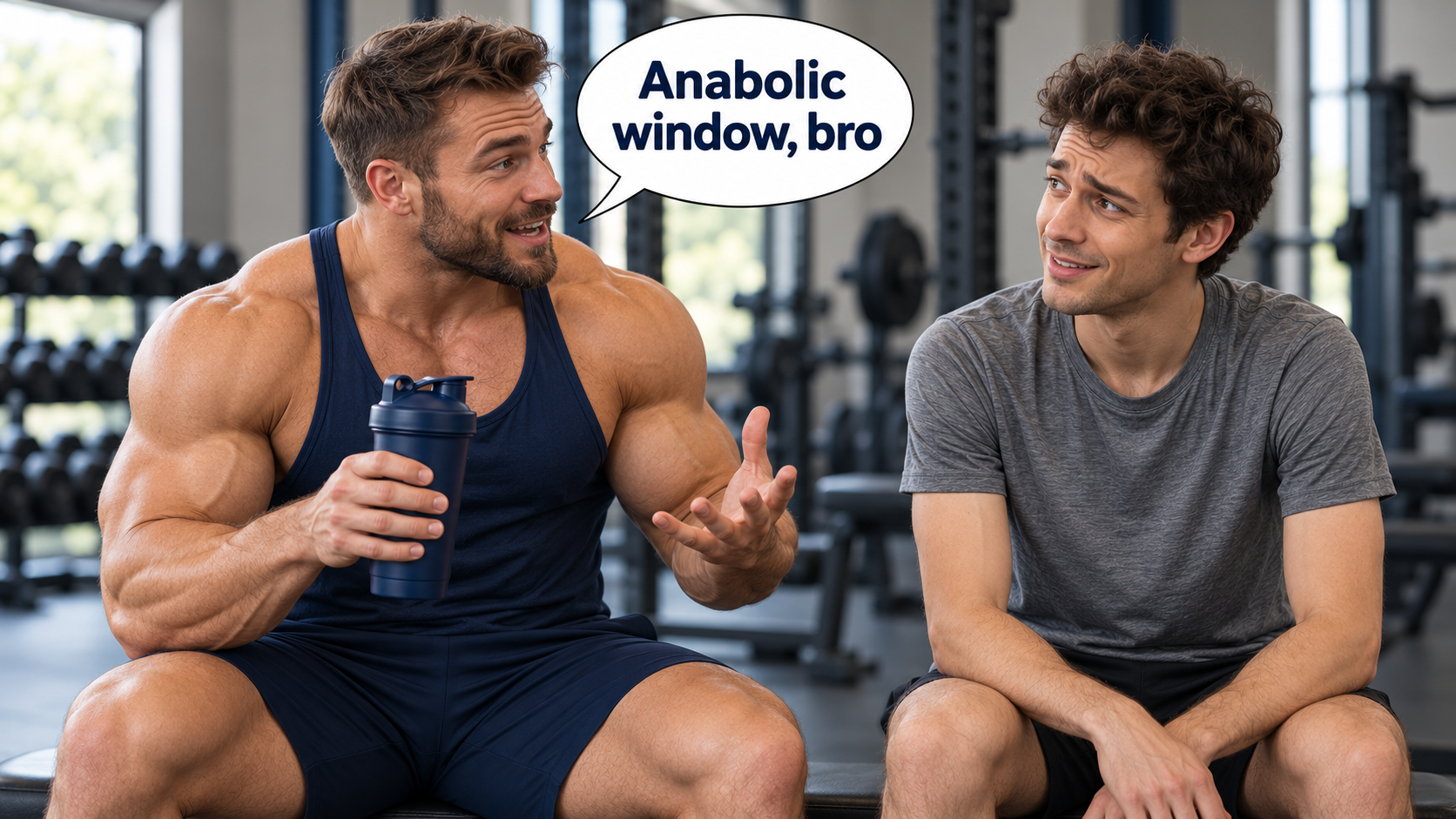
You finish your workout, realise you’ve forgotten your protein shake - it is now the end of the world and your workout was completely pointless, well done. Or is that actually the case? Nope.
Do you need protein straight away? Is it better before training? And does eating it at the wrong time actually affect your results?
Getting enough protein across the day matters more than the exact time you eat it. Having some around your workout is fine, but you don’t need to organise your protein intake around them. And don’t listen to the co-worker chatting on about the “anabolic window”. Just agree with them and ignore their advice.
Do you need a protein shake immediately after training?
A post-workout shake can be convenient, especially if you’re heading straight to work or won’t be eating for a while. But the idea that you have just 30 minutes to get protein is just not backed by science.
What you ate before training matters. If you had a protein-containing meal a couple of hours beforehand, you’re in a different position from someone who trained first thing without breakfast.
My practical advice is straightforward: if you’ve eaten before training and have a normal meal planned afterwards, there’s usually no reason to rush. If you’ve trained without eating, make a protein-containing breakfast or snack part of your routine afterwards.
What does the research say about protein before versus after a workout?
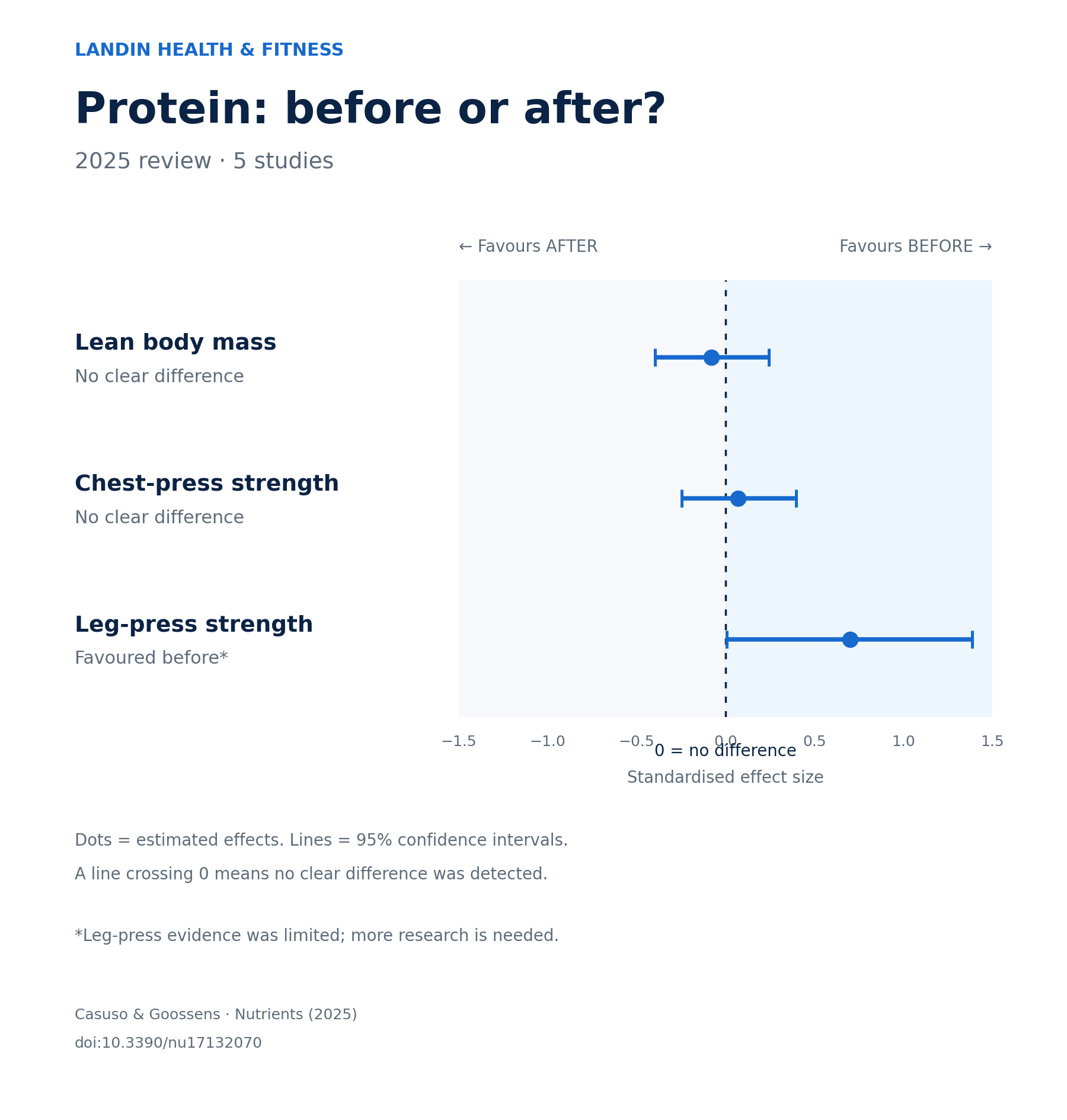
A 2025 systematic review combined five studies that directly compared protein intake before and after exercise.
It found no clear difference in gains in lean body mass between the two approaches. Chest-press strength results were also similar. There was a finding favouring protein before training for leg-press strength, but the small evidence base means we should be cautious about turning that into a firm recommendation and it should be investigated further.
This doesn’t prove timing can never matter. It does suggest there’s little reason for most gym-goers to worry about choosing the “wrong” side of their workout to eat protein.
How much protein should you aim for?
For healthy adults trying to build muscle through resistance training, around 1.6 grams of protein per kilogram of body weight per day is a useful starting target.
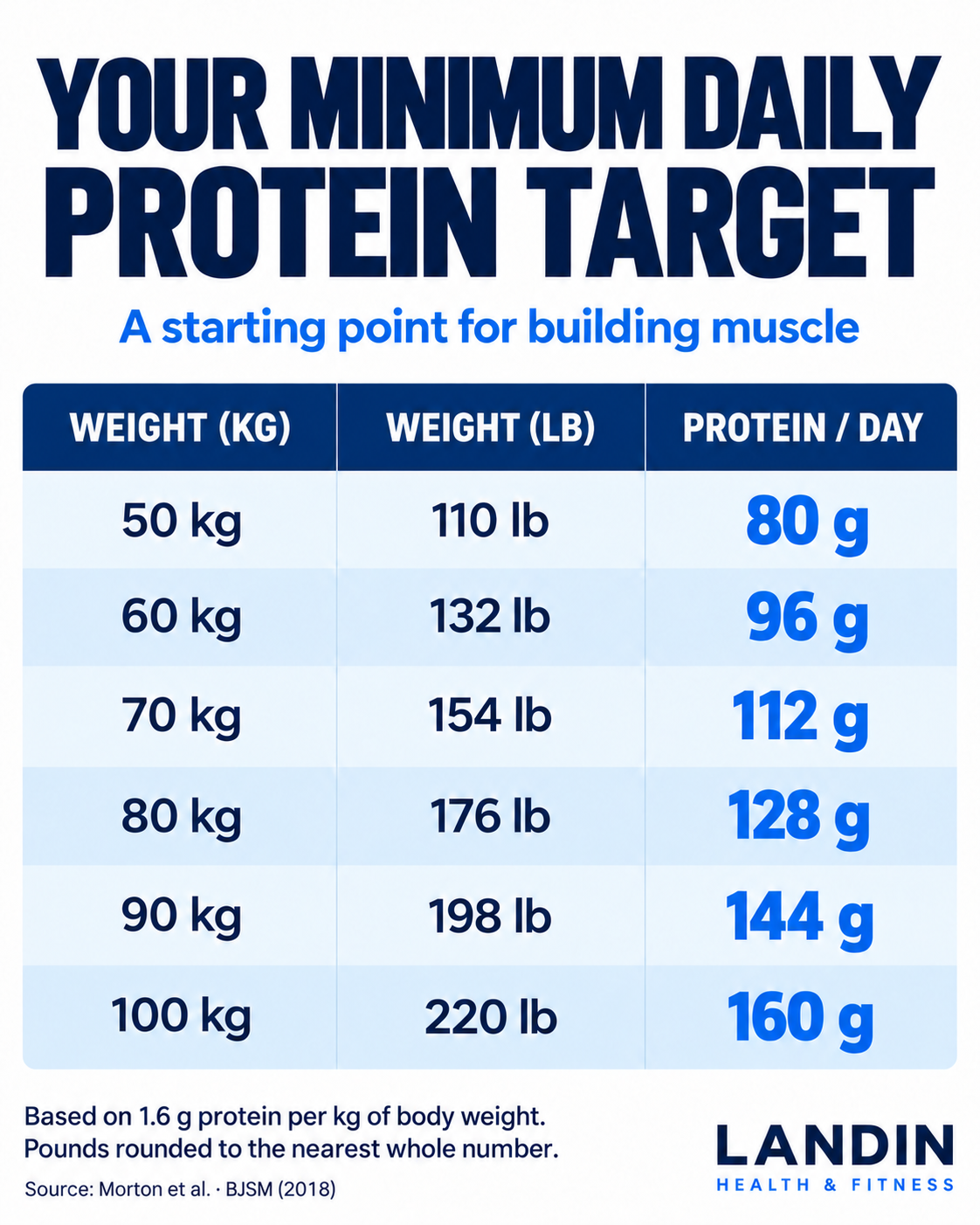
A large meta-analysis covering 49 studies found that the average benefit for gains in fat-free mass levelled off around this intake. That’s an estimate across studies, rather than an exact ceiling for every individual. Your needs can also differ depending on your circumstances and goals.
Before worrying about whether your shake comes ten minutes or an hour after training, check whether your normal meals get you close to your daily target.
Should you spread protein throughout the day?
Including protein across several meals is a sensible approach. It can also make your daily target easier to manage than trying to squeeze most of it into dinner.
One research review suggested approximately 0.4 g/kg per meal across four meals as a practical way to reach 1.6 g/kg daily. For someone weighing 75 kg, that works out at roughly 30 g per meal.
That’s a useful planning tool, rather than a rule you must follow perfectly. It also doesn’t mean protein above a particular amount in one meal is automatically wasted.
You could start by looking at whichever meal currently contains the least protein. Improving that may be more useful than adding another shake after an already protein-rich dinner.
Do you actually need protein powder?
Protein powder is an option for convenience. You can also get protein from foods such as dairy, eggs, fish, meat, tofu, soya products and pulses.
A shake might suit you when you’re short on time. A normal meal might suit you better when you’re hungry and heading home. The useful choice is the one that helps you meet your needs consistently.
How I’d approach this with a coaching client
I’d start by looking at their normal day: what they eat, when they train and which changes they can realistically maintain.
From there, we’d agree a manageable protein target, include protein across their meals and make sure their training fits their goals. Timing can be refined around that routine.
You should be able to finish a workout feeling pleased with your session, without worrying that the journey home has ruined it.
Want help putting your training and nutrition habits into practice? I offer personal training in Altrincham alongside online and hybrid coaching. Get in touch to discuss your goals.
