
Personal Training vs Online Coaching vs Hybrid Coaching: Which Is Right for You?
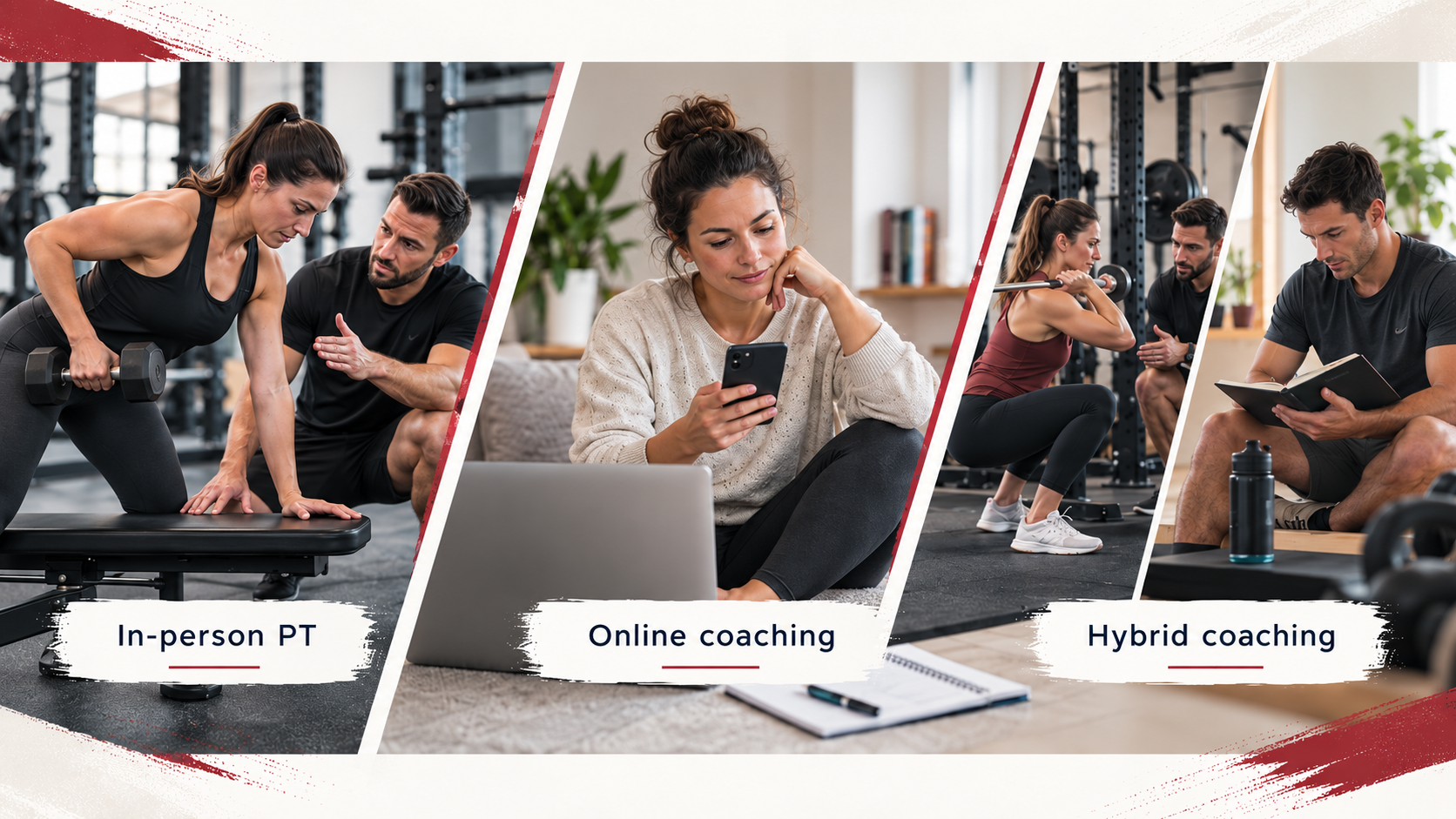
If you're thinking about getting a personal trainer, you've probably noticed there are quite a few different options available.
You could train with a PT in person, sign up for online coaching or choose a combination of the two.
But which is actually best?
The answer depends on you.
In my opinion, there are two questions worth asking before deciding which type of coaching to choose:
What are you trying to achieve?
What's stopping you from achieving it?
Someone who struggles to get themselves to the gym might need a completely different type of support from someone who's been training consistently for years but can't seem to get any stronger.
Let's look at the differences and when I'd recommend each option.
First, what's stopping you from making progress?
Before looking at the different coaching options, it's worth considering why you might need some help.
There are plenty of reasons people stop progressing in the gym, but a few common ones are:
Inconsistency. You might have a great training programme, but if you're regularly missing sessions, you'll struggle to get the most out of it. Some people need the accountability of a scheduled appointment, whereas others just need someone checking their progress.
Poor programming. Maybe you're training consistently, but your exercise selection isn't great, you're not progressively overloading or your programme doesn't really match your goals.
Not training hard enough. This is an interesting one. You might think you're finishing your sets close to failure, but could you actually perform another four or five repetitions? Sometimes it takes a session with a coach to realise how much more you've got in the tank.
Technique. Your technique might not be as consistent as you think. This can make it harder to judge whether you're genuinely progressing.
For example, imagine you go from performing weighted pull-ups with 10 kg to 20 kg. Sounds like good progress.
But what if you previously got your chin clearly above the bar, and now you're only getting your eyes level with it?
You've increased the weight, but you've also reduced your range of motion. It's no longer a fair comparison.
Having a coach watch you occasionally can help pick up on these things.
The important point is that each of these problems might require a different type of coaching.
In-person personal training
This is what most people traditionally think of when they hear the words personal trainer.
You meet your coach at a gym, or sometimes at home, and they take you through your session.
For me, one of the biggest advantages of in-person coaching is immediate feedback.
Your PT can watch your technique, correct mistakes, help you understand how hard you should be training and make adjustments there and then.
It's also useful for people who are relatively new to the gym.
If you've never used a squat rack or you're unsure how to set up a particular exercise, having someone beside you can make things a lot easier.
Then there's accountability.
For some people, knowing their personal trainer is waiting for them at 7 am is exactly what they need to get through the gym doors.
Who would I recommend in-person PT to?
Beginners who want to learn how to train confidently.
People who struggle to turn up consistently.
Anyone wanting regular, immediate technique feedback.
People who prefer encouragement and support during their sessions.
Those who want help understanding how hard to train.
The main downside is generally the cost. If you want two or three supervised sessions every week, it can become quite expensive.
And remember, having a personal trainer for an hour doesn't automatically mean the rest of your week's training is taken care of.
Online coaching
Online coaching gives you a structured programme and ongoing support without needing your coach physically beside you.
And no, online coaching shouldn't just mean someone emails you a spreadsheet and leaves you to get on with it!
A good online coaching service should involve understanding your goals, creating an appropriate programme, monitoring your progress and adjusting your training as needed.
It might also include nutrition guidance, video technique reviews, regular check-ins and accountability.
I think online coaching is particularly useful for people who already know their way around the gym but aren't necessarily getting the results they want.
Let's say you're training three or four times a week.
You're comfortable using the equipment, you enjoy training independently and you don't struggle with motivation.
But your strength hasn't improved for months.
Do you really need someone standing beside you for every workout?
Possibly not.
If your issue is poor exercise selection, progression or programme structure, online coaching might be all you need.
Who would I recommend online coaching to?
People who are comfortable training independently.
Those who want a properly structured training programme.
People who need help with progression and exercise selection.
Anyone who wants accountability without fixed gym appointments.
People who want ongoing coaching at a lower cost than regular in-person PT.
The obvious limitation is that your coach isn't physically there.
You can send videos of your lifts and receive feedback, but it's not quite the same as having someone watch and correct your technique during the session.
And if you're someone who repeatedly talks yourself out of going to the gym, online accountability might not be enough.
Hybrid coaching: the best of both worlds?
Hybrid coaching combines online programming and support with occasional face-to-face personal training sessions.
For example, you might train independently throughout the week using a programme your coach has created, then meet them once every two weeks for a session.
I particularly like this approach for people who are already consistent but want to improve their technique or work towards specific strength goals.
Let's say you want to get better at squatting, bench pressing and deadlifting.
You've got no problem training by yourself, but you'd benefit from someone checking your technique, spotting weaknesses and helping you improve.
Rather than paying for a PT to supervise every workout, you can use your face-to-face sessions for the things where coaching makes the biggest difference.
And the rest of the time, you've still got your programme, progression targets and check-ins.
It can also help prevent bad habits from creeping into your training.
Remember the weighted pull-up example earlier? That's exactly the sort of thing an occasional technique review might pick up.
Who would I recommend hybrid coaching to?
People who train consistently but want occasional technique checks.
Those looking to improve technical lifts like squats, bench presses and deadlifts.
People who want personalised programming and some face-to-face support.
Anyone who wants a balance between cost, flexibility and hands-on coaching.
But I wouldn't recommend hybrid to everyone.
If you're constantly missing workouts and need someone waiting for you at the gym, more regular in-person training could still be the better choice.
Likewise, if you're technically confident and progressing well, you might get everything you need through online coaching.
Does having a personal trainer actually improve results?
There's some interesting research on this.
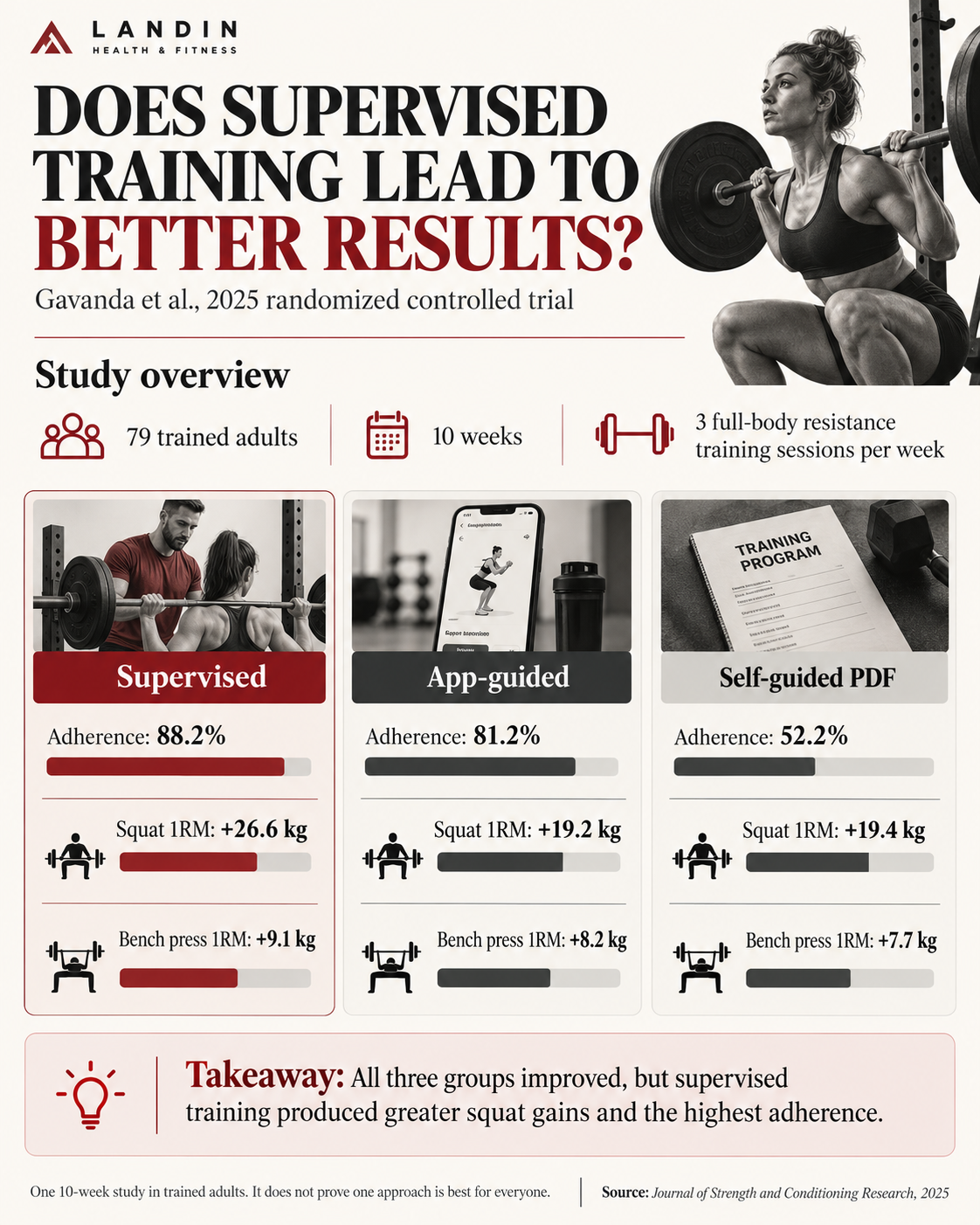
A 2025 study by Gavanda and colleagues compared in-person supervised training, app-guided coaching and self-guided training over ten weeks.
All three groups improved their strength.
However, the in-person supervised group achieved greater improvements in squat strength, with an average increase of 26.6 kg compared with 19.2 kg for app-guided training and 19.4 kg for self-guided training.
That doesn't prove everyone will get better results with a personal trainer. The study was relatively short and looked at particular coaching arrangements.
But it does suggest that having someone supervise your training can offer advantages.
There's also a smaller study from 2019 that I find particularly interesting.
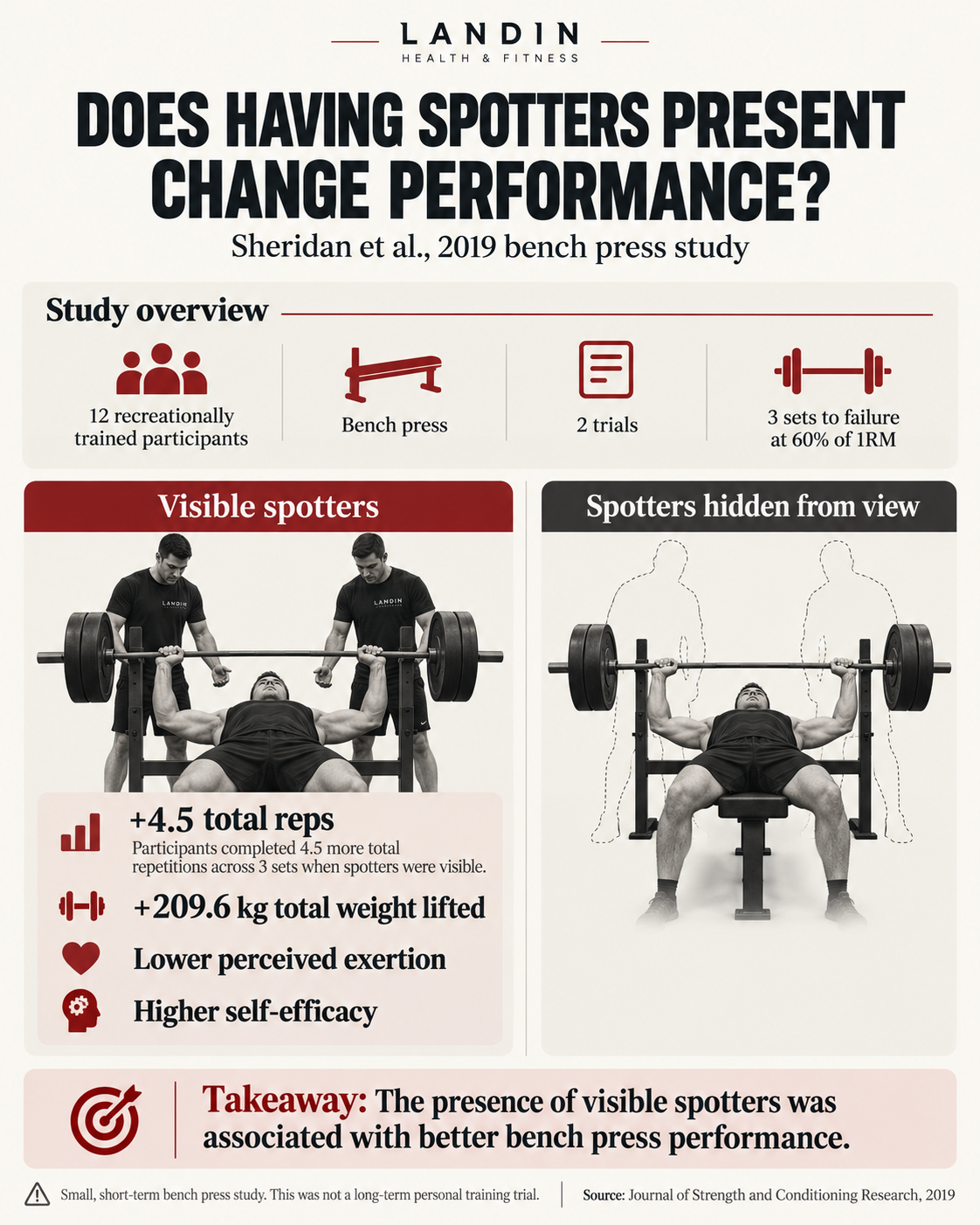
Researchers had participants perform bench press sets to failure, sometimes with spotters visible and sometimes with the spotters hidden from view.
When the spotters were visible, participants completed an average of 4.5 additional repetitions across three sets.
Think about that for a moment.
Simply knowing someone was there spotting them was associated with participants performing more repetitions.
It doesn't mean everyone trains too easily when they're alone, but it shows how another person's presence can influence performance.
And importantly, you don't need to train to absolute failure on every set to get good results. Learning to judge your effort accurately is what matters.
How much does each type of coaching cost?
Prices vary depending on the coach, location and level of support included.
At Landin Health & Fitness, my current prices are:
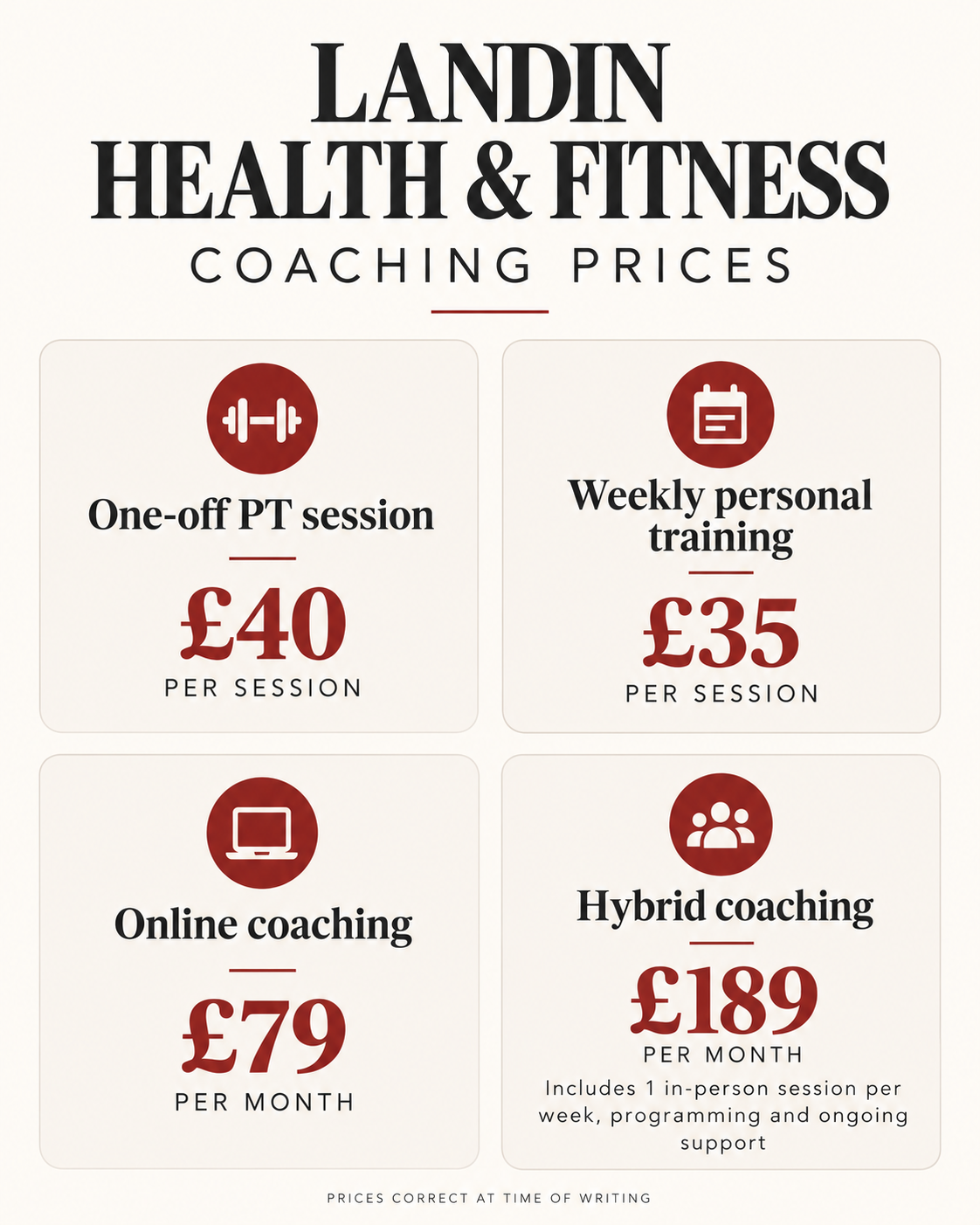
Hybrid coaching combines one regular face-to-face session per week with independent programming and ongoing support.
The important thing isn't necessarily finding the cheapest option.
It's finding the option that gives you the help you actually need.
There's not much point paying for weekly personal training if you're already confident and consistent and really just need someone to sort your programming out.
Equally, there's no point paying for online coaching if you're never going to complete the sessions.
So, which coaching option should you choose?
My advice would be to start by looking at your goals and what's currently holding you back.
If you're a beginner, lack confidence or need regular accountability, in-person personal training might be the best starting point.
If you're already comfortable in the gym but want better programming, progression and accountability, online coaching could be ideal.
And if you're somewhere in between — confident enough to train independently but still wanting some hands-on coaching — hybrid might make the most sense.
Ultimately, the best coaching service isn't necessarily the one with the most face-to-face time. It's the one that addresses the things stopping you from progressing.
Personal training and online coaching with Landin Health & Fitness
I'm a personal trainer based at PureGym Altrincham, offering in-person personal training, online coaching and hybrid coaching.
I also offer home personal training for clients around Altrincham who have their own training equipment.
Whether you're looking to build muscle, get stronger, lose weight or simply feel more confident in the gym, the starting point is the same: understanding your goals and working out how best to get you there.
If you're unsure which coaching option would suit you, feel free to get in touch. I'm happy to discuss your goals and help you decide.
References
Sheridan et al. (2019). Presence of Spotters Improves Bench Press Performance: A Deception Study. Journal of Strength and Conditioning Research. https://doi.org/10.1519/JSC.0000000000002285
Gavanda et al. (2025). Optimizing Resistance Training Outcomes: Comparing In-Person Supervision, Online Coaching, and Self-Guided Approaches: A Randomized Controlled Trial. Journal of Strength and Conditioning Research. https://doi.org/10.1519/JSC.0000000000005216
